The bluebells are well on the way to their full bloom. Pop’s wood is not covered in bluebells but has a wide swathe of them forming a rich carpet at the top edge where the early morning sun shines in and remains brightly lit until sunset. Unfortunately this is also where the herd of fallow deer like to hang out when they visit the wood. The result is that a lot of the plants have been cropped off through grazing and a number have been either squashed under foot or/and under their bodies as they lay down. Having said that they are amazingly resilient and there is still a show.
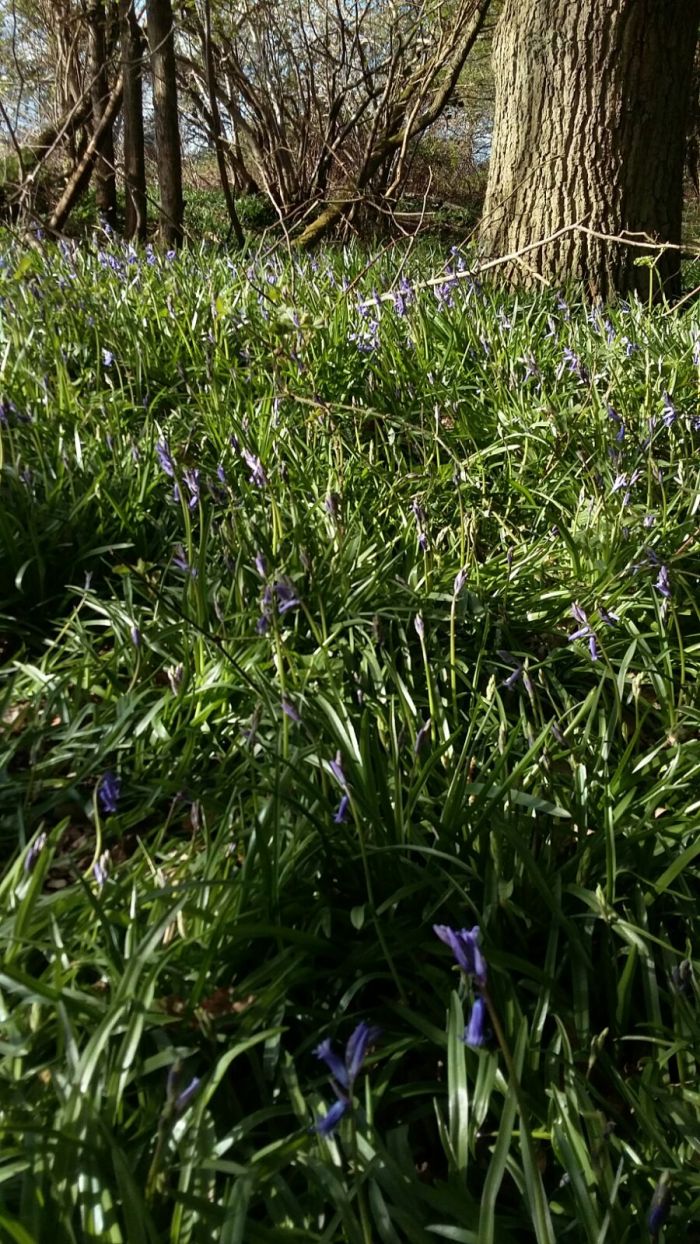
Someone recently remarked how hard it is to capture the colour blue faithfully and that certainly seems true with bluebells – above is a picture to prove the point. Clearly I am not a photographer and have yet to learn how best to capture these beautiful plants and their true colours to do them justice.
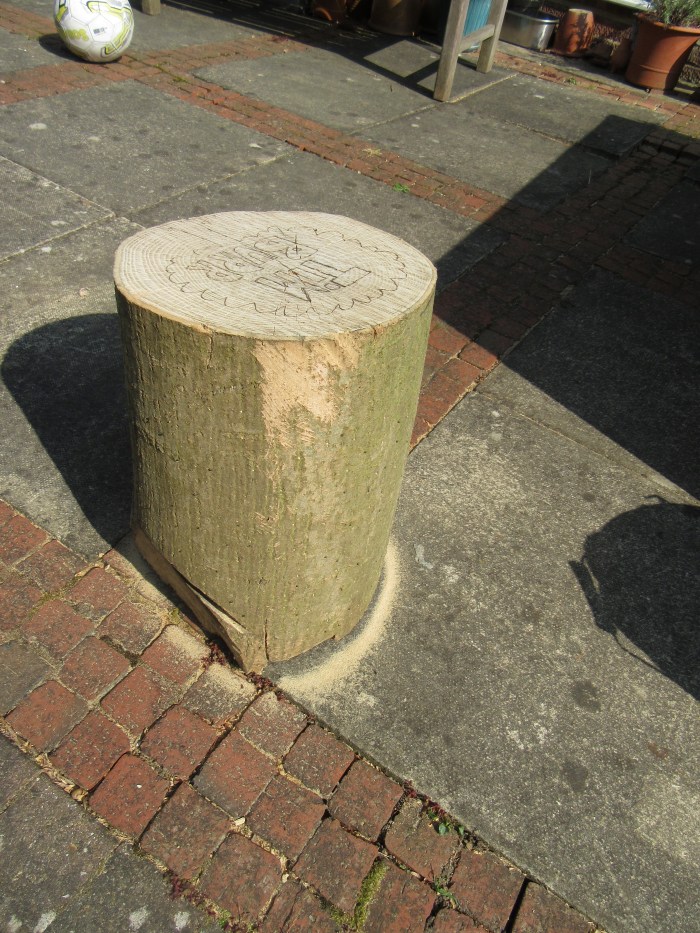
Sat out at home last Saturday I noticed a small ring of sawdust surrounding the base of an ash log that was sat on the edge of the patio. Closer inspection showed it to be covered in and surrounded by tiny flying beetles; the sawdust was either a result of them releasing themselves from the log or trying to bore into the log. Research on line narrowed the species down to most likely being the common furniture beetle which apparently lives as a larva within the wood and then comes near to the surface when ready to pupate. The sawdust is as a result of it finally breaking free and flying off. This seemed fine but the log was part of what I believed to be a living ash tree which I felled it in November last year immediately prior to the hedge laying weekend. The beetle doesn’t attack live or fresh wood. One explanation may be that the tree was actually already dead and had been infected prior to being felled. I will have to watch for signs of life from the remaining stump over the remaining weeks of spring and see if that is the case.
My son Josh joined me yesterday (Good Friday) and we set about the removing the main two branches of the fallen turkey oak tree. The tree had been blown over by Storm Doris and as a result suffered a very heavy fall with the branches becoming shattered and twisted onto each other. The job today was to try and safely saw through the uppermost branch which would take the strain off the lower branch that it was heavily resting against some six foot off the ground. After initially clearing the larger splintered wood from the top of the split with the chain saw we were left with the remaining bottom half of the branch diameter. This remaining section was being pulled down and stretched by its own weight making the wood fibres very highly strung. The result being that they would twang when cut through and spring up as they straighten out. We decided to use the large hand saw so that we could take the whole process very slowly and listen for the sounds of the tree as we cut through each of the “strings”. After a couple of hours, a lot of manual sawing and pulling on a rope that we had set up at the end of the branch the whole thing eventually gave one last crack and slumped to the ground. Before and after shots below.


Good to get these branches safely onto the ground and ready for logging, splitting and stacking.
Next time more on the splitting and stacking along perhaps with something about those efficient devices that I mentioned in the last blog but haven’t covered off today.

 Tim Burr