It has been quite warm in Pop’s wood this week. As can be seen on the data stamp at the bottom of the main picture, the temperature was up to 17°C by mid morning and was very humid given the heavy ran the previous day. This makes chainsawing and chopping up wood very sweaty work. The protective wear for use with the chain saw includes a pair of trousers that have very heavy cotton fibre padding all down the front of each leg. This is intended to clog up the chain and stop the machine so preventing you from inadvertently taking your own leg off. This padding is lovely and cosy in winter but in summer makes them very very hot to wear. The backs of each leg and the seat are normal single material thickness and so by comparison feel very exposed – a bit like a hospital operating theatre gown that they give patents to wear I imagine although thankfully not open backed so not a public health hazard.
I usually concentrate all my chainsaw work into the first session of the morning that way it is slightly cooler but also allows me to change back into normal work trousers and work my way through chopping the sections of trunk into manageable logs in the afternoon. Not a bad discipline really; make sure that I can tidy up all that I cut in the morning and leave the site clear for the next working day.
The current processing pattern is to make a chainsaw cut as deep as the blade will allow around the full diameter on each side of the main trunk. This creates a 12″- 15″ hoop that can then be broken off and further processed into logs. The approach is to use a hammer and a wedge to split into the hoop and remove smaller sections, this then allows the chainsaw to be used again cutting into the centre of the trunk that it couldn’t originally reach. Slow work made more difficult by the areas of timber that are rotten, these areas absorb any amount of hammering as they are too wet to split. All the rotten parts of the trunk need to be sorted out rather than put into the firewood pile.
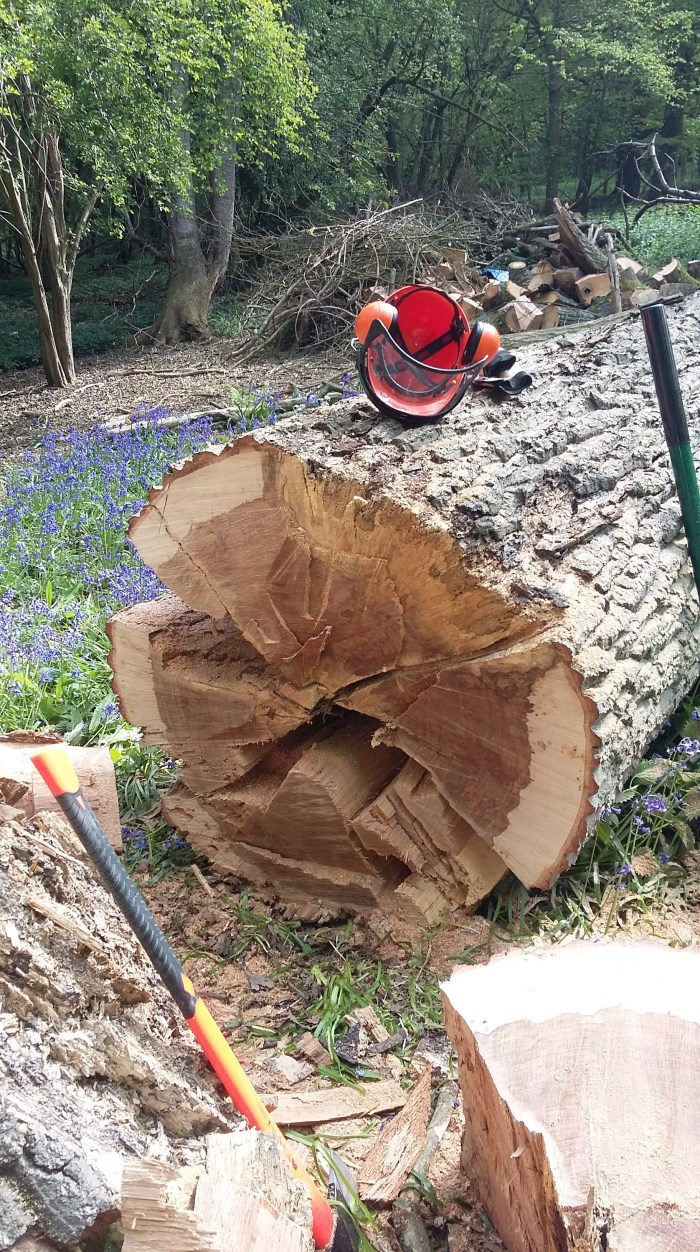 I am managing to cut and process about 6′ length of the main trunk so in a couple of weeks time will only be left with the main “knuckle” where the trunk branched out.
The poor old turkey oak had been extensively weakened by the fungal growth but also had suffered water and insect infestations at points of weakness in its structure. As I have worked my way along the fallen trunk, ie up the trunk as it was when standing, there have been a couple of points where a previous injury to the tree has created a point of weakness. In one case this was where a small side branch had been broken off leaving an open wound through which water and insects entered and over the years started a straight forward rotting process in addition to the fungal attack. Reinforces the need to always make clean cuts when pruning existing trees and to tidy up damage to standing trees wherever practical.
I often wonder what happens in the wood when I am not there. To try and gain an insight into that question I rigged up a camera that triggers when there is movement in its line of sight. I then set the camera to take a 10 second video of whatever it was that emerged. Here are a selection of what what happens after hours. My favourites are the badgers who almost look stripy in the infra red light and the pheasant who looks just like a rich land owner strutting through the wood in his natty waistcoat with his hands behind his back.
It would appear that the fallow deer just wander aimlessly around the wood nibbling at whatever they fancy. The two clips are sequential and show them walking down the wood and then two minutes later they walk back up the wood. Interesting to note that the muntjac usually is a lone animal although very occasionally is with a mate or young offspring but that the fallow deer are herd animals, the current estimate is that a herd of about thirty animals visit Pop’s wood as part of their nomadic ramble.
More next time…….

 Tim Burr