Tim Burr is a deliberate play on words but the “Burr” part is drawn from the vocabulary of the woodland.
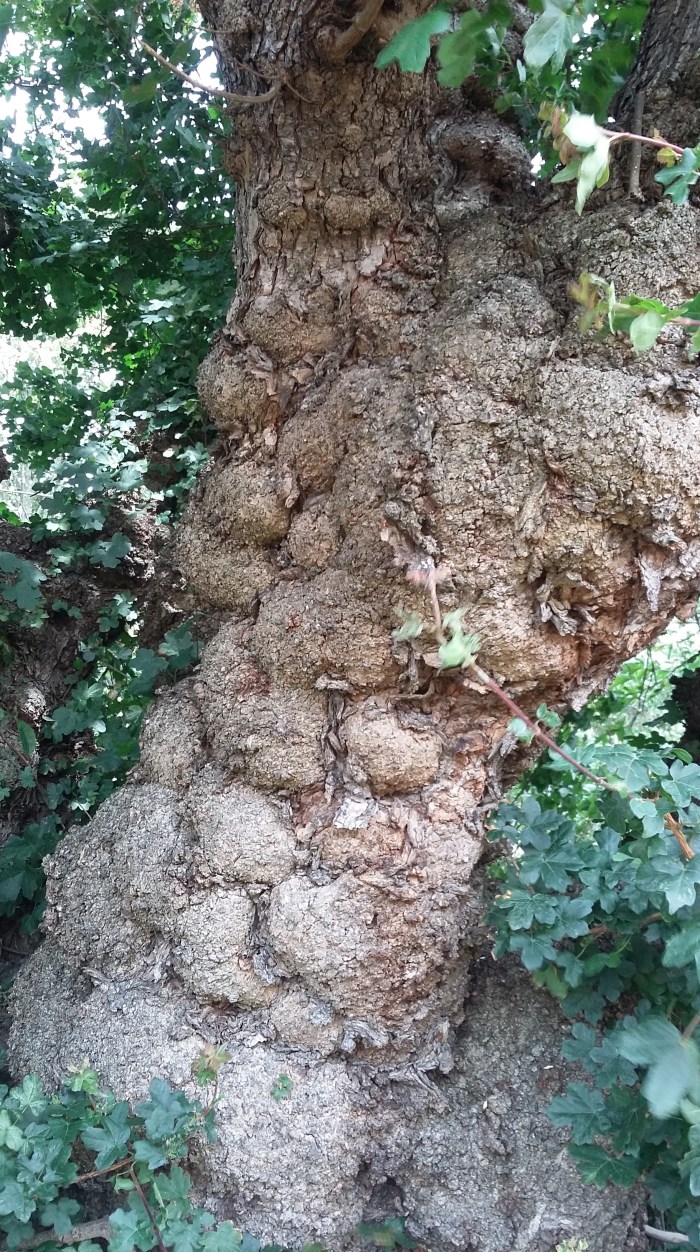
A burr is an abnormal growth which looks like a rounded lump on the side of a tree. The absolute mechanism for their growth is not fully understood in that there is no reliable method of initiating a burr to grow successfully. However, it is understood that a burr results from a tree undergoing some form of stress. It may be caused by an injury, virus or fungus or perhaps insect infestation.
Here is a picture of a field maple seen yesterday on a walk in Essex that is covered in growths but appears to be healthy despite these additions.
The grain pattern inside of a piece of burr wood is extraordinarily intricate as it is made up of a series of knots and so ignores the normal layered grain of the parent tree. For this reason the wood is valued for wood working.


The dashboards of certain cars like Jaguars and the Riley Elf were made from real walnut burr wood at one stage so there must have been a reasonably reliable supply of the material during that period. Imagine the skills needed to make a wooden dashboard, complete with brass hinges for the glove compartment, and compare that with the bland plastic injection versions used today. Nowadays the same visual effect can be produced on a large scale on flat sheets of say plywood through the use of printed layers.
I like the fact that a natural abnormality can produce something more valuable than the original, like a grain of sand in an oyster producing a pearl.
Back in April I commented about flying ants emerging from a section of an ash tree that I had cut down. The tree was felled to reduce the canopy cover and allow direct light to reach the new hedgerow. These ants apparently do not attack live wood but bury into dead wood to lay their larvae which then eat their way out and emerge to start the whole cycle again. At the time it was felled the tree wasn’t in leaf so I wondered whether it was in fact dead before it was cut down. But a recent inspection showed new growth on the tree stump.
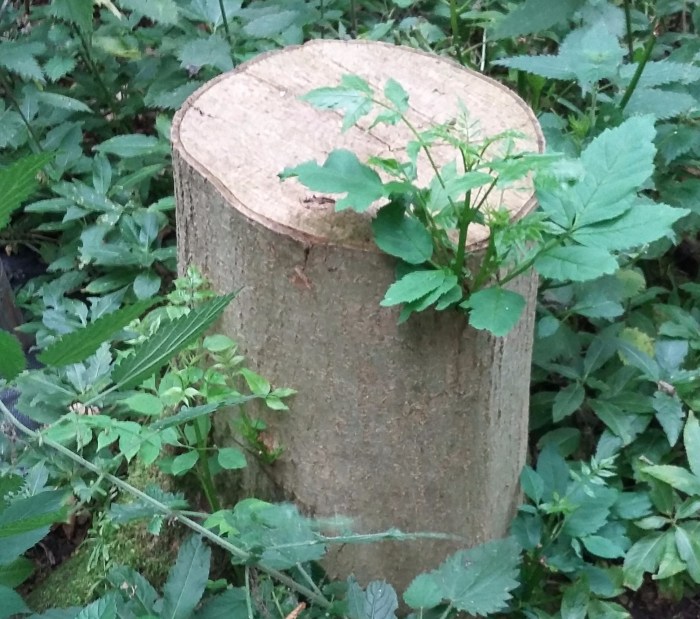
Good news in that the new growth will grow into and become part of the hedgerow; bad news in that it doesn’t really solve the mystery of the flying ants emerging from the cut out section as it would appear that the tree was alive all the while.
I am quite happy not knowing the answer…..more next time.

 Tim Burr