Everywhere you look in a woodland floor setting there are woodlice. As I am chopping logs they drop out of various nooks and crannies from within the log. They seem to be able to survive in the smallest of unpromising places and, having been disturbed by a large axe splitting their home apart, they simply uncurl and scurry off to find a new place. Given that they are largely nocturnal they are probably blinking as they run off wondering what the bright light is all about.

Here are some facts that I found in a study sheet produced by Waltham Forest:
- Woodlice may look like insects, but in fact they’re crustaceans and are
related to crabs and lobsters. - It’s thought there are about 3,500 species of woodlice in the world, and 35-40 of these can be found in the British Isles.
- Woodlice are sometime called pill bugs and slaters (in Scotland). The pill woodlouse gets its name because it can roll itself up into a ball.
- Woodlice like damp, dark places and can be found hiding in walls, under stones and in compost heaps.
- A woodlice has 14 legs and an outer shell called an exoskeleton. When a woodlouse grows too big for its exoskeleton it has to moult to allow a new shell to take its place. Moulting takes place in two stages, first the back half is shed and a day or so later the front half falls off.
- They have a pair of antennae to help them find their way around, and two small ‘tubes’, called uropods, sticking out the back of their bodies.
- The uropods help them navigate and some species use them to produce chemicals to discourage predators.
- Most woodlice are found on land, but their ancestors used to live in water and woodlice still breathe using gills.
- Woodlice eat rotting plants, fungi and their own faeces, but they don’t pee! They get rid of their waste by producing strong-smelling chemical called ammonia, which passes out through their shells as a gas.
- After mating, females carry their fertilised eggs in a small brood pouch under their bodies. The young hatch inside the pouch and stay there until they are big enough to survive on their own.
- A common woodlouse can live for three-four years.
- Apart from man, its main predators are centipedes,
toads, shrews and spiders.
Given that the pile of oak logs is not rotting and would be too dry for their liking I guess that they are simply using the shelter afforded by the cracks and splits in the logs as a refuge during the day and then set off foraging from there each night.
Seems like the woodlouse is on the whole a beneficial partner. It feeds on decaying leaf and plant matter on the woodland floor, meaning that the woodlouse prevents the organic waste rotting and giving off carbon dioxide and so plays a vital role in the natural carbon dioxide cycle. I wonder whether there is a further advantage in their ability to produce ammonia albeit in a gaseous form that could have a beneficial fertilizer effect.
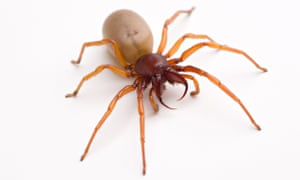
But its not all eating rotten wood and farting ammonia. Who likes to eat woodlouse? Well the woodlouse spider for one – how depressing would it be to have a predator with your name in their title! At just over an inch log these are about the same size as a fully grown woodlouse but their mandibles at the head end make it a very efficient woodland predator. They hunt for woodlice underneath logs and stones within the woodland setting. Their powerful jaws are deadly: piercing the louse’s tough armoured exoskeleton with ease. Apparently they can give humans a nasty nip so watch out.

Amazing to think of the incredible amount of life that exists literally right under our feet. Classic food chains playing out with the hunters becoming the hunted at the next turn. Each tiny seemingly insignificant entity fulfilling a purpose and going about its business relentlessly. Scary to think of how easily we break those cycles and wonder years later what went wrong with our ecology. We really must learnt to tread more lightly.
Says he who uses a chain saw to cut down a million habitats!
More next time………….

 Tim Burr