The target is to have the rest of the fallen turkey oak main stem all sawn up into sections and processed into logs by Christmas. This is quite a challenge as there is about 12 ft of stem left and the diameter of that “log” is over 3 ft. This means that the chainsaw bar, which is only 18″ long, will not make a clean cut all the way through and so numerous separate cuts have to be made. This is why the end of the log show in the main picture looks so uneven as if it has been chewed off.
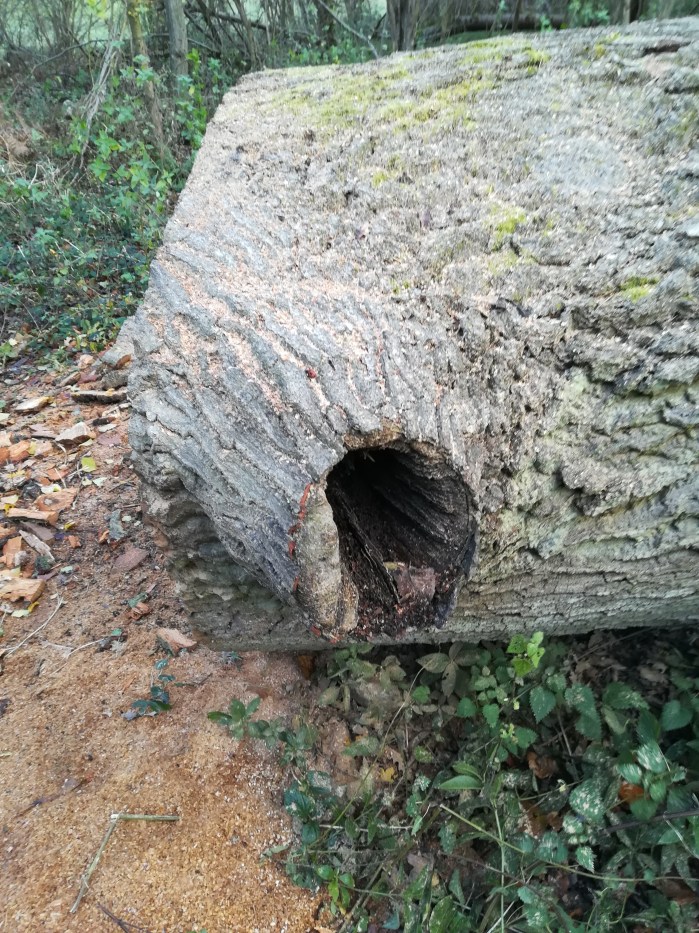
In addition there are several stumps of sizeable branches that were part of the main tree when it was standing. Where each of these branch stumps joins (or sets off from) the main stem there is a complicated interplay between the straight grain of the stem and the straight grain of the branch producing a very tough piece of wood that is hard to split.
Still I have developed a technique now that seems to be effective. It goes as follows:
- Mark out a hoop to cut off that is about 10″ in depth. Start at the 12 o’clock position and cut as deeply as the bar will allow down one side, being careful not to touch the ground at any time as this will instantly blunt the chain saw;
- Repeat for the other side.
- Stand at the front of the log and cut notches with the chainsaw as if marking out the hour positions on a clock face;
- Insert a splitting wedge into the first notch and hit it hard with a sledge hammer until a split starts to form in the end grain of the log (It is unlikely that this first split will result in a section being split completely off)
- Leave the first wedge where it is and insert a second wedge into an adjacent notch and again hit it hard with the sledge hammer. The likelihood is that this second split will join up with the first split and produce a satisfying crack as a section of log, rather like a badly cut piece of pie, comes free and can be removed.
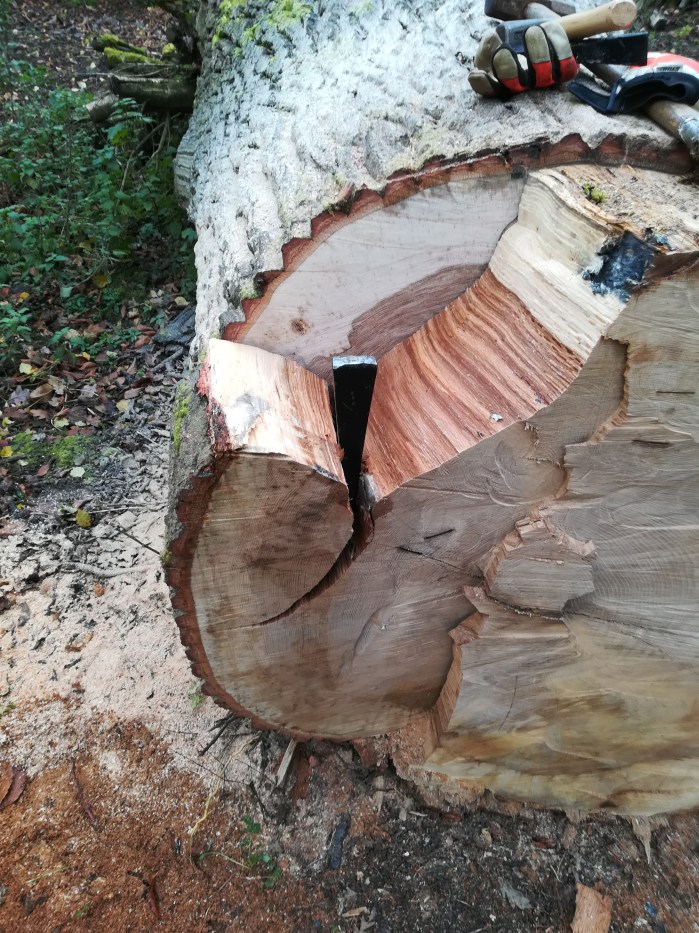
- As the bulk of the log gets removed there is then room to get back in with the chainsaw and setting the blade at a slight angle it is possible to nibble away at the remaining uncut wood and continue using the wedges to split the pieces away from the trunk
- The cant hook (shown below) is a great way of leveraging the sections that are not quite broken through. This tool is about 4′ long and with the spiked jaws firmly gripping the broken log it is very effective.

- Once the whole of that hoop is cut off the main stump, the bark is stripped off each of these split sections with a hand axe and the logs split into firewood size blocks. The removal of the bark helps the air get to the logs allowing the trapped moisture to dry out, also improves the appearance of the cut logs no end.
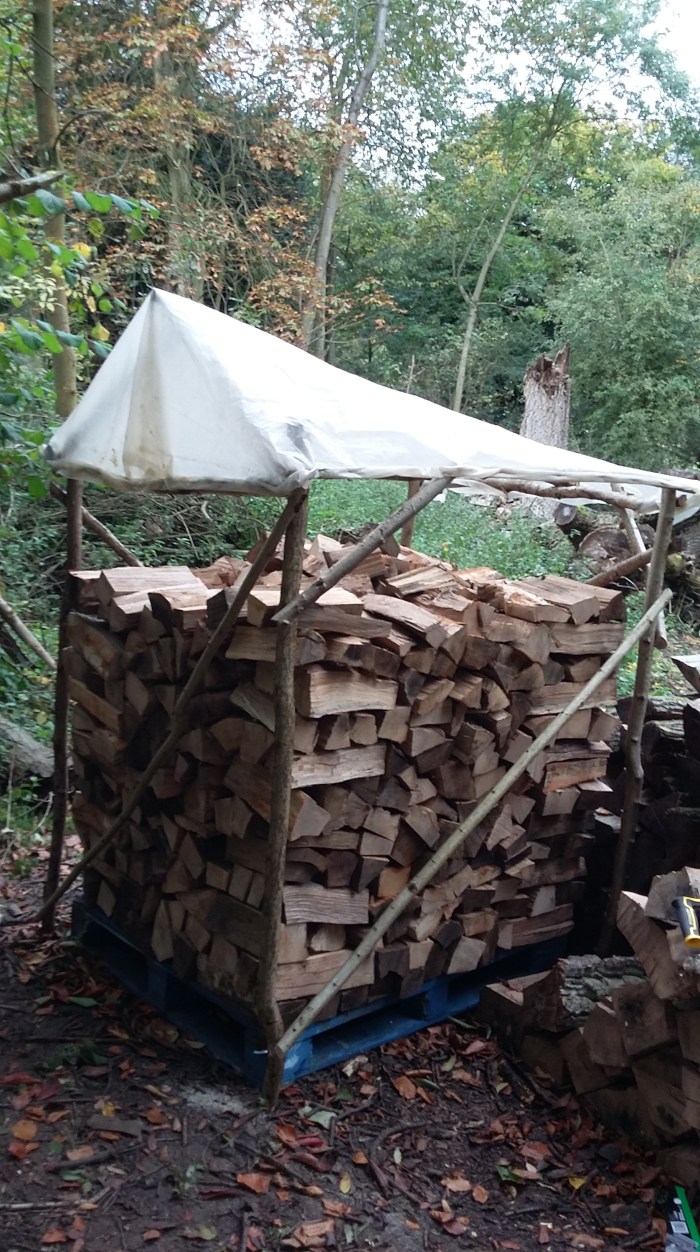
And before you know it you have a cubic metre of firewood starting the seasoning process. The simple shelter made of hazel poles and plastic sheeting protects the logs from rain and allows them to slowly dry out.
More next time…………………..

 Tim Burr