Allium ursinum – known as ramsons, buckrams, wild garlic, broad-leaved garlic, wood garlic, bear leek, or bear’s garlic – is a wild relative of chives native to Europe and Asia. It is a woodland plant that enjoys chalky soils and damp conditions. It grows in broad carpets across the shady parts at the bottom of Pop’s Wood just where the conditions best suit it. At this time of year it is beginning to come into its peak with a solid green covering of leaves and the start of a flower stalk. All this from a period of complete dormancy where, like any bulbous plant, it lies recovering underground having put all the strength of the previous growing period back into energy stores within the bulb ready for another annual surge.
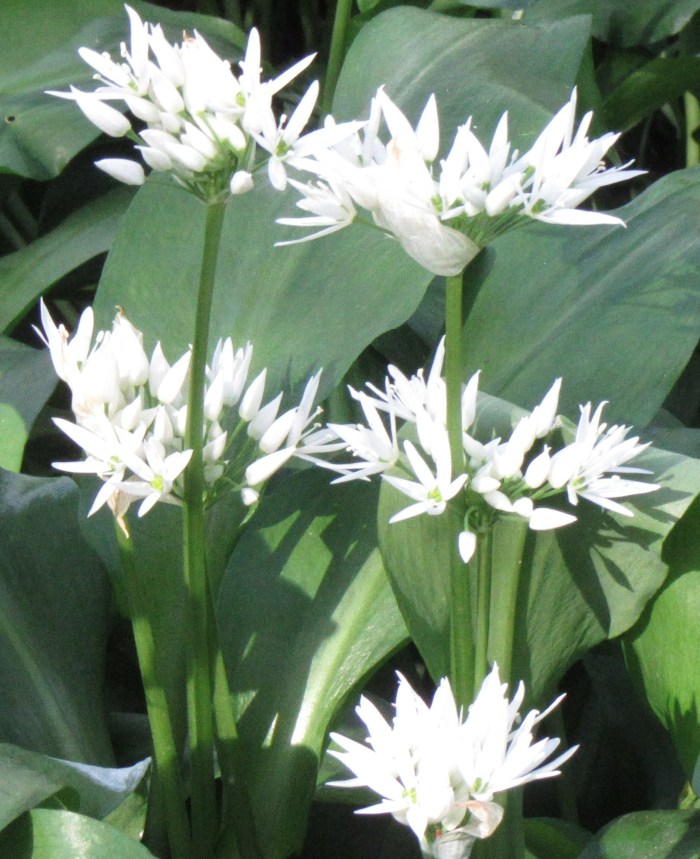
Wild garlic is a really tasty ingredient.
Here are a couple of key foraging guidelines:
– Seek permission before foraging. In certain areas, plant species will be protected so it is important to do some research and check with the landowner before you start gathering.
– Only pick from areas that have a plentiful supply. Look for areas where you can find wild garlic in abundance and then only collect a small amount for personal use. Never completely strip an area as this could damage the species and deny another forager the chance to collect.
– Leave enough for wildlife and avoid damaging habitats. Many animals rely on plants for survival, so never take more than you plan to eat as this could also deny wildlife from a valuable food source. Be mindful about wildlife habitats and avoid disturbing or damaging.
– Never pick protected species or cause permanent damage. Britain’s wild plants are all protected under the Wildlife and Countryside Act which makes it illegal to dig up or remove a plant. Check the law before you forage or if in doubt, why take part in a foraging class with an expert and learn the basics.
Here’s a recipe idea that I picked up from the Countryfile web site created by Gill Mellor from River Cottage.
Wild garlic and onion bhaji with wild garlic raita

These bhajis have become a River Cottage classic. They are cracking with a good curry or served with drinks as a little appetiser.
Method
First, make the raita. Combine the yoghurt with the cucumber, mint and wild garlic and add the salt. Mix well and set aside.
To make the bhajis, combine the gram flour with the ground coriander, cumin, curry powder and salt in a bowl. Turn through the onion seeds, wild garlic and sliced onions. Stirring as you go, gradually pour in the beer or water until you have a nice and smooth, yet very thick, batter – you may not need all the liquid.
Pour the oil into a deep, heavy-bottomed saucepan to a depth of about 8-10cm and warm over a medium heat – you want the oil to be hot, but not too hot, because the onions and flour need to cook through without the outside of the bhajis burning – 165°C is perfect. You’ll need to cook them in batches, so don’t overcrowd the pan – drop large spoonfuls ofthe batter into the oil and cook until golden, about four to five minutes, turning once or twice. Drain on kitchen paper briefly and serve hot, with the raita alongside.
Ingredients
(makes about 16 bhajis)
- 100g chickpea flour (also known as gram flour)
- 2 tsp ground coriander
- ½ tsp ground cumin
- 1 tsp fine sea salt
- 1 tbls of medium curry powder
- 1 good pinch black onion seeds
- 3-4 tbsp finely ribboned wild garlic leaves
- 1 large onion peeled and thinly sliced
- 100-120ml beer (or water)
- Groundnut oil for deep frying
For the raita
- 150ml whole yogurt
- ¼ of a small cucumber, peeled and cubed into
- 1cm pieces
- 1 tbls of chopped fresh
- mint leaves
- 1 tbls of chopped wild
- garlic leaves
- 1 pinch flaky of sea salt
One to try this weekend I think.
More next time…………………………….

 Tim Burr