Bit of a change in the wood this week. Gone are the warm winds and unbroken sunshine and instead we are back to “April like” weather with broken sunshine and showers. One of the showers on Thursday was an unexpected hail storm which seemed so incongruous given that the week before was a glorious 25°C. Still maybe this colder weather will hold the bluebells back just long enough to make sense of a bluebell picnic that is happening in the wood in a couple of weeks time.
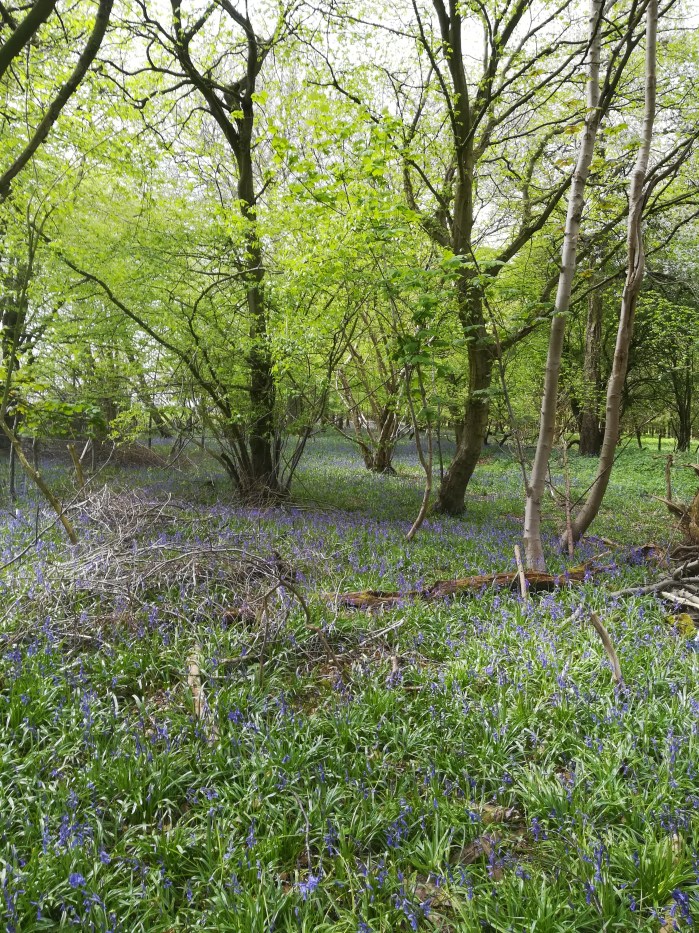
One new feature in the wood was a fallen beech tree. Or rather the remains of a previously dead beech tree that had stood for a while as a stump but has now succumbed and crashed to the floor. This is one of the stages of the death of a tree in a woodland setting.
- Firstly the tree struggles to survive maybe through disease but in the case of the beech trees I am advised it is because they become waterlogged.
- Secondly they die off and the soon after they lose limbs as they physically weaken. What is left then is a stump ie just the main trunk; and,
- Finally that too falls.
Whilst this is not a great process in terms of managing a woodland for timber; this is a very important part of the woodland scene. Now that the tree is on the ground a whole host of micro life (including wood lice and their ammonia farts – see earlier blog) will inhabit the dead wood and decompose it fully to dust and enrich the soil. As is the cycle of life these insects become a part of a food chain for higher species and so the process continues. Leaving fallen wood is an essential part of woodland management.


As mentioned last week I was visited by a team from the Herts and Middlesex Wildlife Trust who came to the wood to update their flora and fauna report. Their expertise and detailed knowledge of plants and woodland trees is very impressive and in the brief chats that had as they worked methodically through the wood were very informative.
One item that they were keen to point out to me is that I have an invasive species right at the gateway to the wood.


This is the Variegated Yellow Archangel. It is a relative of the dead nettle and produces a lovely yellow flower on variegated leaves. It is sold for planting in gardens but this species is listed on Schedule 9 of the Wildlife and Countryside Act in England and Wales therefore, it is also an offence to plant or otherwise cause to grow these species in the wild.
How these got into Pop’s wood is unknown but they are incredibly quick to colonise and appear to flourish in the poorest of conditions. Like a common nettle they send out runners that carpet the ground and set to root along their length. They can very quickly starve out other native species. There are few alternatives to carefully digging these out wherever and whenever they appear. This is a job for life, it strikes me, as the smallest piece of broken root left in the ground will remain viable and grow again the next season.
The native Yellow Archangel is very similar to the intruder, a stoloniferous (sends out runners) herb growing upto 30cm and forming extensive patches. The stolons are thick and root easily, thereby spreading the patch. The hooded flowers are yellow and the ‘tongues’ have red honeyguides. The stamens are hidden in the hood. Leaves are dark green and shaped like stinging nettle leaves.
The are two main approaches to controlling the invasive species;
- mechanical, physically rooting out all the plants taking care to remove all the roots, and/or
- chemical, using an appropriate herbicide to tackle the plant systemically.
My preference is to use a mechanical means initially and see how successful that approach is before taking any more serious action.
Guess what the attendees of the bluebell picnic will be doing!
More next time…………………………..

 Tim Burr