The hornbeam is a native of the UK and is a member of the same family of trees as alder, birch and hazel namely the Betulaceae. It is commonly found in the south and south east of the country but can be found further north. I remember being shown around the Ecceshall wood near Sheffield and seeing their hornbeam tree – just the one, in the middle of the wood. Pops wood has a small grove of them at the top end. At the moment they are somewhat shaded out by larger beech and wild cherry but the plan is to thin these out and to give the hornbeam sometime in the sun and see if it thrives once more.
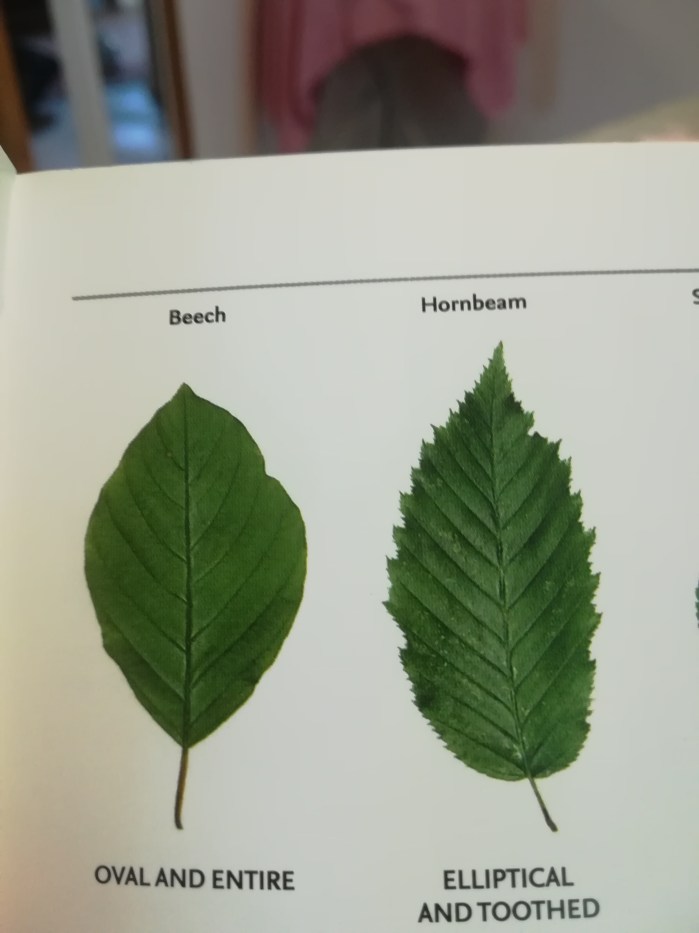
The hornbeam leaf is very similar to that of the beech tree but has some distinct differences shown below.
It produces male catkins that are then pollinated by the female catkins on the same tree. The female catkins then develop the fruit which is a small nut held in three papery seed wings formed into clusters that look a bit like hops hanging down in the late summer/autumn. Weird but the Hawfinch is the only British bird able to crack open the seeds. Now that is specialised.

A tonic made from hornbeam was said to relieve tiredness and exhaustion, and its leaves were used to stop bleeding and heal wounds.
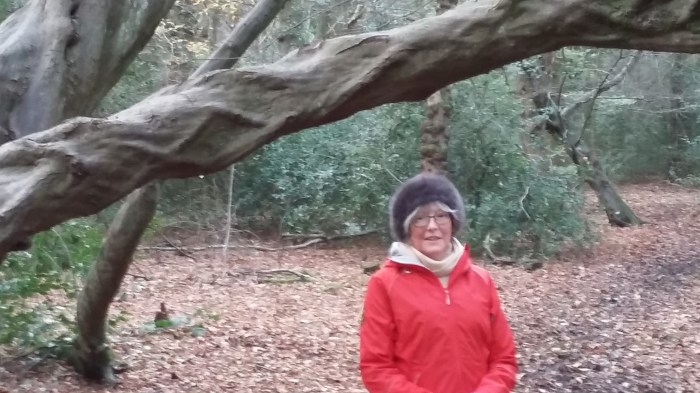
The hornbeam often has a twisted main trunk or bole. It looks a bit like a wrinkly stocking or elephant skin. In fact its often possible to see elephant faces in the trunks of hornbeams – have a good look next time.
The name hornbeam comes from the hardness of its timber – ‘horn’ means ‘hard’ and ‘beam’ was the name for a tree in old English.
Hornbeam timber is a pale creamy white with a flecked grain. It is extremely hard and strong, and so is mainly used for furniture and flooring. Traditionally used for the wood included ox-yokes (a wooden beam fitted across the shoulders of an ox to enable it to pull a cart), butchers’ chopping blocks and cogs for windmills and water mills. It was also coppiced and pollarded for poles.
Hornbeam burns well and makes good firewood and charcoal.
It thrives on heavy clay soil and likes living in amongst oak and beech trees so there you go, ideal for Pops wood.
Later in the summer I will be making charcoal with some pollarded stems that were taken down last year. It will be interesting to see how it compares with the beech charcoal produced to date.
More next time…………………….

 Tim Burr