Just when you expect a tree to come down it actually goes up! This was the chain of events that resulted in the fallen ash to first of all fall to the ground and then Lazarus like rise again.
The first stage of dropping the fallen ash that had become snagged on surrounding trees was to free the base of the tree that had formed a hinge on its original stump.
My apologies for the shaky camera work, I found to hard to hold the phone and work the Tirfor winch.
So the trunk was now safely down on the ground.
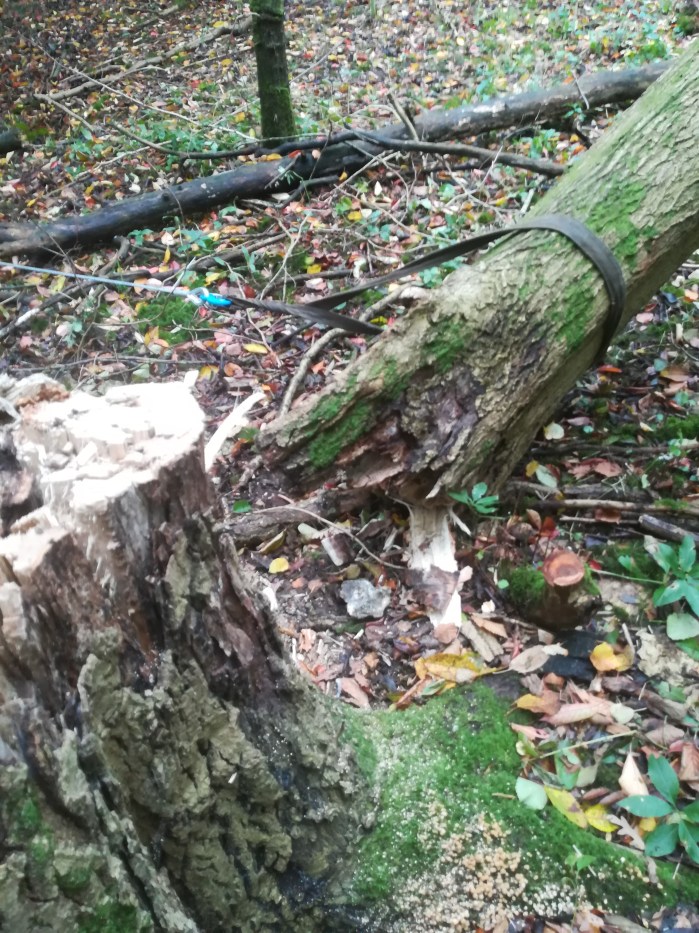
The next task was to attach the winch cable and “pull” the trunk along the ground and free the top end and its entangled branches out of the neighbouring trees and let it all fall to the ground. So with the winch attached I started to apply tension …..


…..the freshly fallen base started to rise again. This wasn’t the ash defying the laws of gravity but rather a demonstration of how stuck the top branches were and how the only way for the tree to react as the tension was applied was for the base to rise.
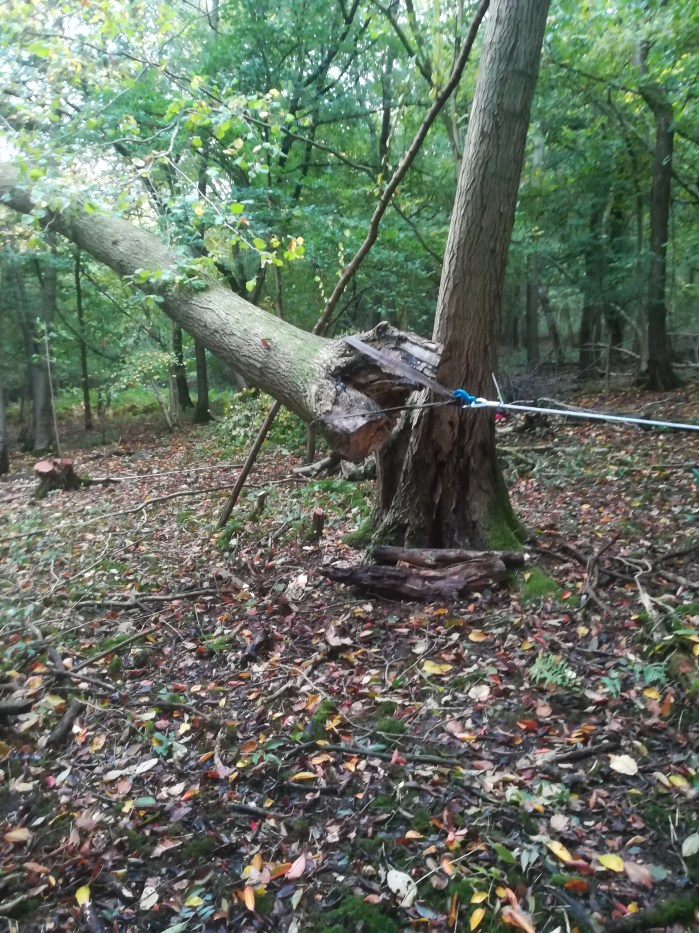
As can be seen by the picture above, the base reached a significant height and had been pulled back towards the winch by some 3 feet or so. Just as I was wondering whether I was inadvertently creating the world’s largest bow and arrow there was a very satisfying “crack” and the top branches came free as the wild cherry stem finally split under the load.
Here are two videos of the “before” ie just after the tree finally fell; and the “after” which is the tidied up site.
Before……
and after………..
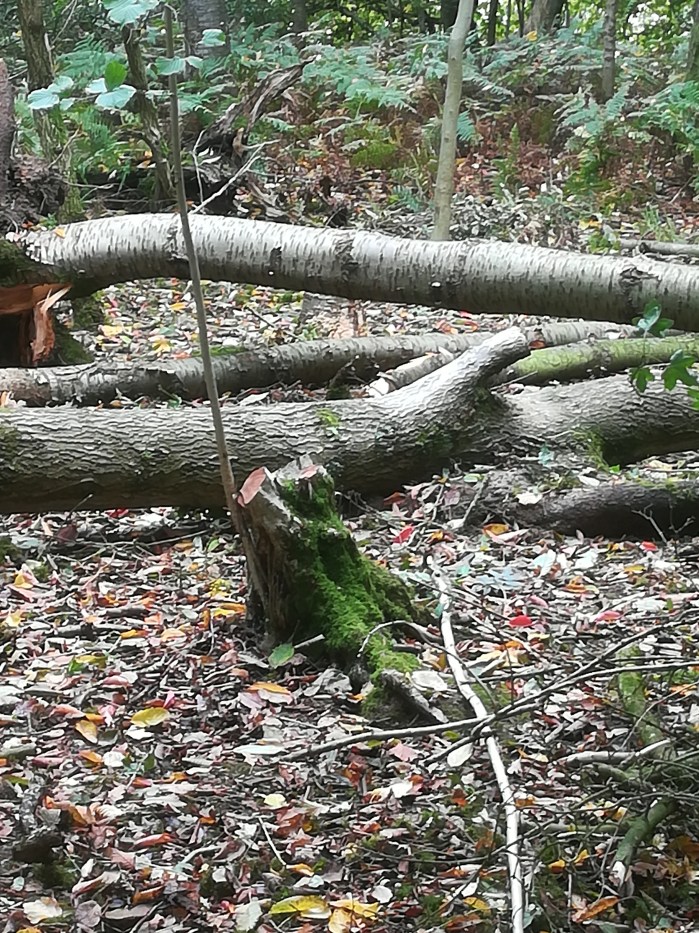
All the various species of trees (ash, wild cherry, elder, hazel and field maple) that were entangled in the wreckage are now sawn into manageable chunks and in separate piles. May seem a bit fussy but it is an important step when aiming to make single species charcoal.
Just the main trunks of the ash and cherry to process now. I’m rather hoping to mill the ash into useable timber at some stage.
More next time……………….
PS I am happy to report that the hazel directly underneath the fallen ash survived the process and will become part of the first coppice coupe later this autumn.

 Tim Burr