This week I made a start on the hazel coppicing. The first two stools I worked on are well established and healthy which bodes well for their regrowth. They are also growing quite close together so will act as a starter/model for increasing the density in their immediate vicinity and eventually lead to a regeneration of a good copse.
Here is a picture of the wood with the early morning sun coming through the trees at the top of the wood. It so happened that the sunlight was “spotlighting” the two tress that I had planned to work on.
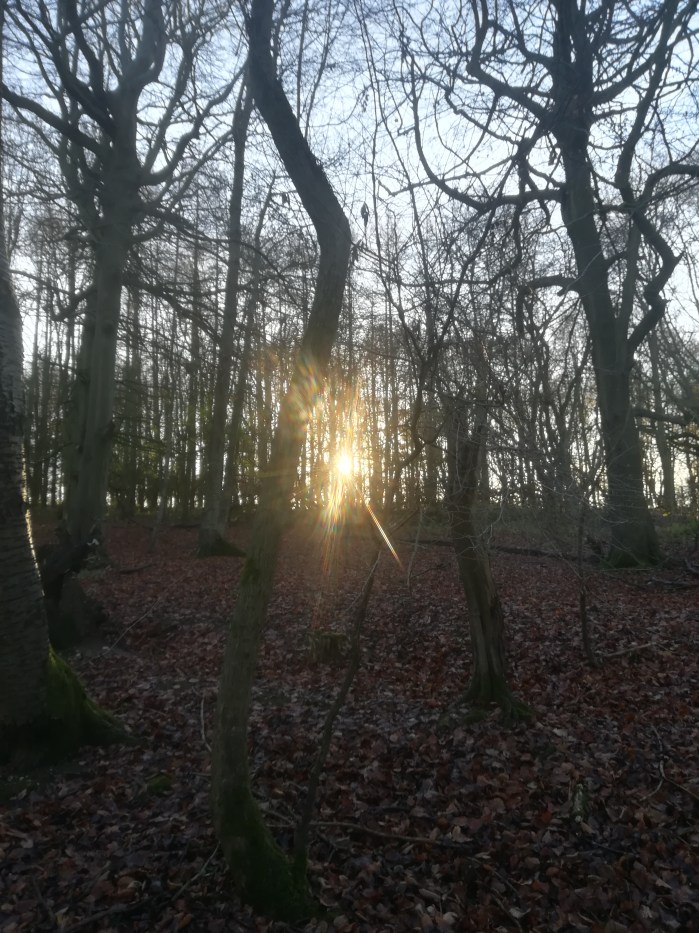
early morning sun through the trees

the chosen one?
Cutting down trees is always a lesson in humility I think. You stand next to the tree and you think that its not that big and this shouldn’t take long. The truth is a bit more realistic. Each branch, although only the thickness of your arm, weighs a considerable amount and as soon as you start cutting into the limb the stresses that build up need to be thought about and acted upon. So making a v notch on one side before making the main cut not only creates a “hinge” to govern the direction of fall but also prevents the falling limb from ripping along its length and ruining any potential use for the wood.
I like to do most of the coppicing using a hand saw only. Its a lot quieter and less smelly than a 2 stroke chainsaw and means that you can take each cut a bit slower than simply ripping through the limb and seeing what happens. It also ensures that you work up a bit of body heat on a chilly morning. As each limb comes down I work my way through taking off the smaller branches and recent growth. Some of the branches are reasonably straight and will split down to make fencing poles to support the deer proof netting. The rest of the growth will be cut to lengths of about 6″ -8″ and split into smaller logs and set to dry out prior to making into charcoal or using as firewood later next year.
be separated from the parent and a new stool is born, The selection of these poles isn’t a perfect science (well in may case anyway) but the criteria I use is that there needs to be evidence of healthy growth this year and the pole is itself rooted close to ground level on the existing stool.
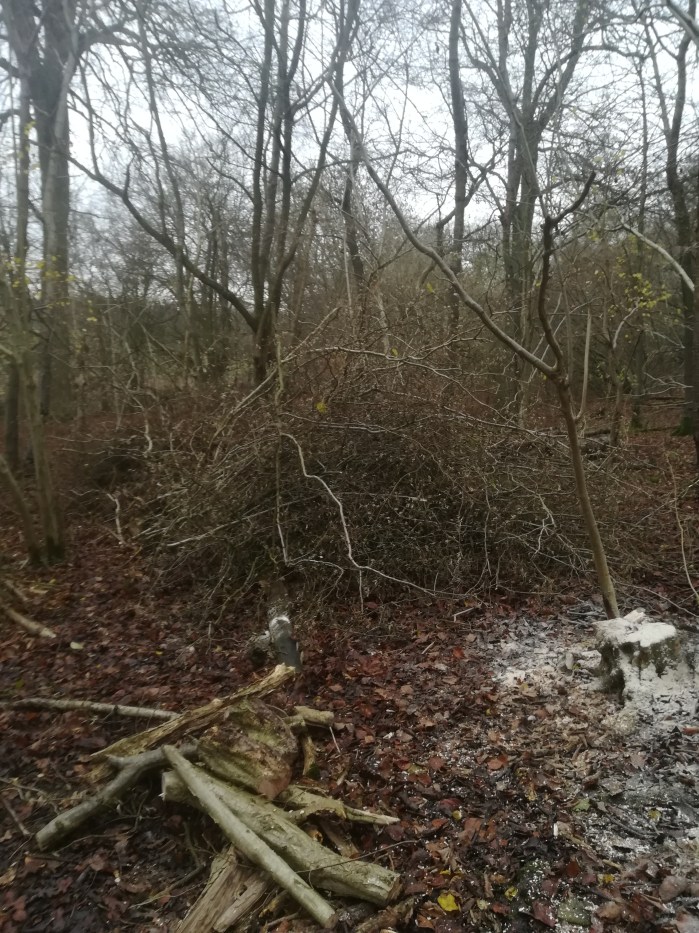
Pile of brash cuttings 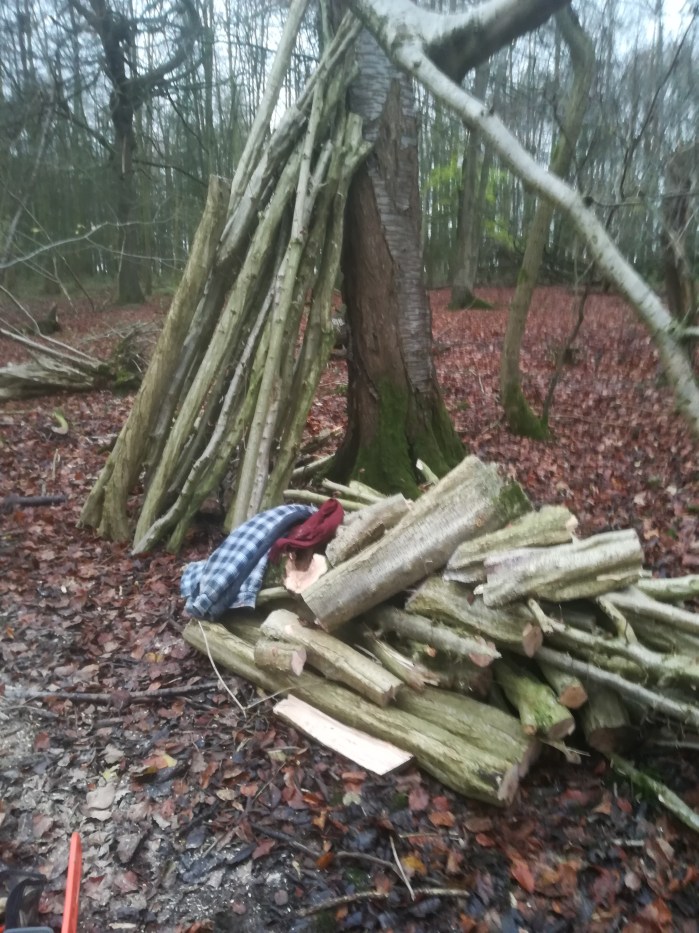
firewood and poles separated out
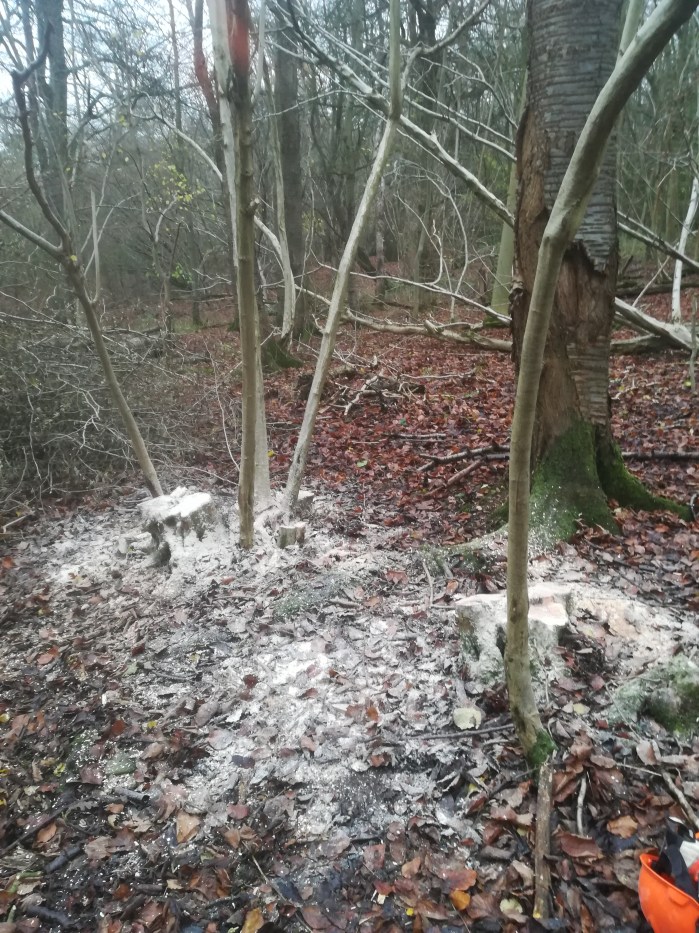
chainsawed stool with retained poles
In order to be able to use the existing stools for layering a few healthy looking stems are retained. These will be partially cut through at the base and then pulled down and pinned to the ground. Ideally where they touch the ground there would be a bud that will go on to grow into a new root for the layered branch. In time this root will be capable of supporting the branch by itself and the layered length will be separated from the parent and a new stool is born. The selection of these poles isn’t a perfect science (well in my case anyway) but the criteria I use is that there needs to be evidence of healthy growth this year and the pole is itself rooted close to ground level on the existing stool.
More next time…………………

 Tim Burr