There are a number of plants that have different devices for ensuring that their seed cases get carried away from the parent plant. Some are very obvious like the teasel with its very clear hooks that get snagged onto passing animals and are transported to a new place to grow. The teasel was also exploited by the croppers in the woollen industry to raise the nap of the unfinished pieces of woollen cloth. The teasels were set in a wooden frame and dragged across the surface of a woven but unfinished piece of cloth. The hooks snagged with the rough surface of the cloth and lifted up the surface so that sharp shears could be used by the skilled croppers to crop the surface to a finer finish.
Another example is the burdock. As a child we used to love throwing what we called “sticky bobs” which are the seed cases from the burdock plant. These are amazingly good at sticking to anything where it can hook on. They are so light that if you toss them gently onto the back of someone’s jumper as they walk along then they don’t notice them building up!

One of the less obvious plants with an ability to stick together is the hazel and its spindly new growth branches. It is many years since any work has been done on the coppice and some of the hazel trees are very mature. Their canopy has become entwined with its neighbouring hazel tree and also stuck into the lower branches of the ash, cherry and hawthorn. What I have found out is just how incredibly resilient these entangled branches are to being separated. In some instances I have cut the main trunk of a limb and the tree has simply swung from its base and hung suspended by its upper branches and their strong entwined grasp of other branches. The harder you pull the tighter the “knot” becomes.
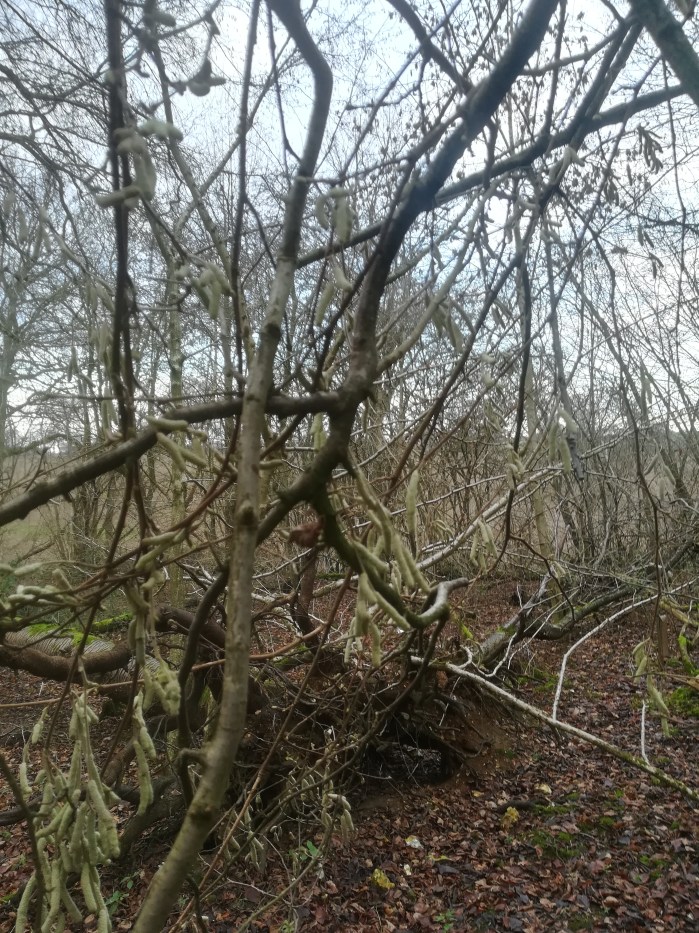
Carrying out the coppice work forces you to take a close look at each of the existing hazel trees as you decide how best to tackle the process. This week I noticed that one of the trees I tackled had a long trailing branch that seemed to link two trees together. A closer look showed that a branch had somehow become laid against the ground, perhaps after being hit by a fallen branch from an adjacent tree. Far from giving up the ghost this branch has put down roots in the middle and has established itself in its new position. I now have the potential for two trees as ling as I can stop the deer from continually nibbling off the fresh growth.
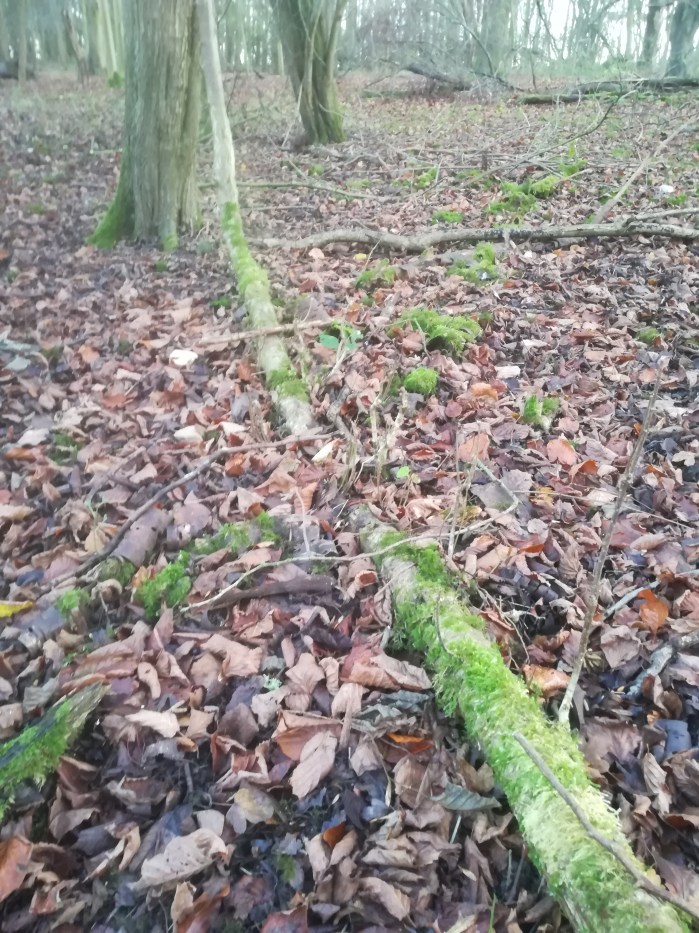
point of contact 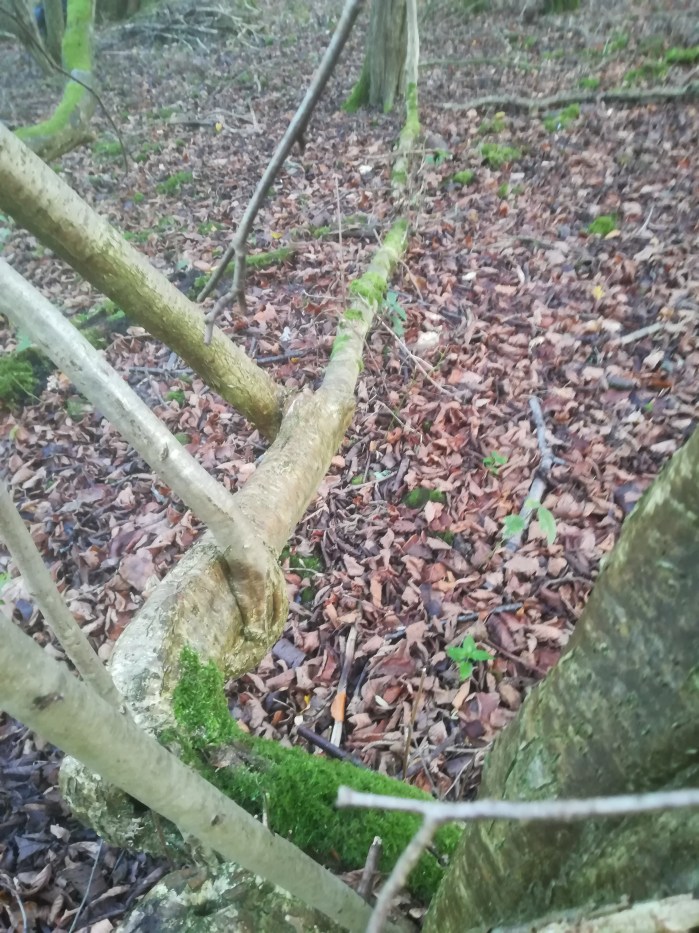
new shoots off the fallen branch 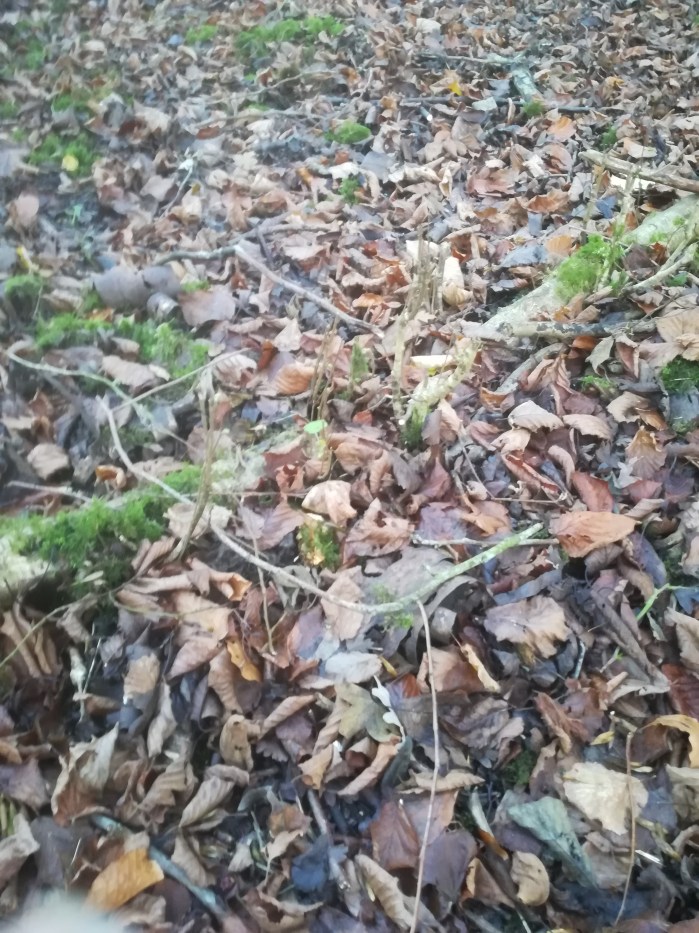
signs of new growth albeit chomped off by the deer!
Hazel is so resilient. It hangs onto other trees to give itself further support and when it does get forced to the ground it simply puts down new roots and carries on. I like the idea of trees walking across a landscape over hundreds of years and this ability to send out existing branches to create a new tree is a winner.
More next time…………

 Tim Burr