The coppicing work in the actual hazel trees within the coppice is virtually complete and so I have now started to take out some of the wild cherry trees. The removal of these trees will reduce the canopy considerably and let the sunlight reach the woodland floor and most importantly reinvigorate the coppiced hazel stumps and help promote healthy regrowth.
According to The Woodland Trust, the spring flowers provide an early source of nectar and pollen for bees, while the cherries are eaten by birds including the blackbird and song thrush, as well as mammals such as the badger, wood mouse, yellow necked mouse and dormouse.
The foliage is the main food plant for caterpillars of many species of moth, including the cherry fruit and cherry bark moths, the orchard ermine, brimstone and short cloaked moth.
In Highland folklore, wild cherry had mysterious qualities, and to encounter one was considered auspicious and fateful.
Traditionally cherries were planted for their fruit and wood, which was used for making cask hoops and vine poles. The sticky resin was thought to promote a good complexion and eyesight, and help to cure coughs.
These days cherry wood is used to make decorative veneers and furniture. The wood is hard, strong and honey-coloured, and can be polished to a good shiny brown colour. The main photograph at the head of this post is a bread board that I made with wild cherry earlier last year. Wild cherry has many cultivars and is a popular ornamental tree in gardens. The wood burns well and produces a sweetly scented smoke, similar to the scent of its flowers. The wild cherry bark is a reddish colour and is remarkably tough and endurable. A feature of the area immediately below a cherry is a range of branches that have fallen and rotted away over the years leaving the “skeleton” of the limb in its bark “clothing” which is largely intact.
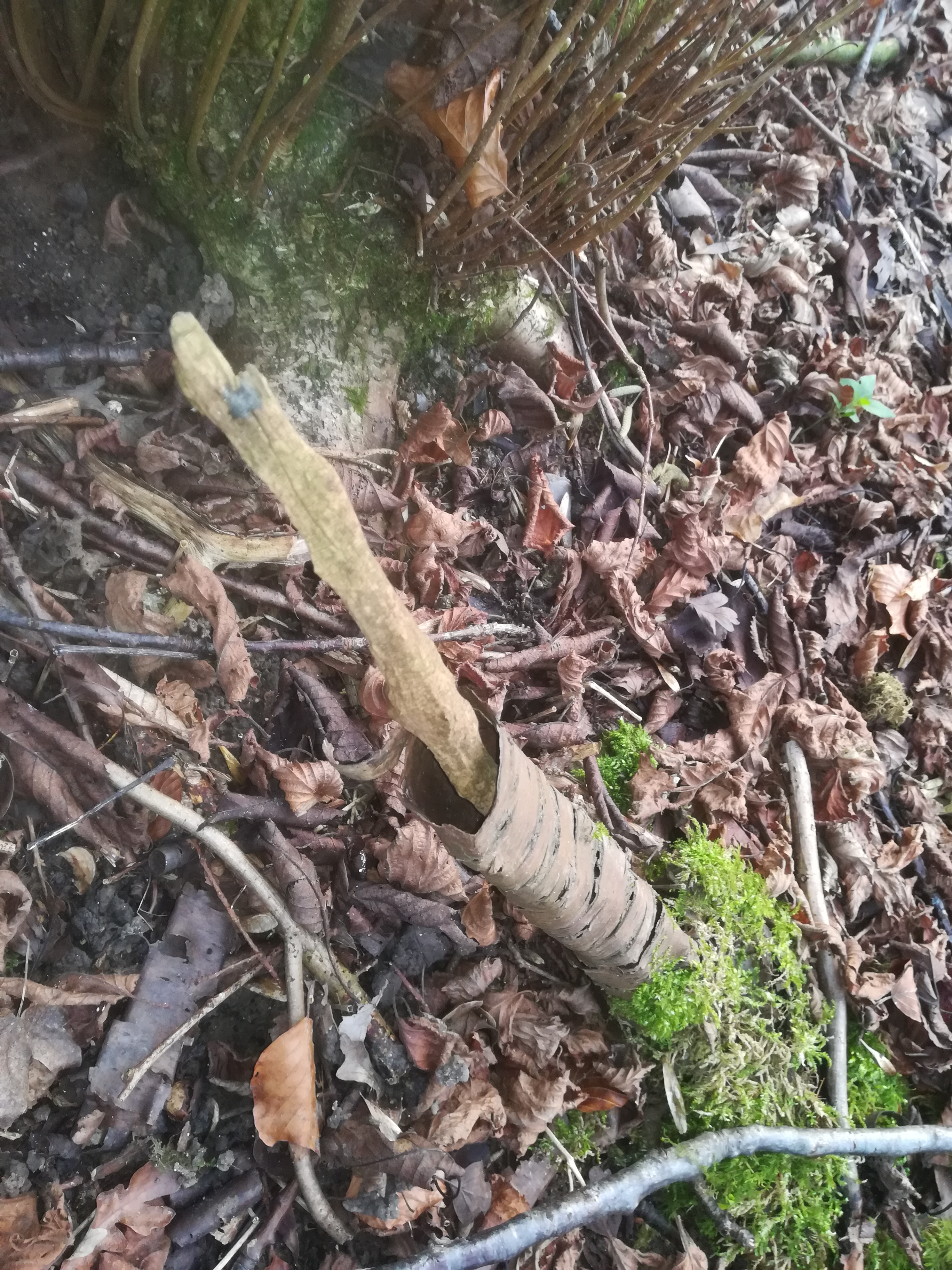
The bark outlives the branch
There are something like six or seven wild cherry trees within the coppice area that I am restoring and these will each have to be taken down and cleared out of the way.
The first of these was felled this week. The cherry trees in Pops Wood have developed very large bases at ground level but that quickly split into two stems. Practically this means that the felling cut is at waist height which is not ideal but does allow each stem to be felled separately and the direction of fall to be better controlled.
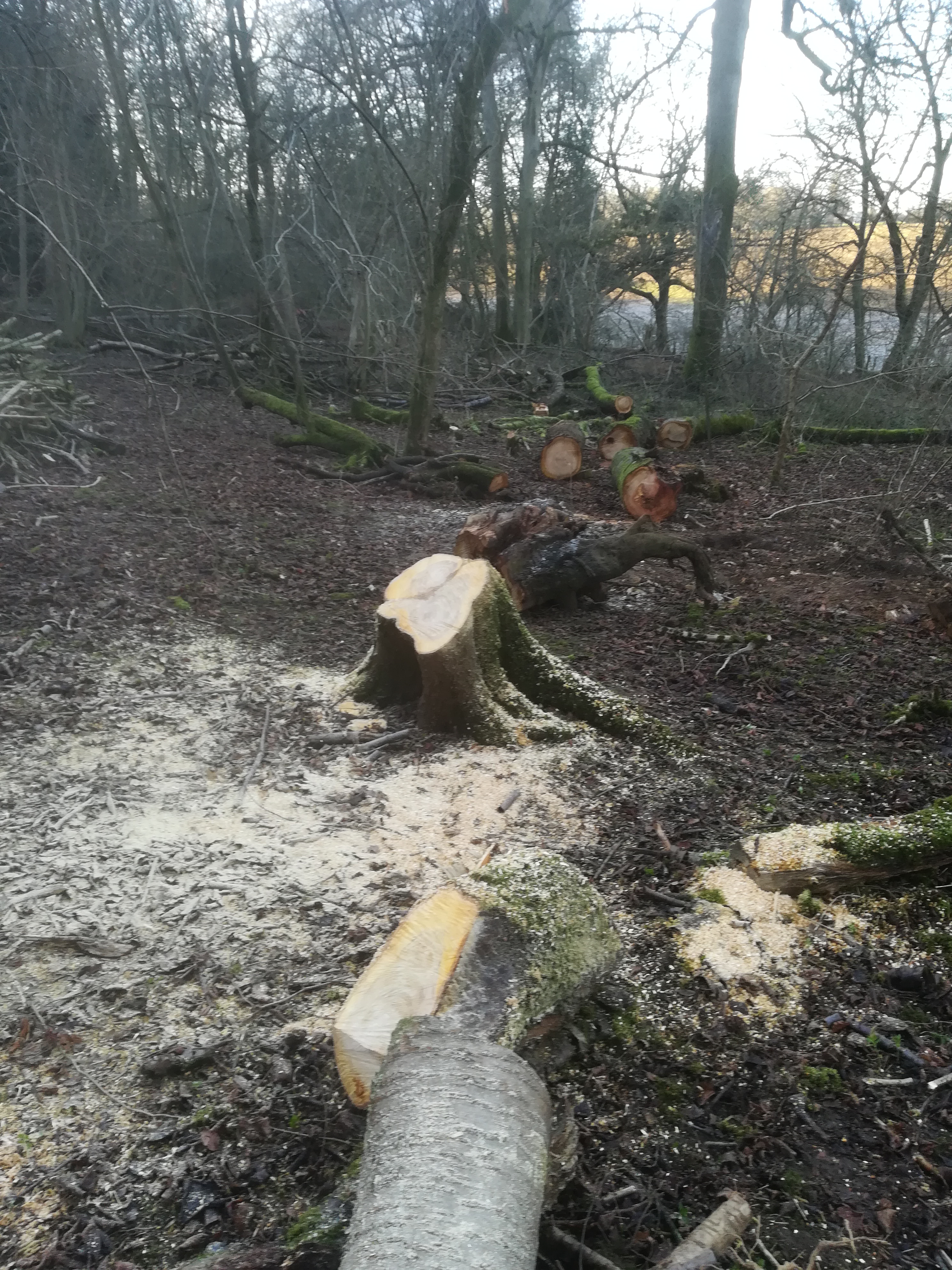
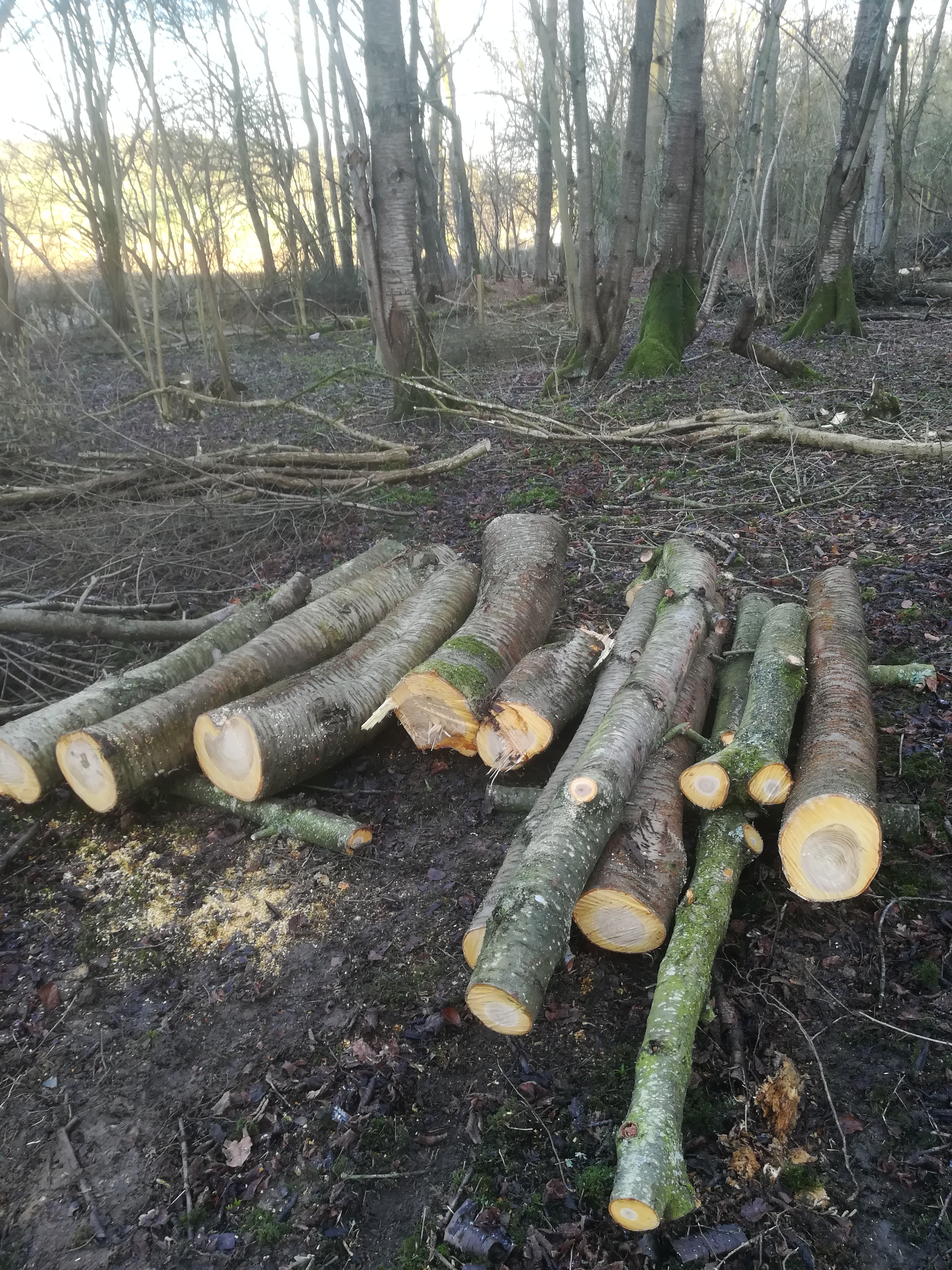
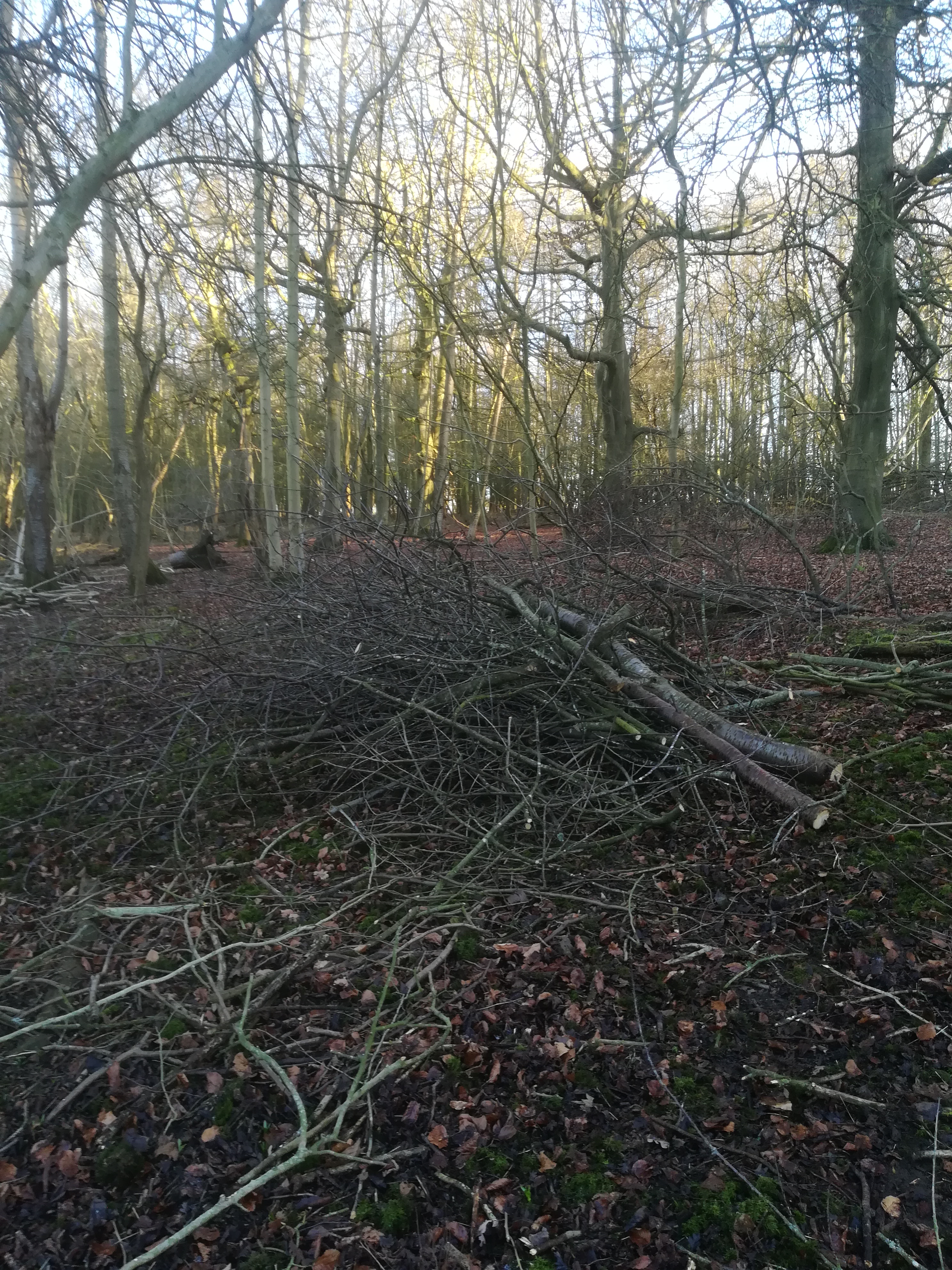
Plenty of wood to process into milled timber and also a great pile of branches that I use to make cherry charcoal. It will be interesting to see how it goes through that process and what a finished cherry charcoal looks and smells like. Will it carry over the fragrance of the cherry blossom as is reported to be the case when it’s burnt conventionally?
More next time……………….

 Tim Burr