This week has been mainly about felling the last few trees that are not going to be part of the restored coppice area. One of the trees that needed to be taken down is a damaged ash tree. In an earlier blog I described how one of the stems of this ash tree had already fallen over and got tangled up in a cherry tree. This is the second limb of that same tree.
However, the base of the tree was not in good shape with a central portion of the trunk rotted away leaving a gap all the way through. Basically there was no room in the trunk to make an orthodox felling cut. This was a worry. In addition a large crack had started to open up from the top of that rotten section and was running vertically upwards in the main trunk. This became obvious as the strong gusts of wind, caught the top of the tree making it rock quite dramatically. More on the strong gusting wind later.
After much wandering and pacing around; looking and thinking, I figured that a simple quick cut through one side of the forked base would remove enough support to allow the tree to hinge on the other side and fall safely. Quite what else it would do on its way down was unknown. Here goes nothing.
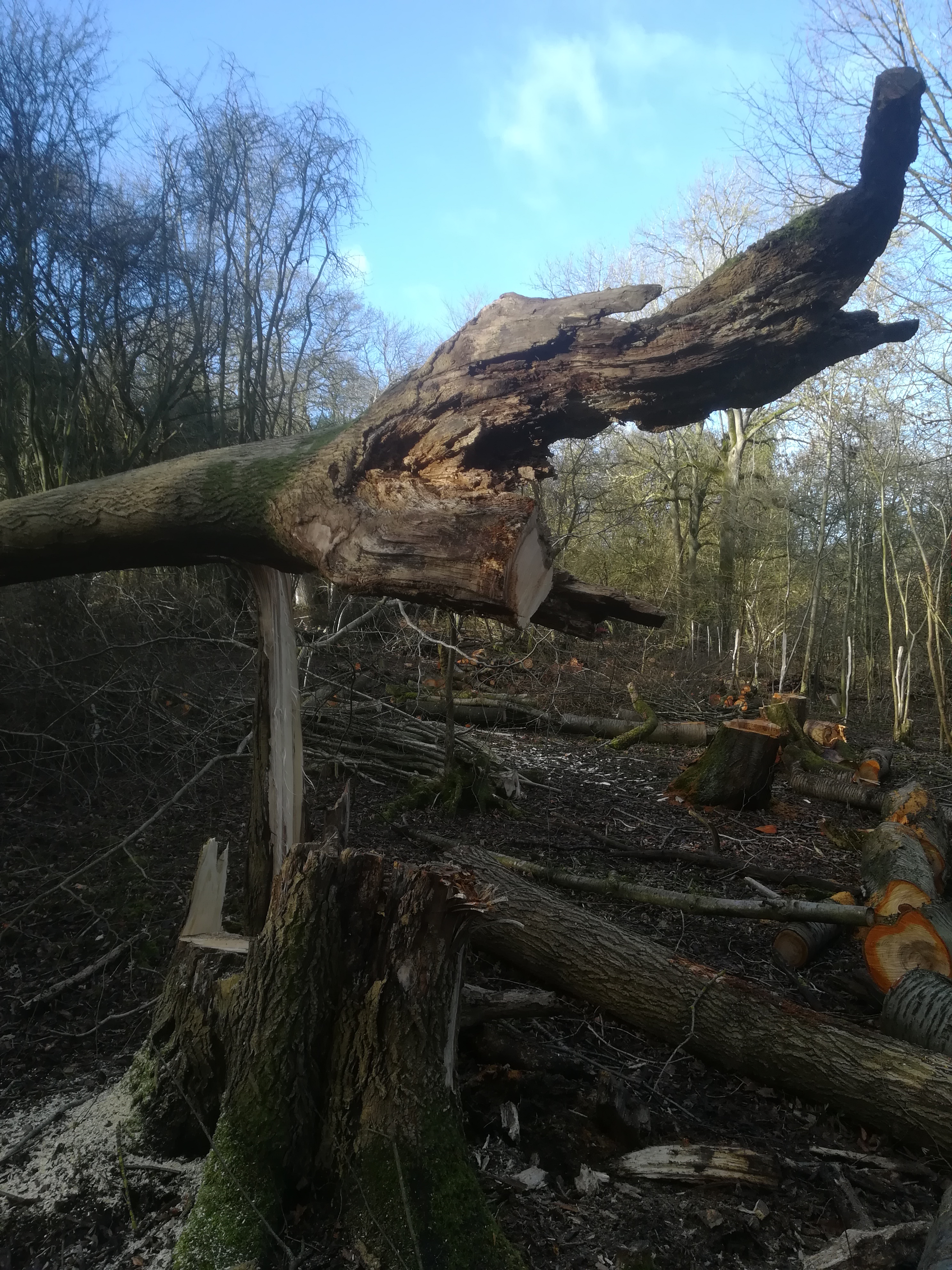
Oooh that isn’t pretty
Ah, so that’s what it did. Not very pretty but at least the main trunk is down. One of my concerns at the outset was as I hadn’t enough room/decent wood to make a conventional “v” notch at the front of the felling cut that the tree would create a “barbers chair” – which is exactly what it did! The extent of the rot can be seen clearly. Still it fell where I had planned.
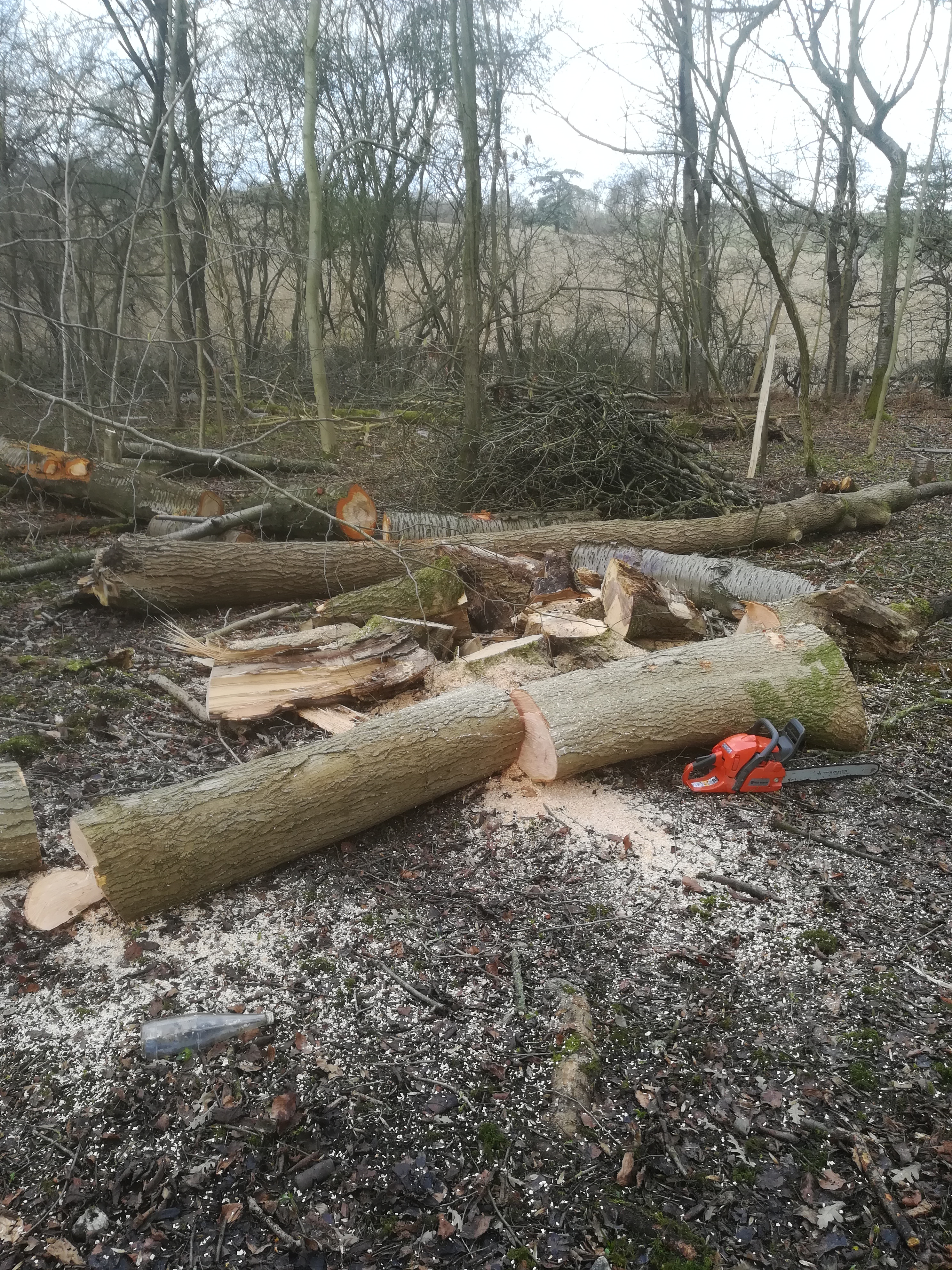
Phew – all safely down and cut up
Once I had trimmed off all the canopy branches and shortened the main trunk it was possible to roll the rest of the stem off its precarious pivot and onto the ground. Once there it was straight forward to cut it up into sections and finish off tidying up the stump itself. I feel much better now this tree has been dealt with. Its creaking in the wind had been an ominous soundtrack to the rest of the work. The bole of the tree itself is that lovely classic pink ash wood colour and I will mill these logs down into useable timber as soon as practicable.
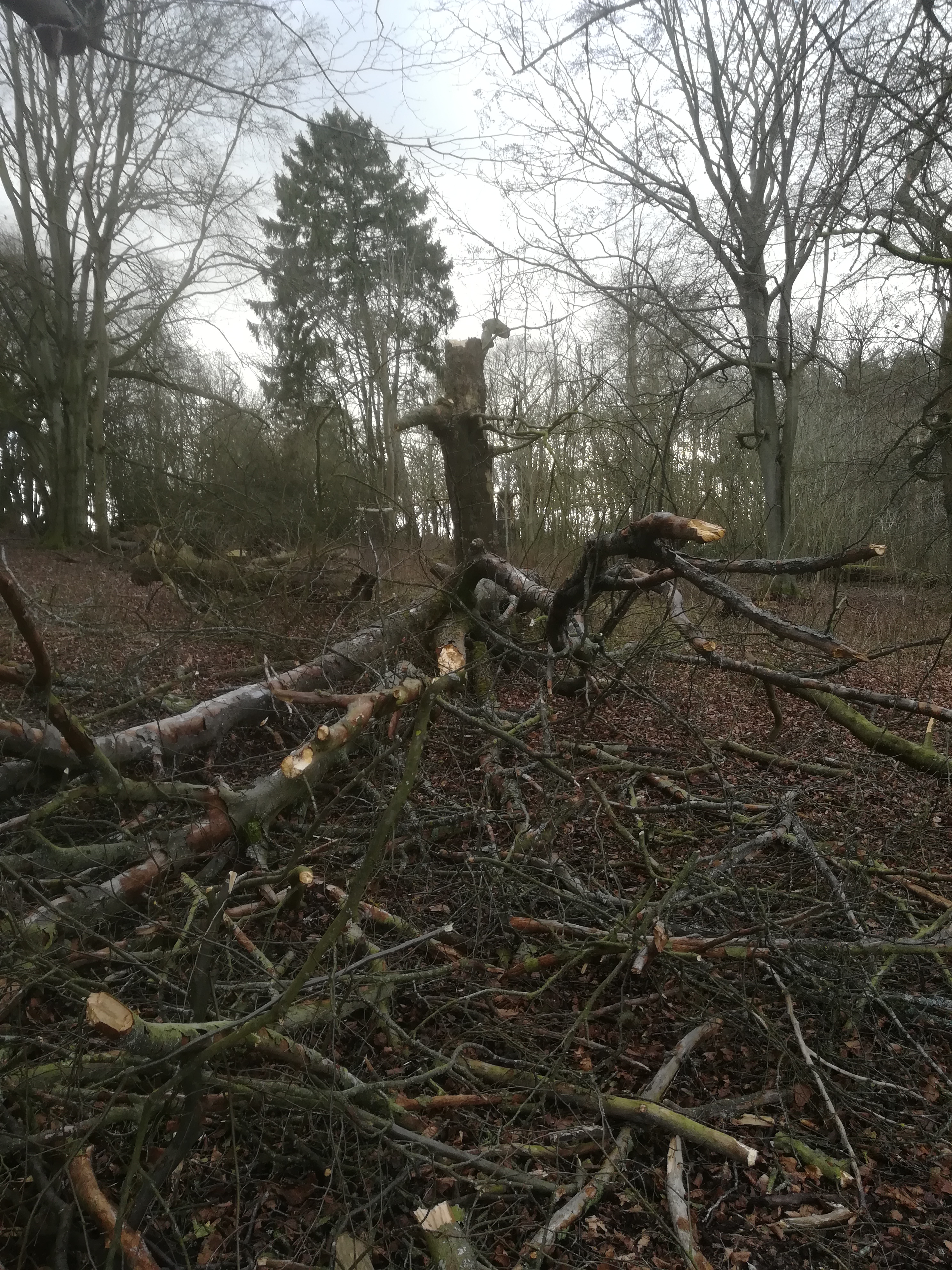
Sadly another beech tree is blown over
Sadly another victim of the strong winds has been one of the standing dead beech trees. This particular tree shed a huge branch a couple of years ago and this week saw the whole thing snap at the top of the stem and come crashing down. I wasn’t there so whether it made a noise – who knows. This is the process that the beech trees seem to follow. The wood is probably at the edge of the chalky conditions that beech prefer and small changes to the ground water makes the roots become too wet and the tree struggles. Once dead they shed a few branches followed by the main trunk. The remaining trunk stands like statue less column until it too succumbs to gravity and falls to the ground. However, each stage of this death and decay offers a perfect opportunity for some aspect of the flora and fauna of the woodland. This is the easiest part of woodland management – do nothing. Just let the process take its course and the whole of the wood benefits.
………having said that I will be processing the fallen branches for making charcoal later in the spring.
Just a final foot note. A couple of weeks ago I included a simple method of estimating where the top of a tree would fall when felled. That is the distance away from the base. I tried this out during the week and was amazed by the accuracy.
The picture below shows a branch on the left had side of the shot showing where I estimated the very top of the tree would reach when felled. the chainsaw is placed at the top of the branch where it actually fell. Not bad and certainly better than making the cut and having no real idea what other trees are in risk of being hit.
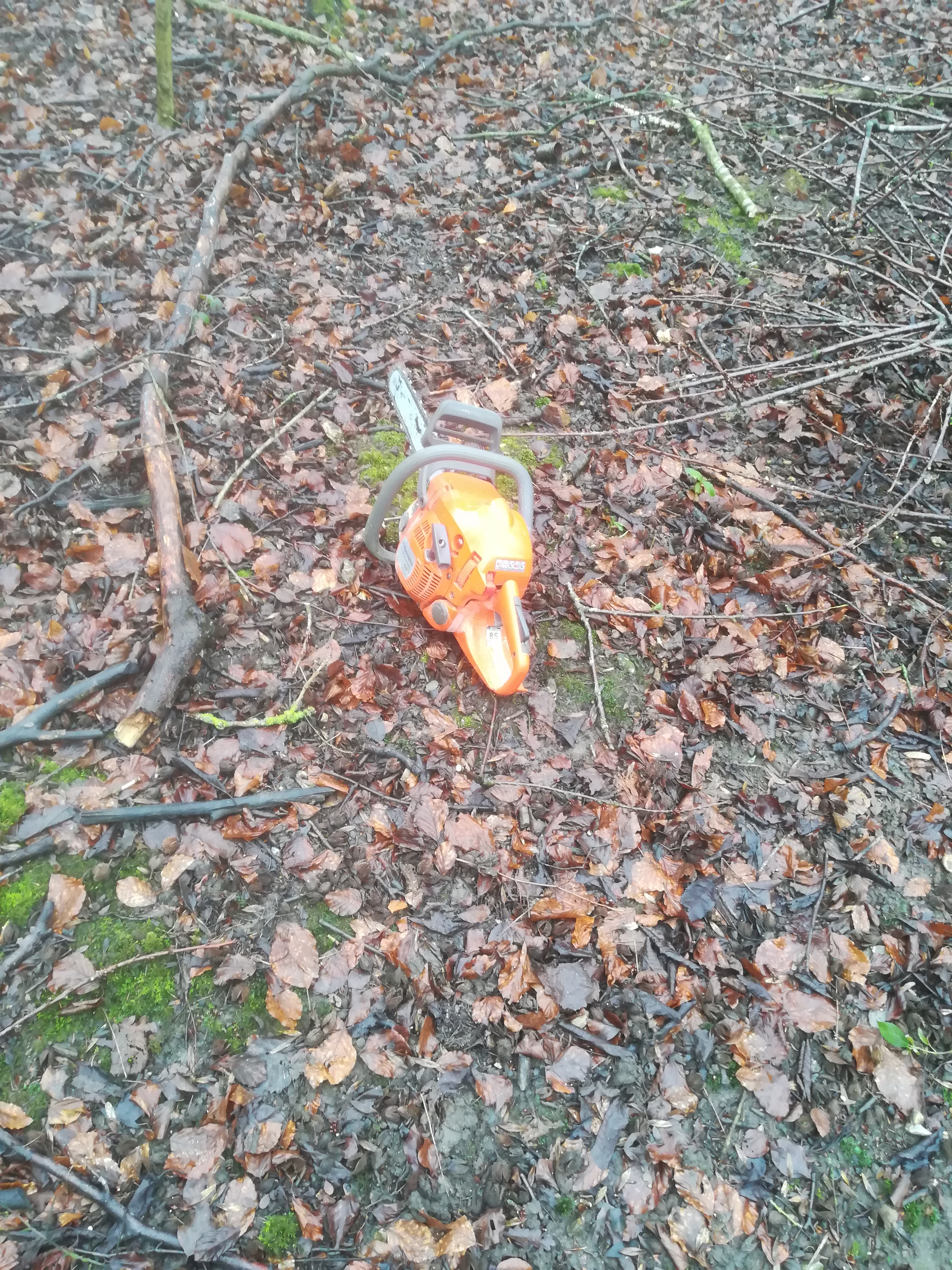
So close to the estimated distance
More next time…………………….

 Tim Burr