The task of shifting all the logs that I have felled continues in order to clear the coppice ready for planting. Up against the time somewhat now as March approaches but I think that we will just be ready in time.
Whilst shifting some ash branches I spotted a lovely piece of lichen wrapped around the stem.
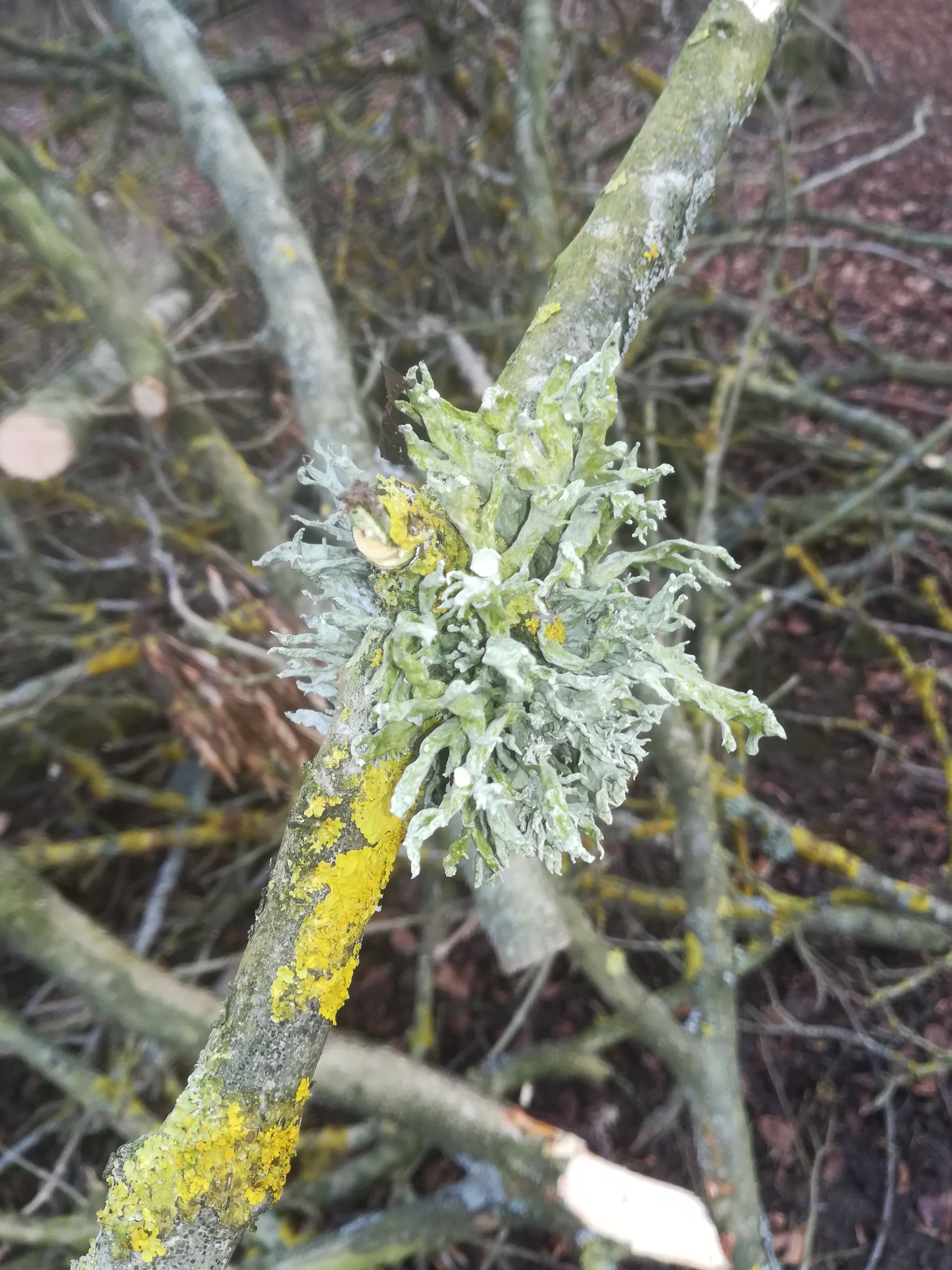
The British Lichen Society has a database which shows that ash trees are the home to in excess of 536 lichens (27.5% of the British lichen flora), these having been recorded by lichenologists. Of these, 220 are Nationally Rare or Nationally Scarce and 84 have a conservation status of near-threatened or above so ash die back is a real concern for lichens. Given that information I don’t think I will be able to accurately identify this particular lichen.
Wow what a lot to understand about lichens.
The following is an extract from the Woodland Trust website.
Lichens are wonderful, complex organisms that should not be overlooked. They can be found growing on trees, rocks, walls and fences, and offer food and shelter to many invertebrates that in turn feed others creatures. They are also used by birds as nesting material.
Woods rich in lichens support more wildlife than others, and ancient woods are particularly important for them.
Lichens are a symbiosis of two partners working together in harmony; one a fungus and one a green alga or cyanobacterium (a type of bacteria that gets its energy from photosynthesis, as does the alga).
The fungus protects the alga or cyanobacterium from harsh external elements by offering it a sheltered home to live in and providing mineral nutrients. In return the alga or cyanobacterium captures the sun’s energy via photosynthesis and creates carbohydrate food that feeds itself and the fungus.
There are four main types of lichen: crusty (crustose); scaly (squamulose); leafy (foliose); and beardy (fruticose). They are sensitive to pollution and can be used as indicators of air quality. Crusty lichens are hardier to pollution, whereas the more delicate beard-like ones are mostly found in cleaner locations and are rarer.
Lichens harbour their own ecosystem. Tiny tardigrades, also called waterbears or moss piglets, are particularly amazing creatures that inhabit moist lichen. They can endure extreme conditions and are the first known animal to have survived the vacuum of space.

How often do we ignore or simply not notice what is right under our noses? But how amazing it is when we stop and ask a couple of questions. The results sometimes can be out of this world.
More next time……………………

 Tim Burr