In order to extend the shelter that houses the sawn wood it seemed a bit odd to be going out to buy some timber rather than use the stuff growing all around.
Anyway what could be more fitting for a felled tree but to be used to protect further timber, how very appropriate.
I had noticed a few fallen scots pine throughout the plantation section of the wood so inspected them for suitability. Unfortunately the softwood timber very rapidly deteriorates if left dead on the ground and none of the sections I looked at were suitable.
I then moved my search a bit closer to the container and spotted a tall scots pine with enough space around it for it to be felled relatively cleanly. There were a couple of ash struggling to get enough light so the removal of this particular tree will open up the canopy a little for them.
The actual cutting of the tree went well with the tree falling in the planned direction which is always a huge relief. However the area at the canopy level was a lot more congested than I had assumed and the tree hung up on some neighbouring branches. In actual fact the tree hadn’t fallen sufficiently to fully break the felling hinge so was well and truly stuck.
The first job then was to weaken the hinge by carefully sawing out the centre leaving two section at the edge for it to pivot on and hopefully break. the next job was to rig up the Tirfor winch and pull the tree off its stump and into the ground. Video below.
Once the tree was free from the stump the next job was to set up the winch to pull the base along and clear the tangled branches from the canopy and allow it to fall to the ground.
Great the tree was now on the ground and safe. Next job, clear all the side branches, snedding, as its known, and then cut the trunk into suitable lengths – 7′ in this case.
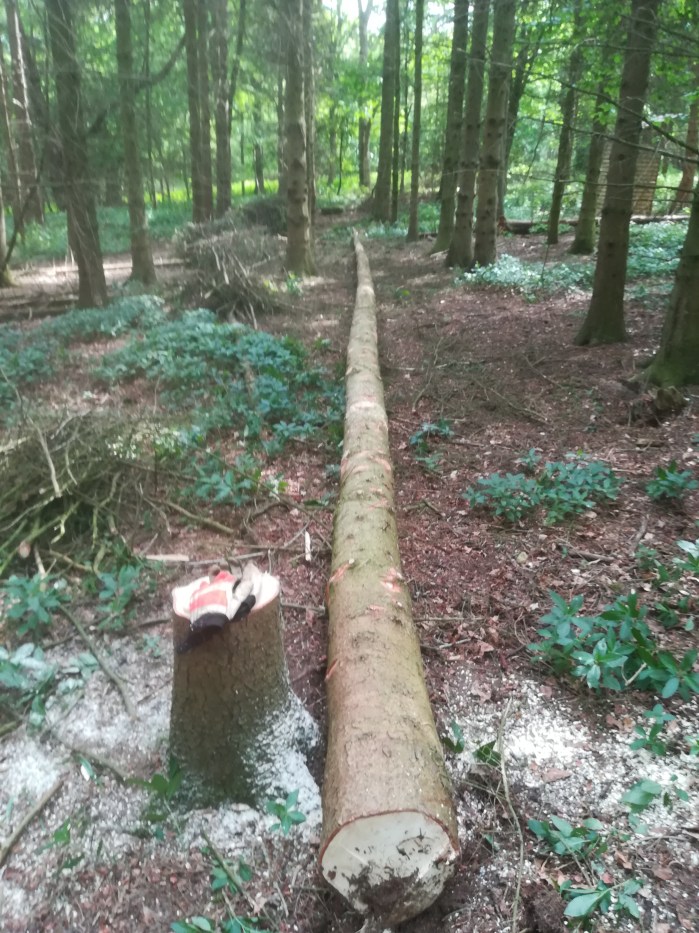
snedding complete 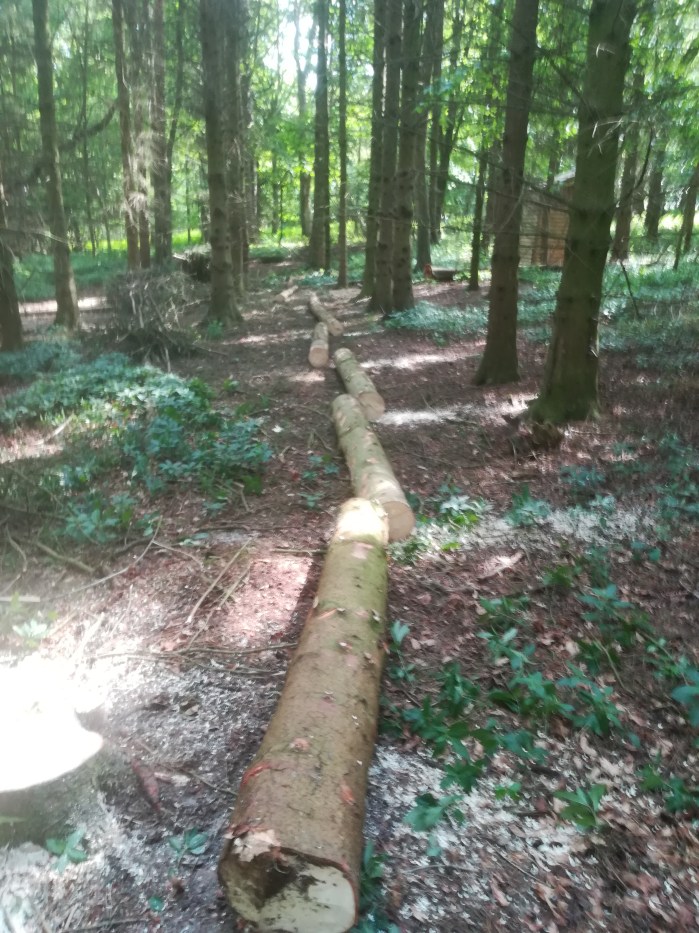
7′ sections
Then transport the logs back to the mill. My approach has always been to try and minimise the impact that I have on the rest of the wood so I haven’t cut out any access paths. I used the bogey trolley for this job as it is very maneuverable and can weave in between the existing trees.
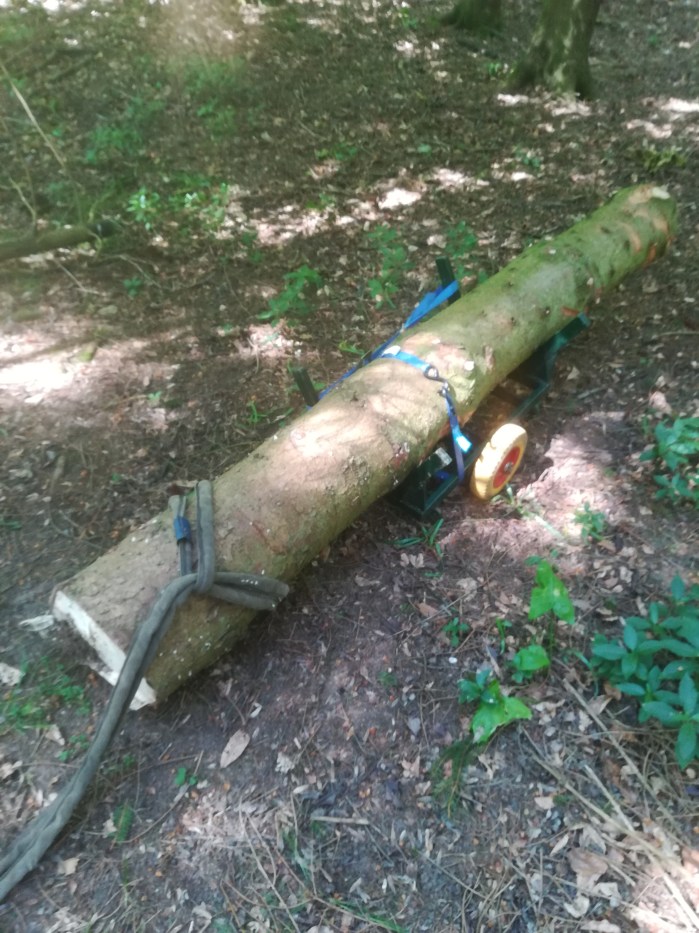
trolley loaded with a log and pulling strap 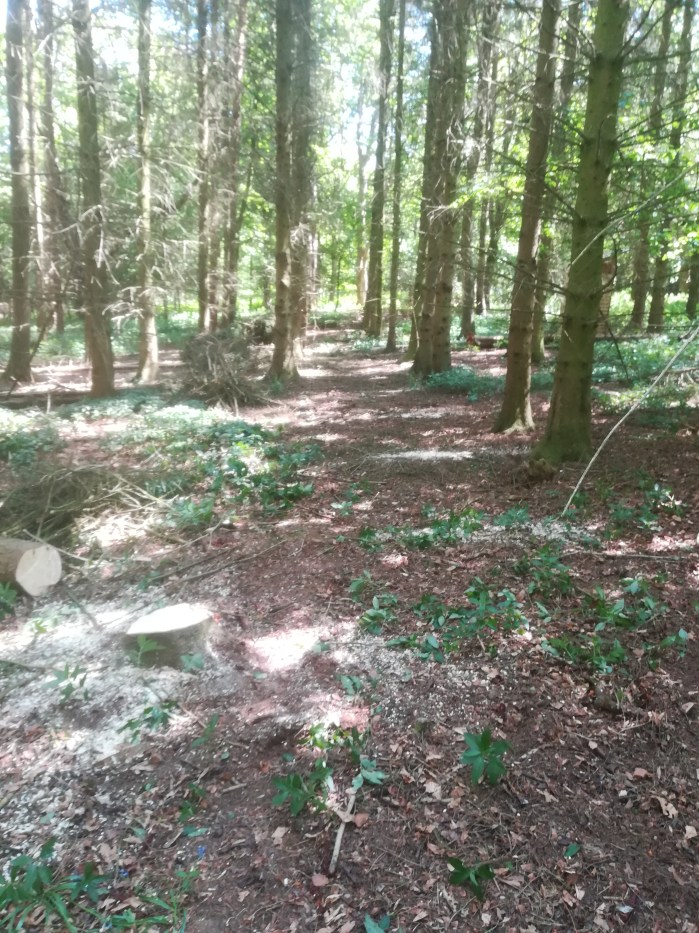
tree completely removed 
log pile next to the mill
I processed the first two logs ie the thickest and next thickest to see what sort of practical dimensions of timber I could generate. I was very pleased to end up with 9 x 7′ lengths of 2″ x 3″ and a lot of waney edged pieces that will work well to clad the framework of the timber shed.
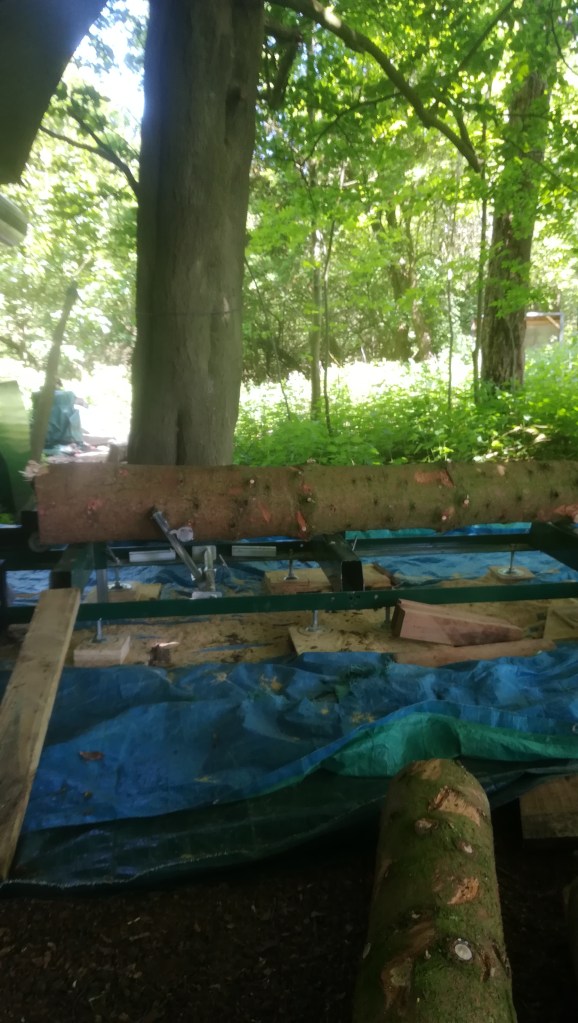
log loaded on the mill 
some useful pieces 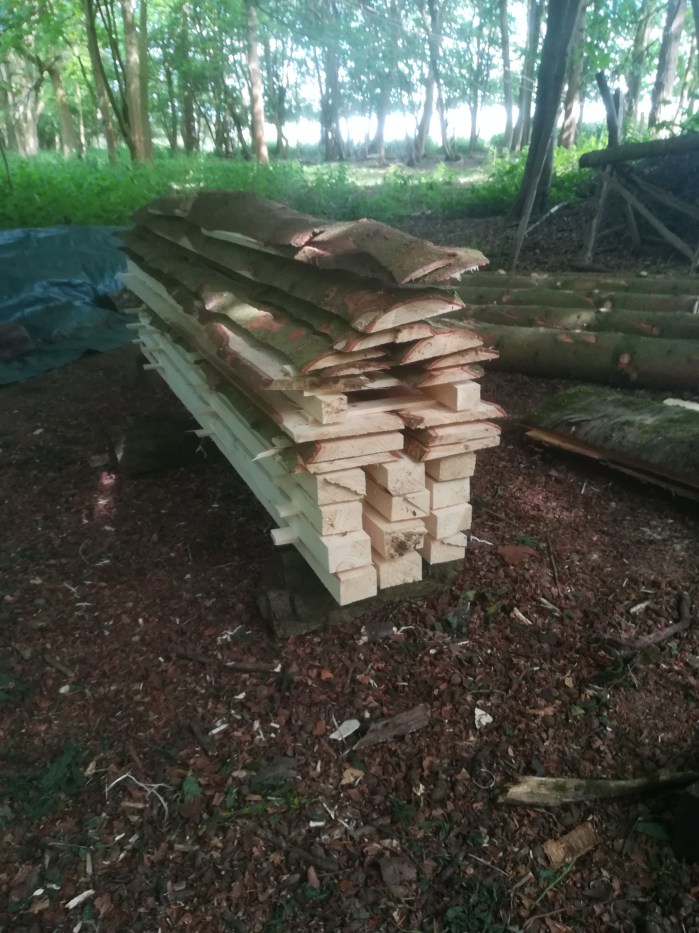
finished timber
Really satisfying day. I don’t know who was more surprised; me or the tree with the way that it worked out.
More next time……………….

 Tim Burr