Plotting a coupe

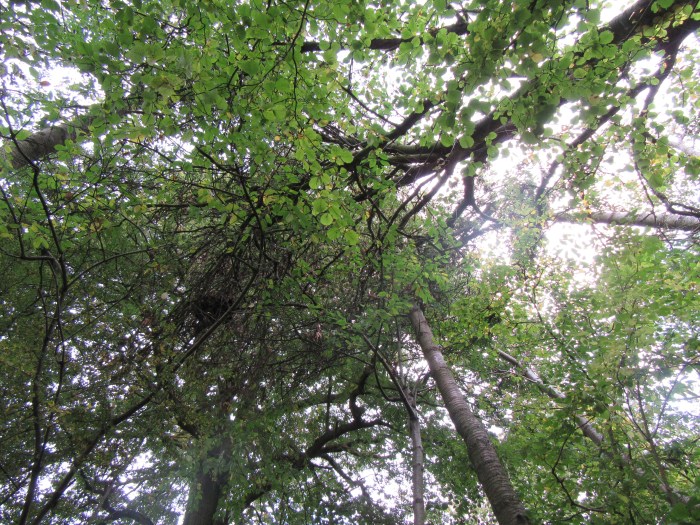
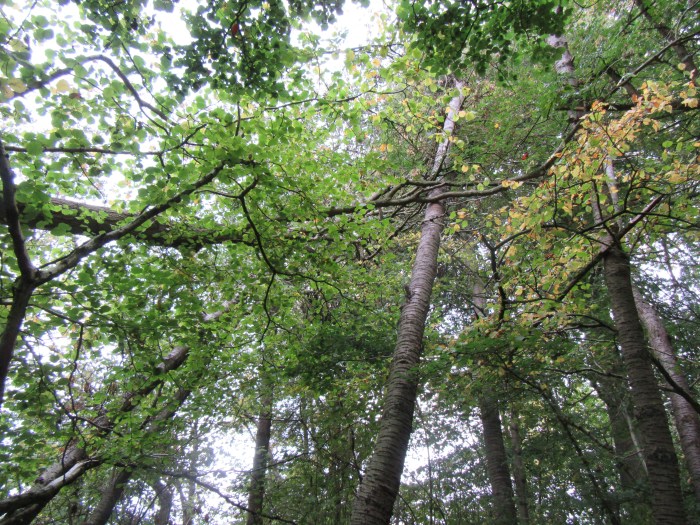
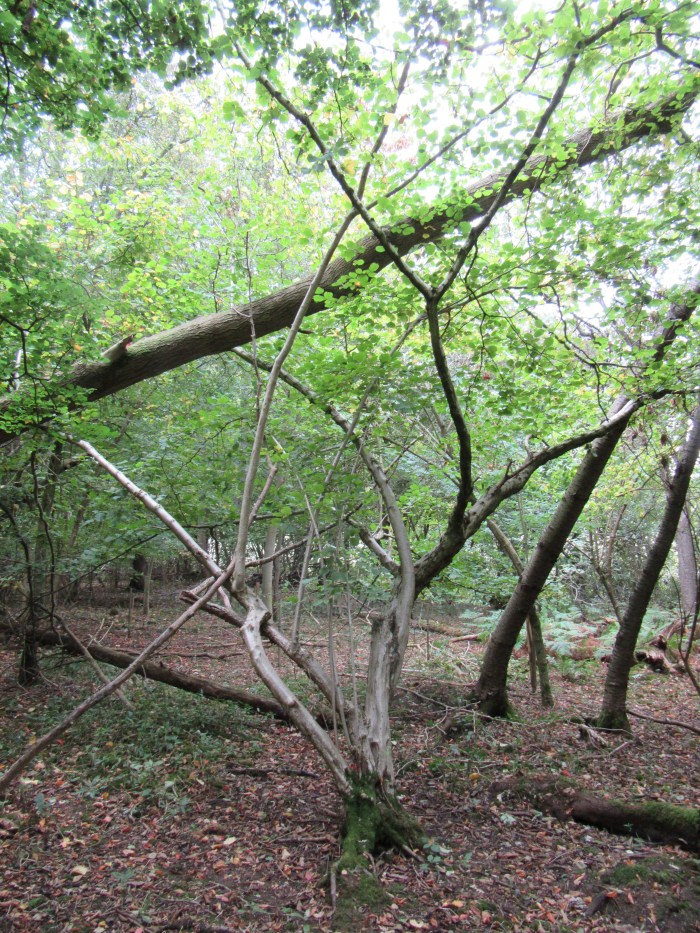
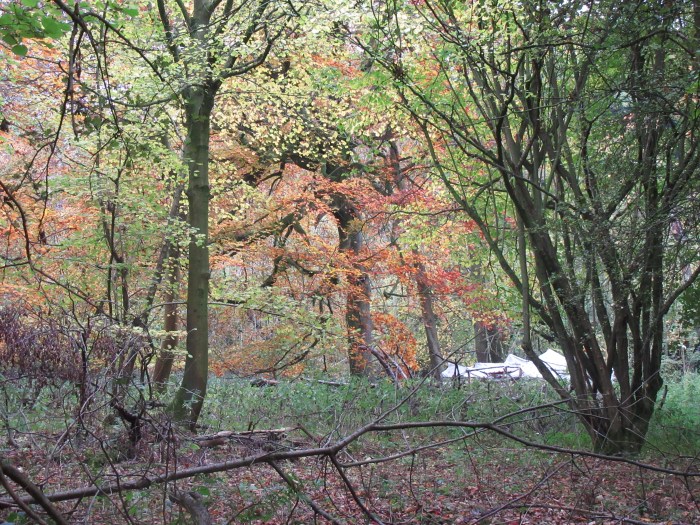
The coppice season is here and now is the time to plot out how best to create, or perhaps more accurately re-create, Pop’s wood first hazel coupe. Pop’s wood has various different sections where one particular tree species dominates but at the bottom of the wood, where the hazel is most populace, there is a real tussle for dominance. The larger trees including ash, oak and wild cherry have outgrown the shorter trees like hazel, field maple and hawthorn and are now beginning to shade them out.

The major part of re-establishing the hazel coppice is to remove the greater part of the canopy and let the sunlight and rainfall reach the coppiced stumps. Each hazel coppice is separated into a number of compartments or coupes. Typically each of these would be at least 0.25 acres in area and there would be the same number of coupes as the cycle of coppicing. So if the coppicing was to be carried out every 7 years there would ideally be 7 coupes. The thinking here is that each stage of a coppice’s lifecycle provides ideal habitat for a number of animals and birds. If the coupes are situated close to each other then as each coupe is coppiced it is likely that an ideal alternative coupe for the animals to move to is available nearby. One of the first jobs is to walk amongst the existing trees and try and assess where best to set the boundaries for the first new coupe.
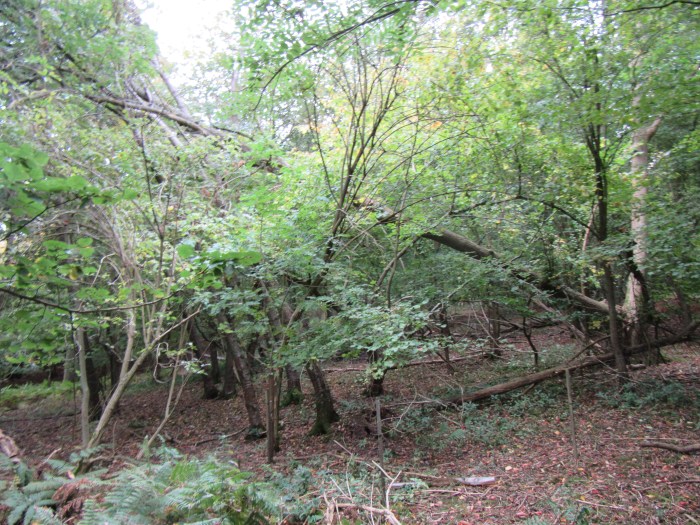
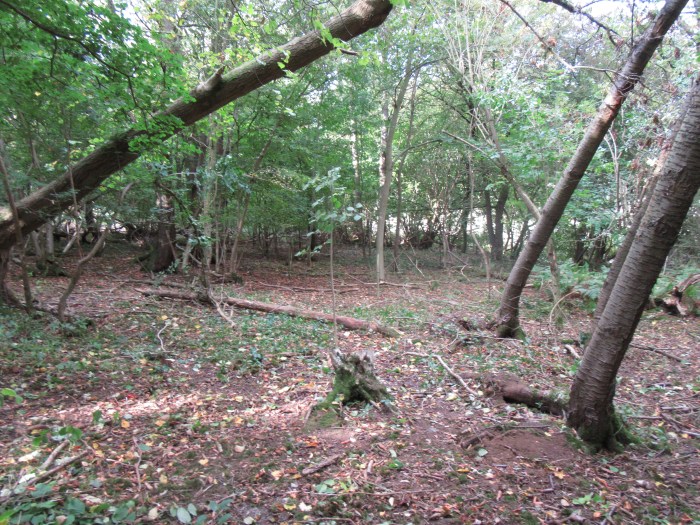
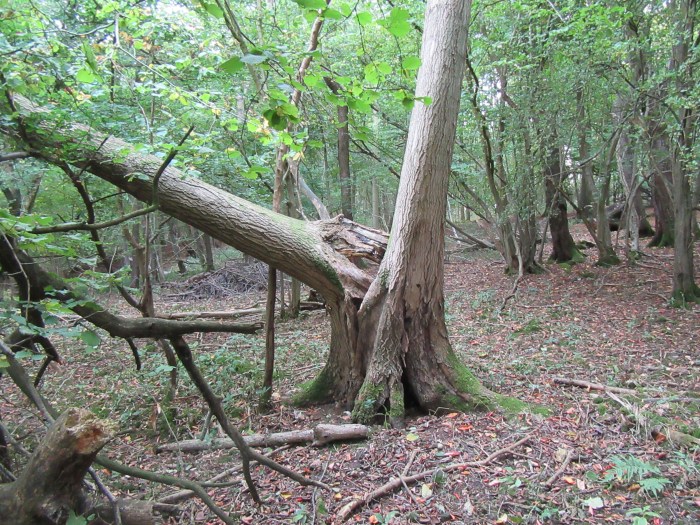
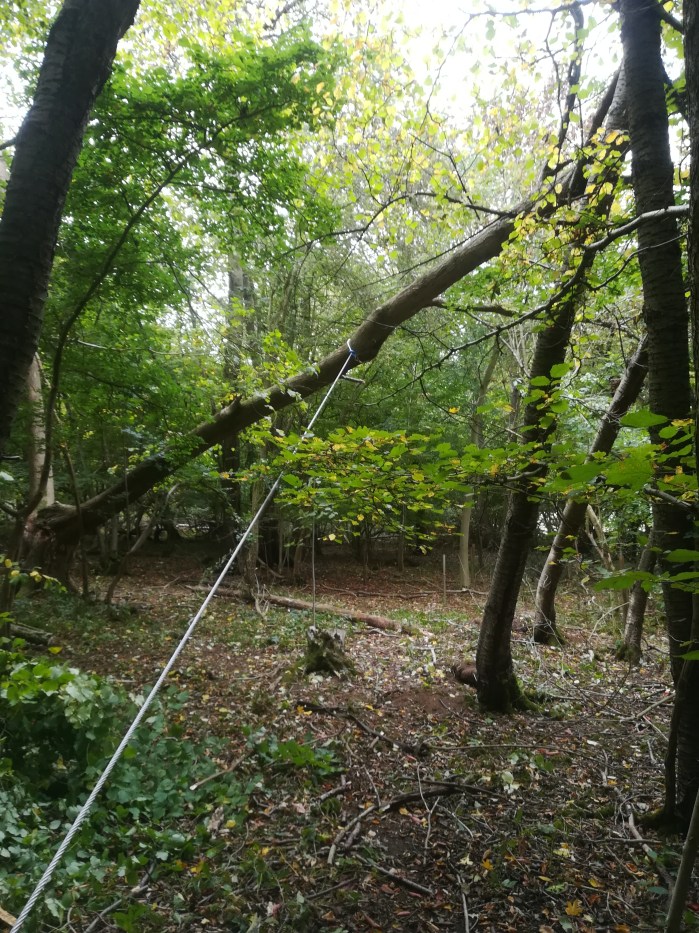
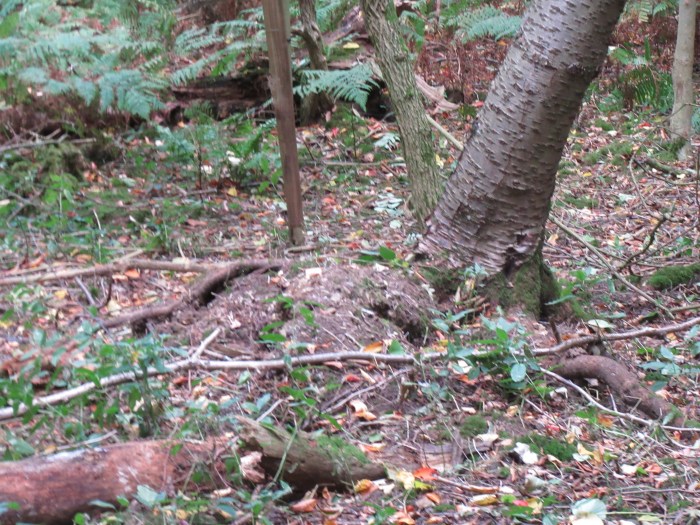
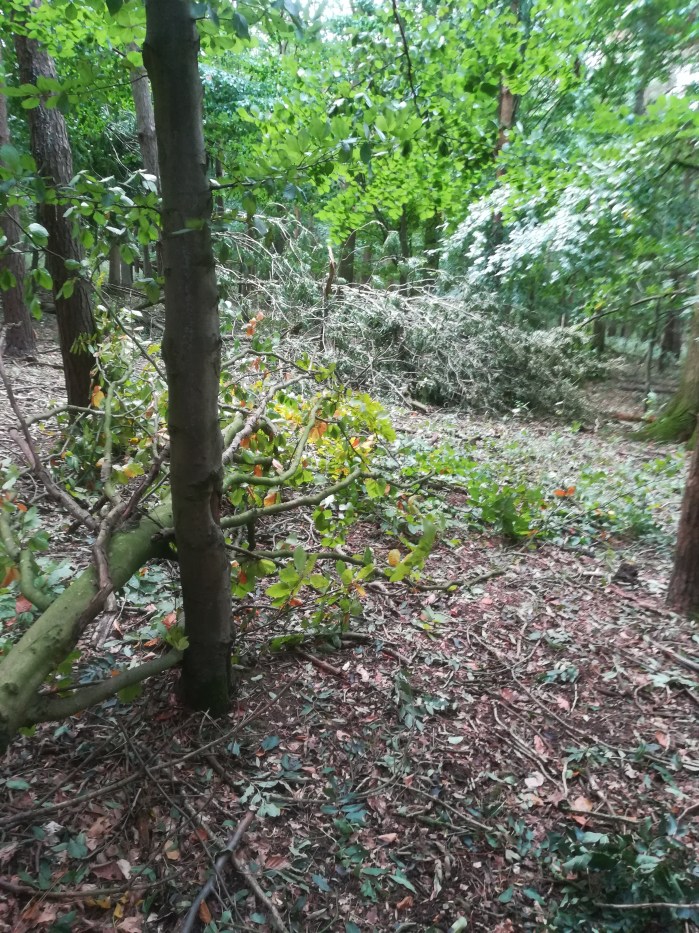
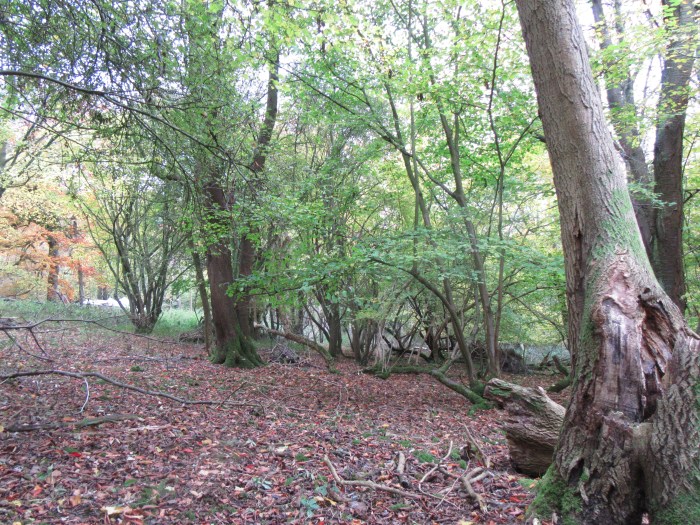
IMG_0772 As the picture above shows there’s a lot of sense to be made of the existing trees and the initial effect will be quite startling!

I have identified and marked out an oblong footprint measuring approx. 100ft wide by 120ft long. This is as near as makes no difference 0.25 acre so is a good start. The next job has been to identify how many viable hazel trees there are currently within that patch. The total is not very high as it came out to be 21. Assuming that each of these existing stools will be capable of layering say a further 3 hazel trees each then that total is pushed up to 63 ish.

For an ideal coppice the distance between each hazel stool/tree should be 2.5m which means that the planned density of plants is about 150 – 200! So a bit of a shortfall then.

There are a number of ways of tackling this shortfall:

  • buy in an appropriate number of new plants and get them into the ground and growing straight after coppicing and layering the existing stools;
  • take a load of hardwood cuttings from the existing trees before they are coppiced and plant them in the nursery for planting on in the coppice when they have become established (takes two years);
  • wait until the freshly coppiced stools have put up new shoots and then carry out a further coppice/layering exercise and increase the density again (probably in two years time).

I guess like most problems the solution will be a combination of all the above and some more options that develop along the way. No need to leap at the first idea I don’t think. However it strikes me as sensible to take cuttings and set up a separate nursery anyway as that way I can be preparing the restocking requirements for the next coupe in a couple of years time.

Anyway back to the list of things to do which currently looks like this:

  • set out the coupe area
  • carry out tree survey and identify viable hazel stools
  • identify those trees that are going to have to be felled
  • identify any larger trees that are going to be grown alongside the coppice as “standards” (these are trees with a reasonably straight and clear stem that can be grown amongst the coppice for timber without shading out the hazel beneath)
  • complete the coppice but leave the layering stems upright
  • fell the trees and clear the timber
  • complete the low level cutting of the stools and layering
  • fence off the area to provide protection against the deer, badgers and deer using split hazel poles where suitable
  • sit back and wait for things to take their course periodically checking the integrity of the fencing

Simples.

More next time……………………..



Grown in Britain

Did you know that Monday 8th October was the start of Grown in Britain week? What is Grown in Britain? It was launched in 2014 as an independent, not for profit organisation to support UK woodlands and assure woodland and timber products through its licensing scheme. Its a bit like the red tractor logo only for woodland products.

Its aims are to increase demand and visibility of homegrown timber. It also aims to stimulate supply and increase management of the UK’s woods and promote stewardship of our woodlands. Since its inception it has seen more than a million tonnes of accredited timber put into the supply chain!

The UK is the second biggest importer of wood after China. Whilst we don’t have the capacity to be self sufficient in homegrown timber there is capacity amongst the currently unmanaged woodlands to boost the supply of homegrown timber and so reduce the imports and benefit the local economy.

This should make sense in terms of making the most of what we currently have but also has an additional benefit that the carbon footprint of locally grown timber is a fraction of that imported from overseas. Public perception of where timber comes from is sometimes way off the mark. Who knew that we import “British” oak from Canada and Romania for example?

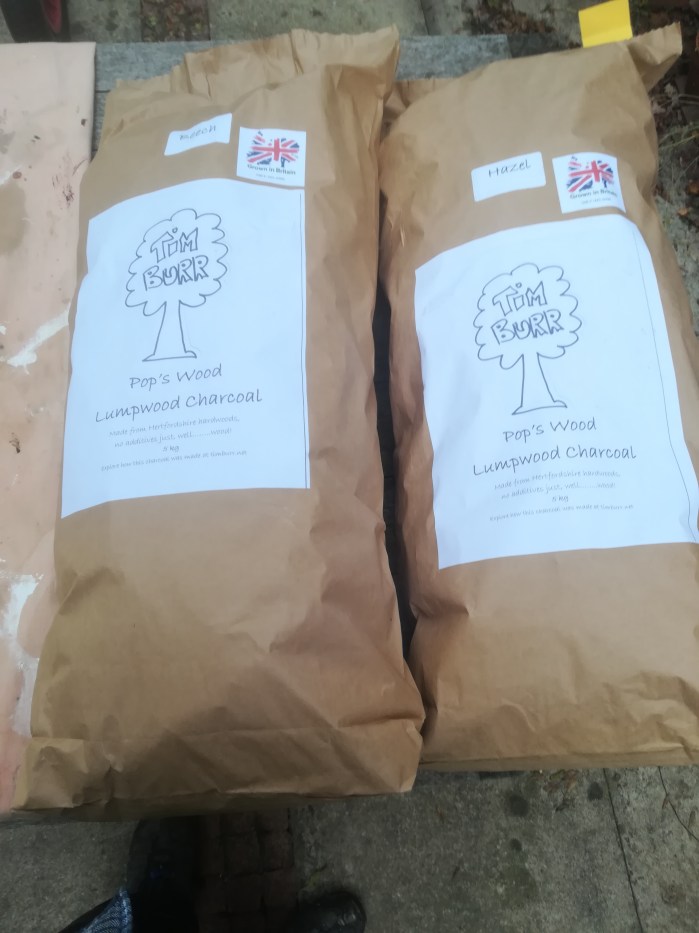
So I thought that it would be good to get accreditation for the products that come from Pop’s Wood and I am happy to say that I now registered with Grown in Britain and can use the logo on my products.

dav Next year I will be adding sawn planks onto the products list. These will include wild cherry planking, some turkey oak and some spalted beech.
It is odd but the simple addition of a logo does actually seem to raise the credibility of the product. I think that Grown in Britain have created a very useful and positive impetus behind making the most of our woodlands. This has always been the intention of my buying and working in Pop’s Wood; to see whether the wood could be gently brought back into being productive without losing the magical, natural feel of the place itself. Some way to go yet but another piece of the jigsaw maybe has just gone into place.

More next time……………………..

What goes down must come up!

Just when you expect a tree to come down it actually goes up! This was the chain of events that resulted in the fallen ash to first of all fall to the ground and then Lazarus like rise again.

The first stage of dropping the fallen ash that had become snagged on surrounding trees was to free the base of the tree that had formed a hinge on its original stump.

My apologies for the shaky camera work, I found to hard to hold the phone and work the Tirfor winch.
So the trunk was now safely down on the ground.

dav

The next task was to attach the winch cable and “pull” the trunk along the ground and free the top end and its entangled branches out of the neighbouring trees and let it all fall to the ground. So with the winch attached I started to apply tension …..


…..the freshly fallen base started to rise again. This wasn’t the ash defying the laws of gravity but rather a demonstration of how stuck the top branches were and how the only way for the tree to react as the tension was applied was for the base to rise.

Nearing the point of collapse

As can be seen by the picture above, the base reached a significant height and had been pulled back towards the winch by some 3 feet or so. Just as I was wondering whether I was inadvertently creating the world’s largest bow and arrow there was a very satisfying “crack” and the top branches came free as the wild cherry stem finally split under the load.

Here are two videos of the “before” ie just after the tree finally fell; and the “after” which is the tidied up site.

Before……


and after………..


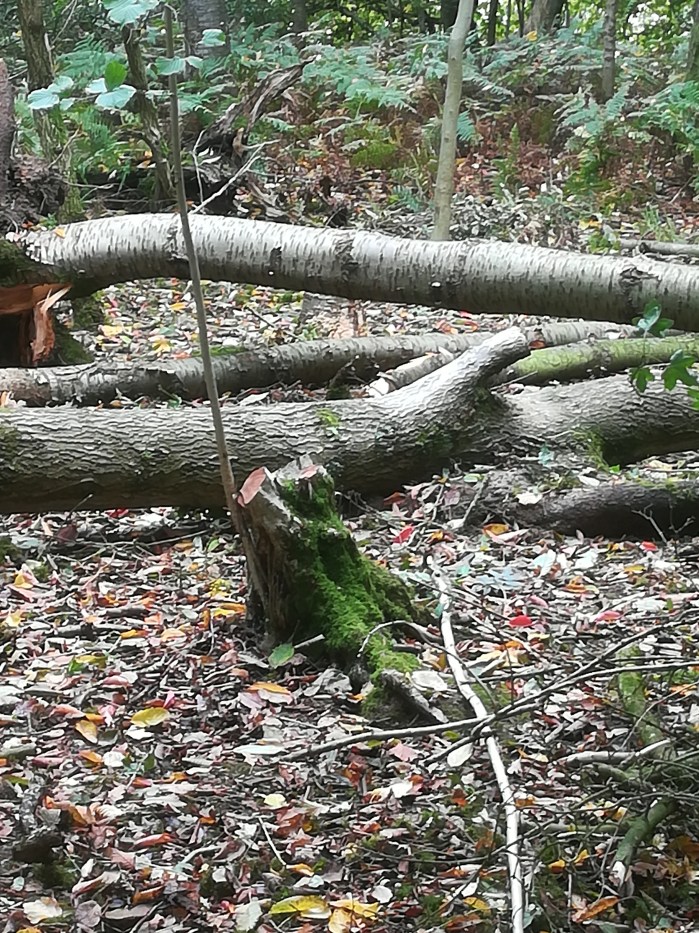
All the various species of trees (ash, wild cherry, elder, hazel and field maple) that were entangled in the wreckage are now sawn into manageable chunks and in separate piles. May seem a bit fussy but it is an important step when aiming to make single species charcoal.

Just the main trunks of the ash and cherry to process now. I’m rather hoping to mill the ash into useable timber at some stage.

More next time……………….

PS I am happy to report that the hazel directly underneath the fallen ash survived the process and will become part of the first coppice coupe later this autumn.

dig

Ash down but not down

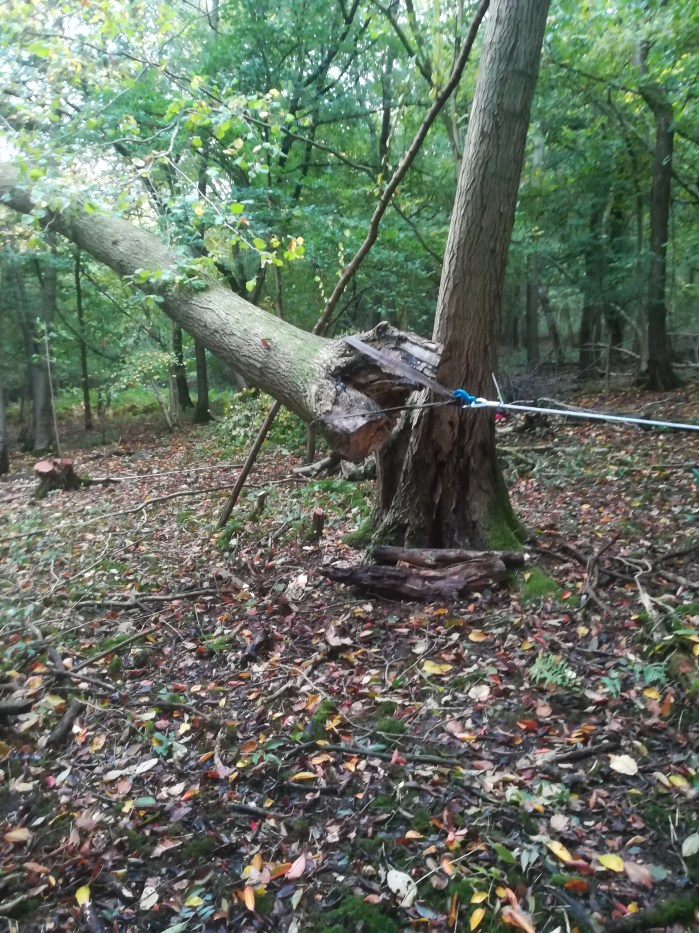
Some work this week on the fallen ash tree that is snagged up on another tree. I initially thought that it was stuck on a large neighbouring turkey oak but a closer inspection shows that it is actually entangled in three separate wild cherry trees.

IMG_0747
entangled with a cherry
IMG_0746
snagged on main trunk of a cherry

I also noticed that there was a healthy hazel tree stuck underneath the tree which would very likely be ripped out of the ground once the main ash trunk fell. So the first job was to coppice the hazel and ensure that it would survive the felling of the ash tree and be a part of the restored hazel coppice. There are very few surviving stools so I can ill afford to lose any. Here are the before and after shots.

IMG_0748
Before – branches likely to be broken and the stool damaged
IMG_0751
After – stool taken down, one shoot left to use for layering if possible. Note the mad lean on the two cherry trees

The stool will need to be taken down even closer to the ground before the spring but for now it is fine. I have optimistically left one thin stem and will try to layer this as part of the later work. This layering will involve partially cutting the stem and bending it onto the ground and pinning it down. Here the buds sensing that they are under the soil should become roots and eventually become a self sustained plant.

The base of the fallen ash is still attached to the main root by a thin hinge of wood and looks very precarious.

IMG_0745
Fallen stem “hinged” to the main tree

However, the strength that is retained within an apparently slender hinge of wood is astonishing.

dav
1.6 tonne winch on the main stem

Even with the leverage of the winch cable half way up the main stem there was absolutely no movement in the hinge. Rather optimistically, it now proves, I was hoping that there would be some give at the hinge. I imagined that the turning force would tear through the remaining stands and that I could at least get that end on the ground. But despite the 1.6 tonne pulling force and the mechanical advantage – nothing happened. I think this was mainly due to the top end of the tree being laterally constrained by the trees it was snagged on so preventing anything but the slightest twisting action at the hinge end. However pulling the trunk did pull one of the cherry trees further out of the ground. This is not a great loss as I was intending to remove these as part of the coppice work anyway.

IMG_0753
Cherry tree being pulled out by its roots!

And still the ash hung on there. Ran out of time during the week so will come back and finish the job later on. Who knows, with the remnants of storm Callum and the forecast high wind the situation may alter all by itself.

More next time.


Gone with the wind and a wooden letter

During the recent strong winds there have been a few casualties in Pop’s Wood. If there are any weaknesses in the trees then the wind is pretty ruthless at finding them out and bringing them down. I guess that isn’t necessarily a bad thing. The tree had a problem and although the wind is a very crude form of tree surgery, nevertheless, the weaker limb is now down and the tree is less vulnerable. The problem is that the falling limbs, it seems, rarely come down on their own but often take out branches from neighbouring and otherwise healthy trees. So it has been for a couple of more serious fallers this last month.
dav

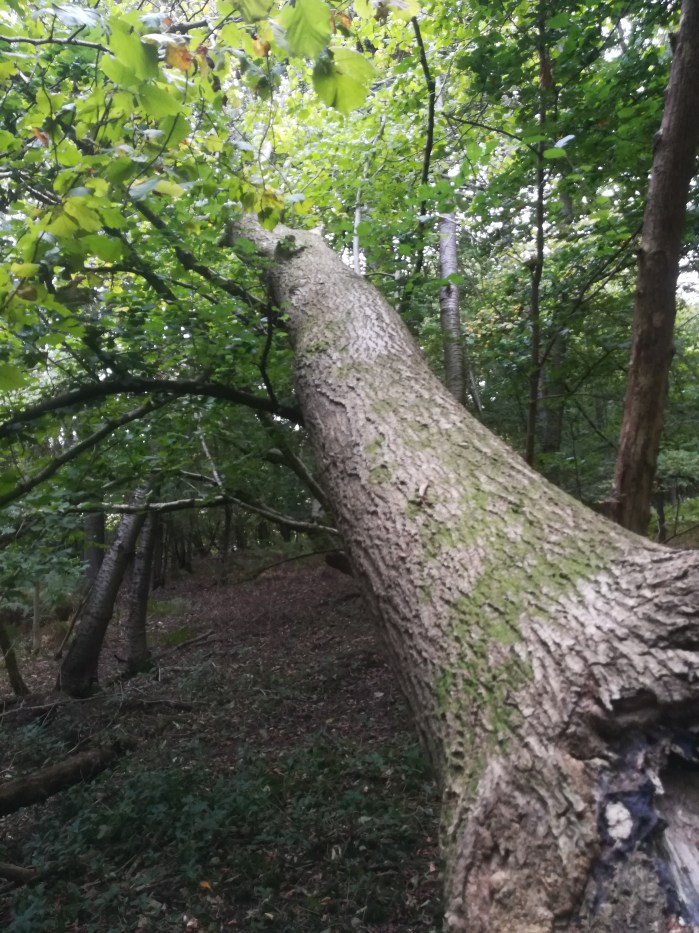
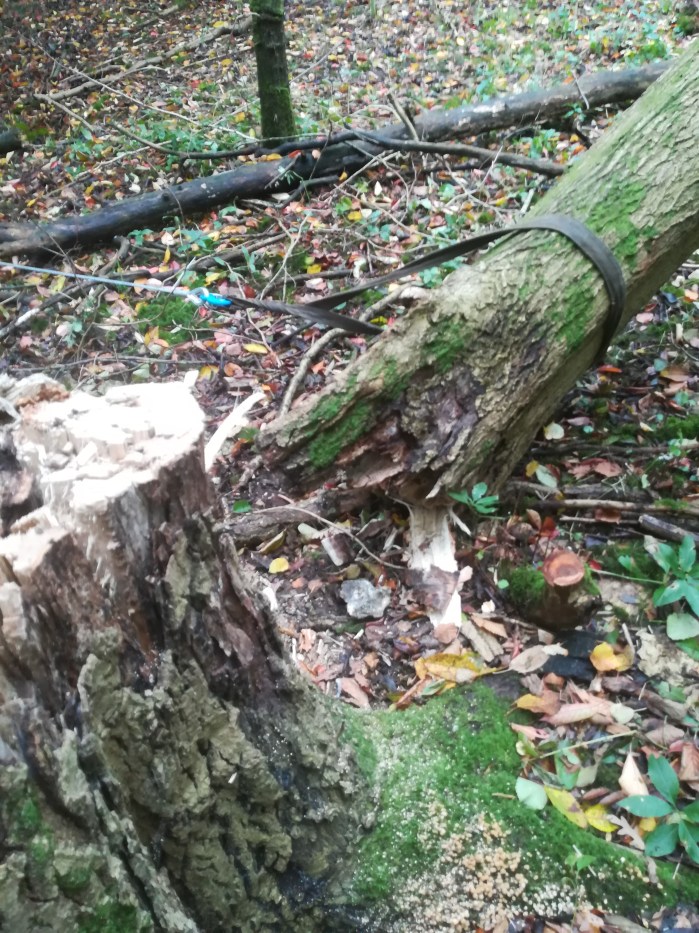
This is one of the trunks of a two stemmed mature ash tree. As can be seen the base of the trunk has rotted away and become unable to support its own huge weight. The strong winds has done the rest! In this case the tree has fallen onto several other trees. The top canopy is hung up on a large turkey oak , with the rest of the trunk coming down on top of several wild cherries and some of the hazel that I intend to coppice later in the autumn. The picture shows two of the wild cherries (wild – they’re absolutely furious!) leaning into the fallen tree. These have been caught by the trunk as it fell and have been pulled over, on one the roots have started to lift out of the ground. So not only has this tree potentially damaged a few others on its way down but it is far from safe in its current position.
Trees that become hung up on their way down are more difficult to tackle than felling a tree that is standing straight up. The tree in its standing position is a known quantity, judgements can be made about the best direction for it to fall and a cut chosen to best facilitate that plan. Unfortunately if the tree becomes stuck on its way down then all bets are off. It is very difficult to know how secure it is ie is it delicately balanced and will the slightest intervention bring it tumbling down or is it absolutely stuck fast? To add to the complications the broken end is about three foot off the floor and still (loosely) attached to the main tree base.

I think in this instance it would be sensible to put a winch onto the broken end of the trunk and try and pull that end free of the stump and down onto solid ground. Once that is achieved then it may become more obvious what to do with the top end. The advantage of using a winch is that you can apply the pull (in this instance) whilst being well away from the danger area.  Unfortunately the initial pull is unlikely to solve the issue but at least having one end firmly on the ground will make it potentially easier to attach the winch higher up the trunk and attempt to pull the rest of it down. I am not too concerned about the damage to the cherries as these are planned to be removed to allow more light into the first coppice coupe. Equally the hazel is intended to be coppiced in a few weeks so any damage to the hazel branches is not critical as long as the stool remains intact. However I am keen to minimise any damage to the turkey oak and will have to work carefully around it.

The ash itself will be worth trying to get down in as big a piece as possible. The trunk is reasonably straight and may well be able to be milled for timber.

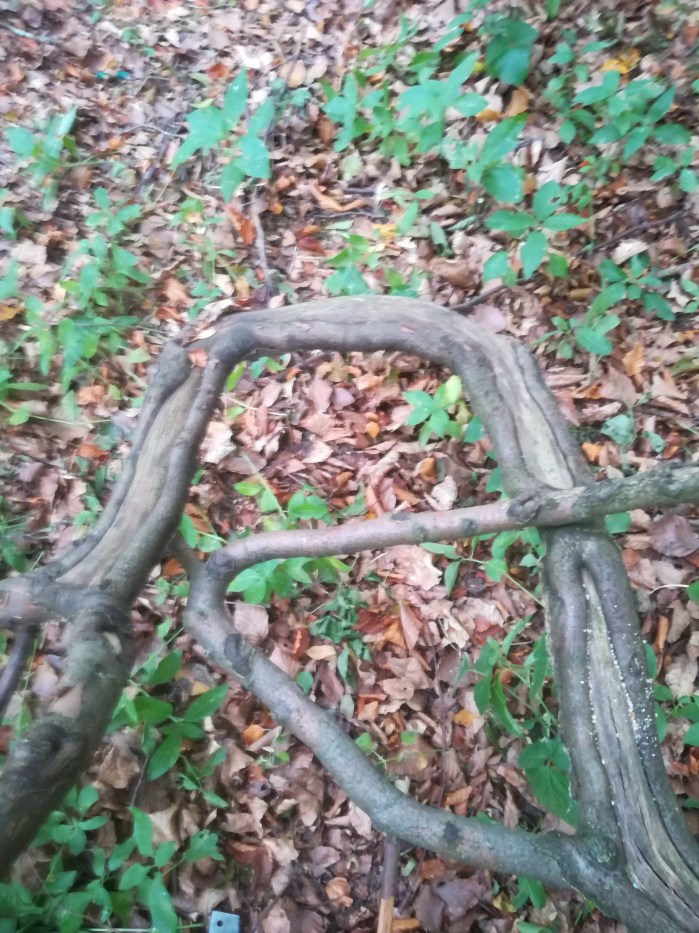
Whilst tidying up another fallen ash limb that had taken several beech branches down with it I noticed one of the beech branches was a peculiar shape.

dav
A is for ………beech?

Goodness knows why the branch has grown in this convoluted way but very satisfying to come across a bit of “art” in the wreckage.

More on this next week.


Regen, what’s lurking in the undergrowth?

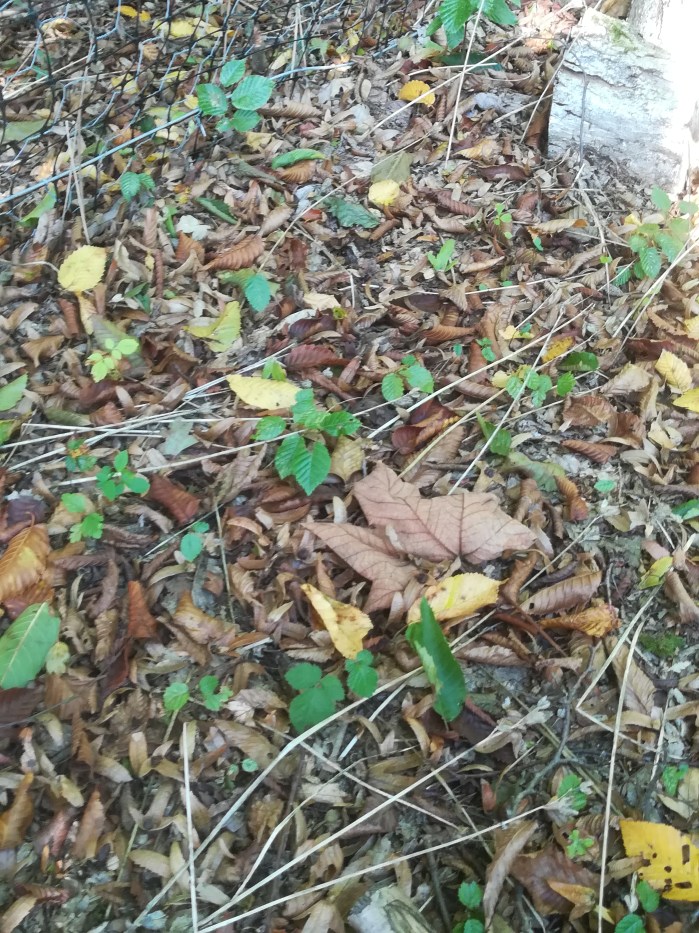
Regen or regeneration is the natural process whereby fallen seed germinates, takes root and grows through the leaf litter in a woodland. Most of these self sown seedlings don’t survive as the conditions are not ideal. Under the existing canopy the light and rain water can be restricted, but the most likely cause for their demise is that they are grazed off by the deer or grubbed up by badgers.

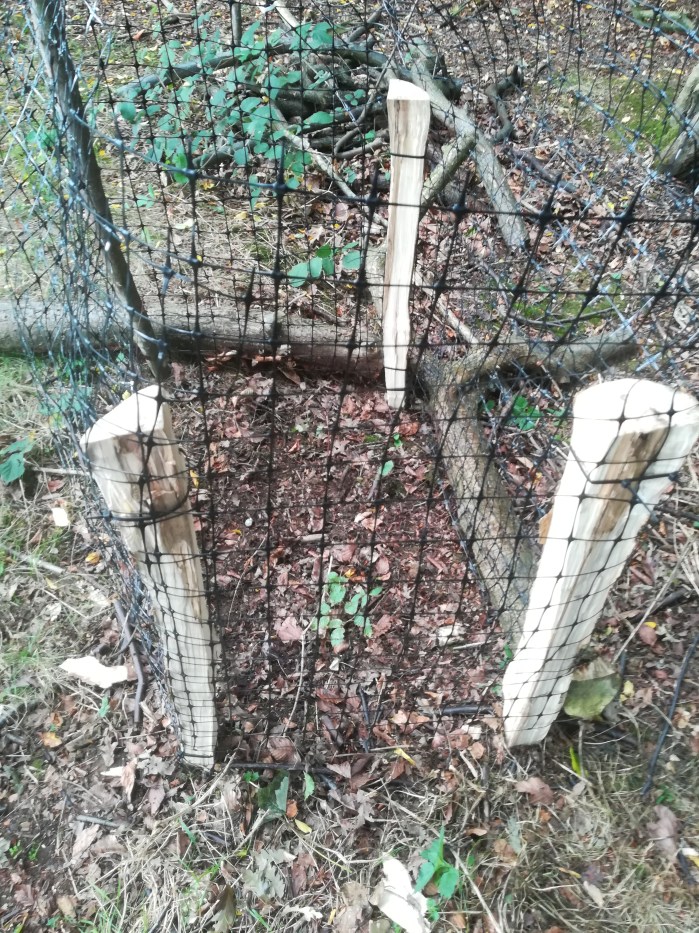
The one place in Pop’s wood where these threats have been managed is the small nursey/compound I built to protect the hazel coppice.

regeneration growth in the compound
regrowth within the compound

As can be seen within the picture above, there are numerous hornbeam saplings just starting to emerge. These are not easy to grow and so it is doubly pleasing to see them survive and thrive. The fencing gives the seeds chance to germinate and get established without being eaten. Hopefully these will go onto develop into strong enough saplings to be transplanted into permanent positions within the wood.

Encouraged by what I had found in the compound I went on an exploratory search through Pop’s Wood last week in search of some further regen. Sadly a fairly thorough walk through was fruitless, it showed that virtually nothing that had survived either the ravages of the deer or the stresses of the summer drought. However, closer inspection and looking in seemingly unlikely places revealed some small successes.

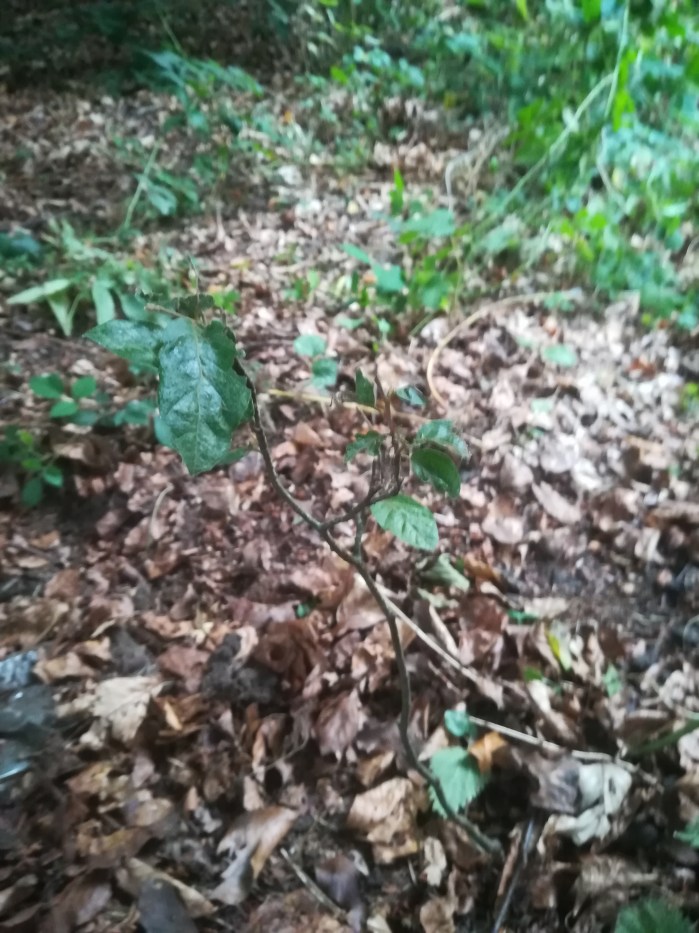
Under a pile of small branches (brash) from an old cherry plum tree was a small green tree shoot. Closer inspection revealed another hornbeam seedling.


Of course having removed the brash I have taken away the very thing that was protecting the seedling and left them exposed. I quickly erected a simple fence around what turned out to be three seedlings, this should offer refuge from the deer and badgers.

dav
Simple deer proof fence around young hornbeam seedlings

One of the strengths of regeneration is that the seeds that survive are ones that are “happy” growing in that situation ie the conditions suit it and by dint of their germination and development are suited to that location. The other clear advantage is that they are of known provenance for Pop’s Wood having regrown from trees within Pop’s Wood itself. This is not absolutely critical as bought in trees can be selected for their provenance and suitability but having them grown where they fall saves a lot of faffing around. One further massive upside is that they are FREE! No cost to buy them in or time taken to replant them and nurse them along, they simply appear. Wonderful.

Just to prove that other species are just as capable of regeneration, the picture below shows a turkey oak sapling which I found in the middle of a bramble thicket.

dav

Again the brambles had acted as a protective barrier allowing the seed, an acorn in this instance, to germinate and develop into a healthy sapling. The key in all this is offering the seeds the chance to develop without either being grubbed up by badgers, dug up by squirrels and birds or being grazed by deer. Quite a list of threats that makes the finding of successful regeneration so satisfying.

One of the projects for the autumn is to create a further purpose built nursey and plant some seeds and carry out some soft wood cuttings of hazel over the winter and into next year. The hazel will be particularly useful in the coming years in re-establishing the stool densities within the coppiced coupes the first of which is due to be created later this year.

More next time…………………….

Back up and running

After a lovely summer holiday I’ve been back in the wood for the last three weeks or so.

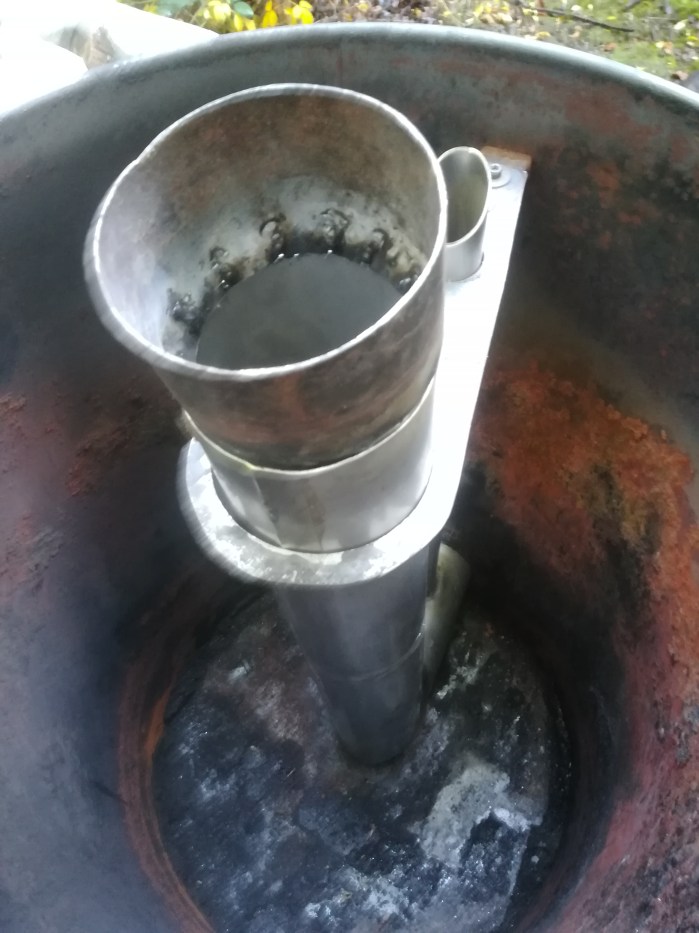
Fresh from a steel fabricator in t’North there arrived a new stainless steel burner chamber for the charcoal retort. My eldest brother had passed the design onto a guy he knows who has faithfully reproduced the original dimensions but this time in lovely, shiny stainless steel. I’m not sure whether this will prove to be any more resistant to the heat corrosion that the mild steel version suffered from but it certainly looks the part.


After some careful jiggling around the new piece was installed and it fits very nicely.

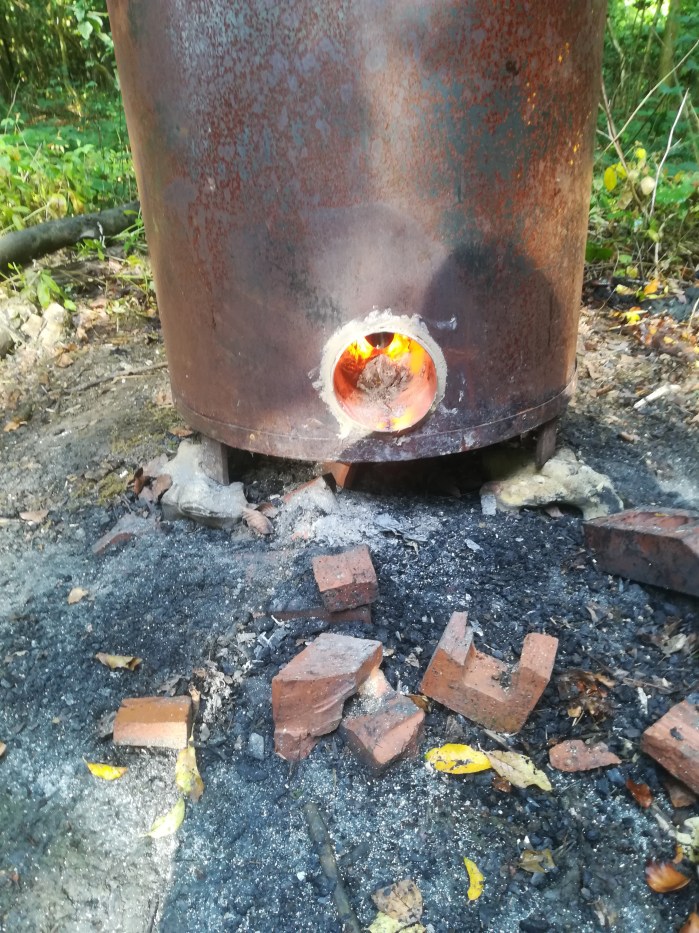
and, perhaps more importantly…..it works.

dav

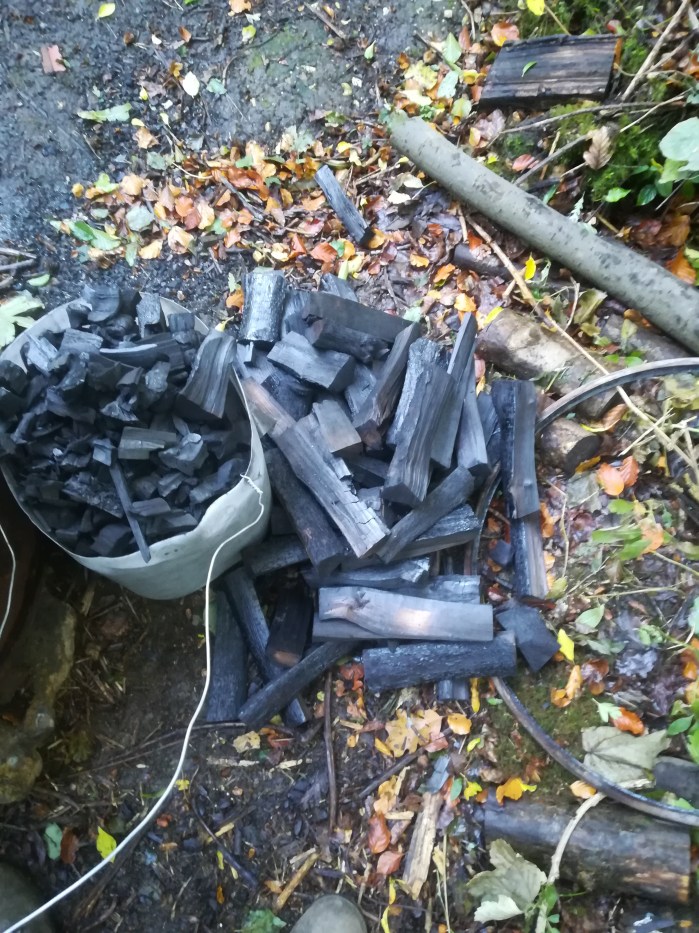
Sadly though the results of this first burn were perhaps the worst that I have ever had in terms of conversion from wood to charcoal. Lots of brown ends.

pile of unconverted brown ends

This was only my second hazel wood burn and I think that I simply haven’t applied enough heat for long enough. The result is that there is a lot of wood that has not completed the charring process and the charcoal that has been produced has a very tarry smell.

Yesterday’s burn seemed more enthusiastic in terms of the wood gas phase and I was particularly careful to maintain the heat for an hour or so after that phase to support process completion. Hazel is a significantly different wood from beech with different burning characteristics and I guess that is demonstrated in the apparently different ways that they perform in the retort. We will see once I open up the retort next week.

More next time………………………….

Time to get fruity.

It seems amazing given the very dry conditions over the last few months, that the trees and brambles are still able to produce fruit. Whilst the fruit may be of interest to us humans to casually pick because of their taste or natural properties, it is sobering to realise that fruit is the culmination of a season’s growth for the plant. The principle purpose of any fruit is to ensure that there is future growth. The fruit invariably contains the plant’s seeds and the production of the seed is the plants method of ensuring that its own genes continue to develop and that their species thrives.

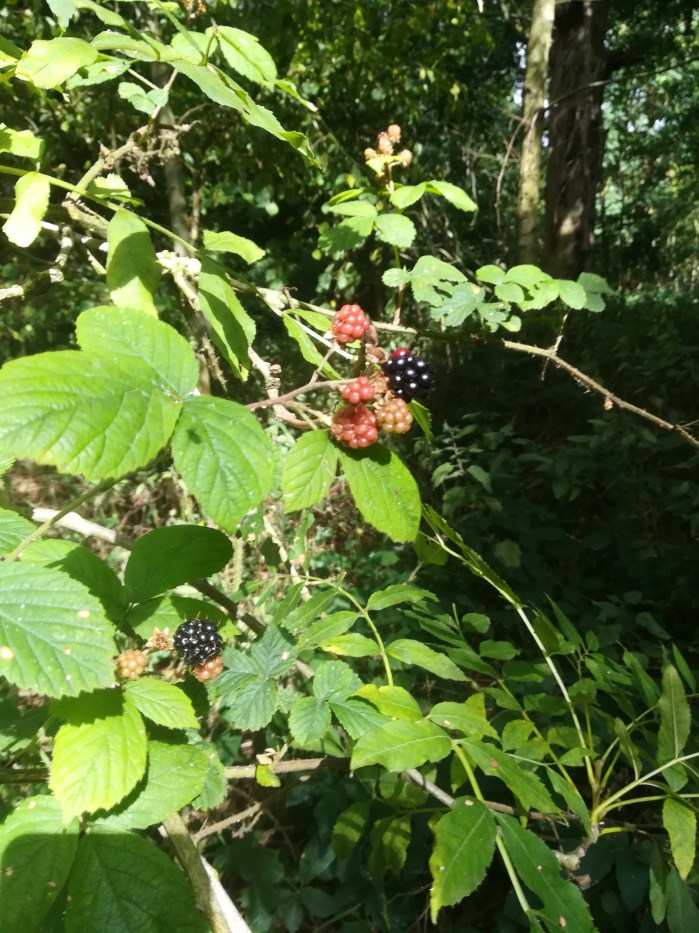
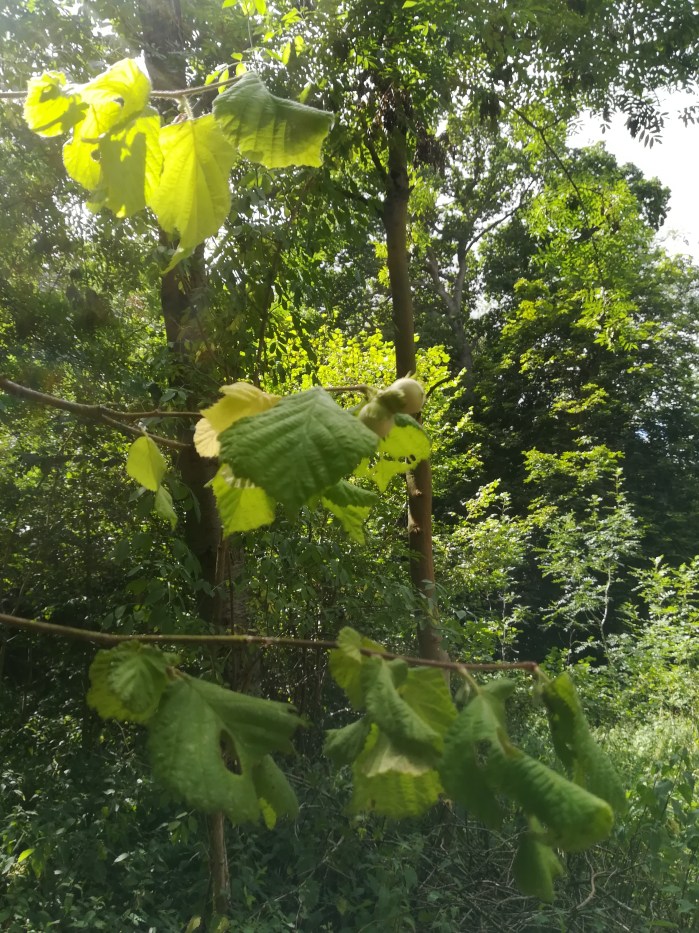
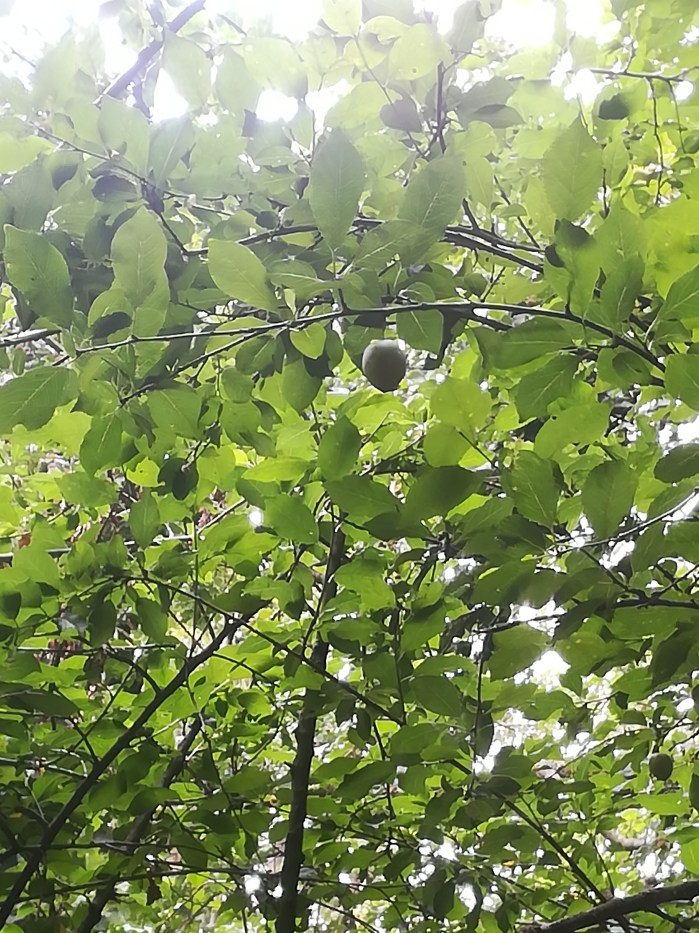
I spotted four obvious edible fruits as I walked around the wood the other day.

dav
hazel nut
dav
blackberry
dig
Cherry plum
beech mast
beech masts

Some other species have had their fruit a lot earlier in the season. The wild cherry, for example, usually flowers around April/May time and the fruit will set shortly after pollination. Because of the height of the cherry trees all the fruit get eaten by birds with those that fall are eaten by badgers and wood mice.

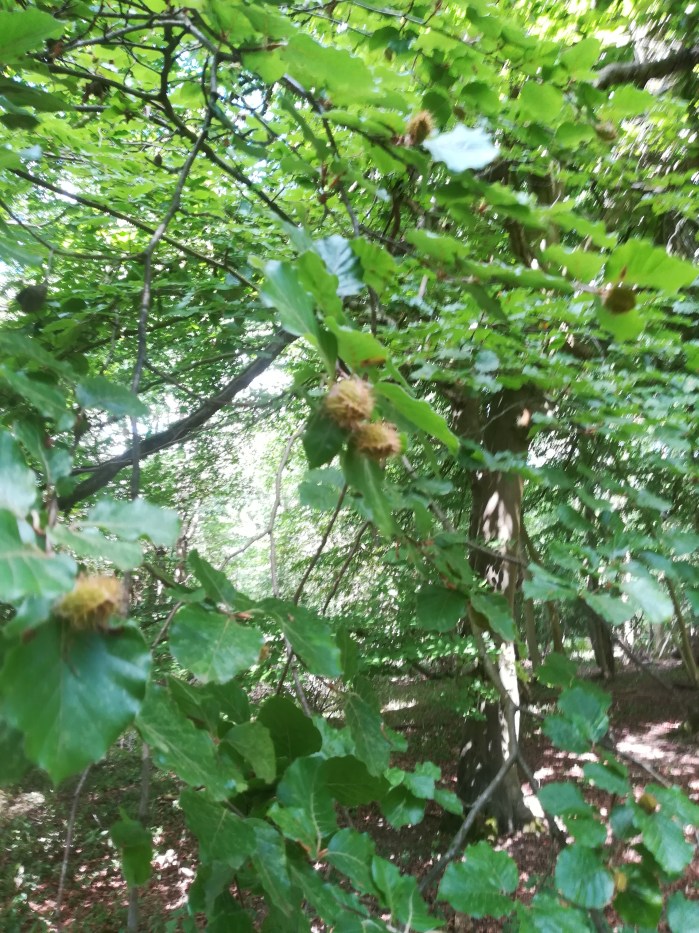
Beech masts are edible and apparently can be roasted and ground to produce a coffee like substitute. Even though I don’t drink coffee it may be interesting to try this out. The beech trees seem to be having a particularly bountiful crop this year, maybe conditions just suited their needs. So as long as I can get to some of the masts before the squirrels eat them all then I may be in with a chance.

More next time…………………………


Dear me and deer me!

So the dry, hot period has broken. Pop’s wood is soaking up the rain and breathing a sigh of relief I would imagine. I am pleasantly surprised at how well the trees have coped but will be watchful over the autumn as the trees will remain brittle and susceptible to wind damage for some time I would imagine.

During the week I managed to take the broken retort part and remove the burner tube. My brother had made it in such a way that there were only two bolts to remove and then after a bit of wriggling and pulling the whole thing was free. Looks in worse condition now when removed but the good news is that it can be repaired or more likely replaced.

dav

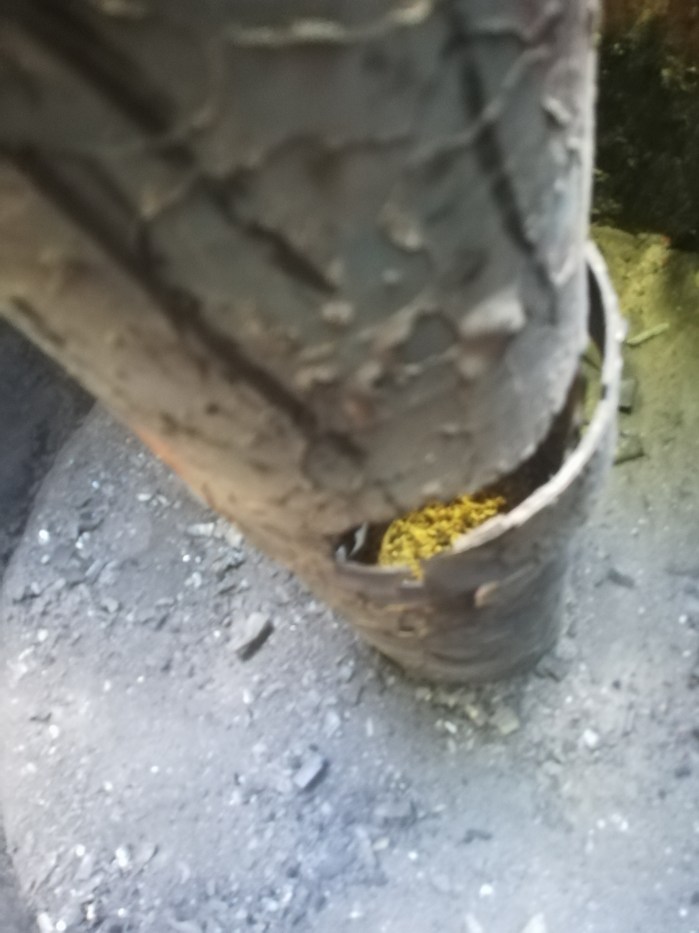
It is fairly easy to determine from where the damage is on the pipe where the hottest part of the flame is once the retort is in full flow. My brother was surprised how quickly it had burned through particularly as the pipe that he used was originally designed to be used as bus exhaust pipe. A closer look at the damaged area shows that the metal appears to be laminated suggesting that there may have been a manufacturing fault in the metal wall itself.

sdr

The replacement is to be made out of mild steel and we will monitor how well it performs. Using mild steel keeps the cost down from the expensive £60/m exhaust pipe whilst still retaining the strength and good heat transfer properties.  I look forward to getting the retort back up and running.

Periodically I set up the motion sensor camera at a point in the wood to capture images of the regular inhabitants of the wood going about their business without me in the way.

At the top of the wood near the edge of the field is a spot where there is always evidence of deer having congregated. This seemed a good spot to set the camera up and leave it running for a couple of days.

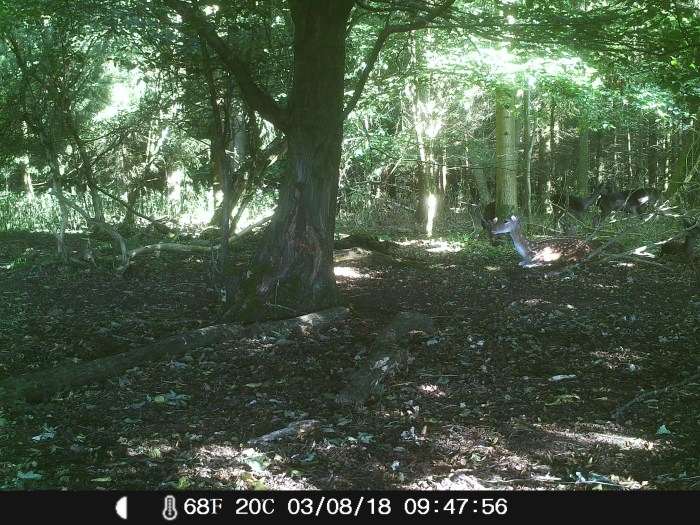
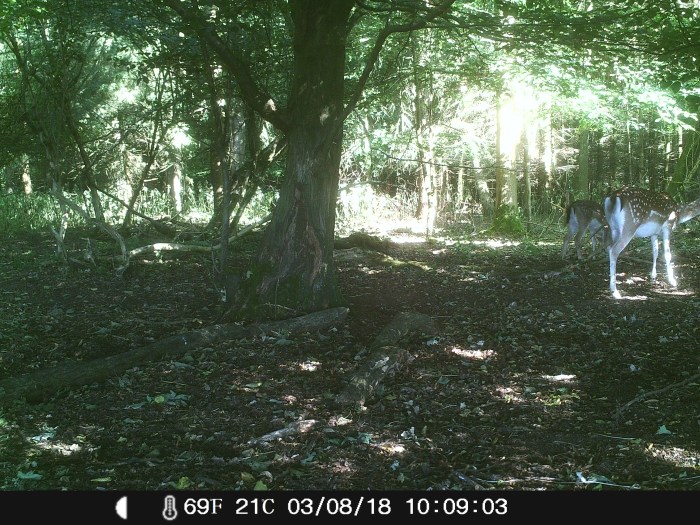
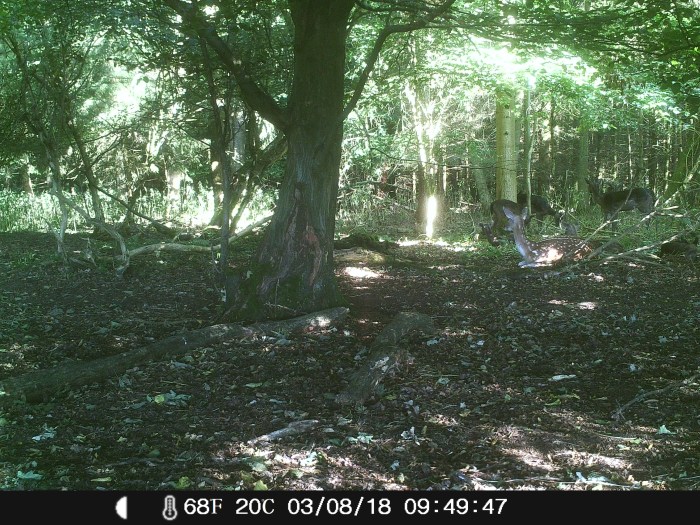
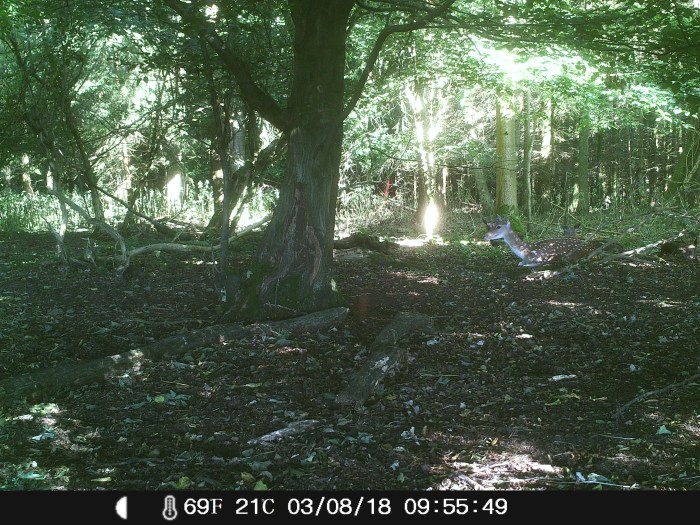
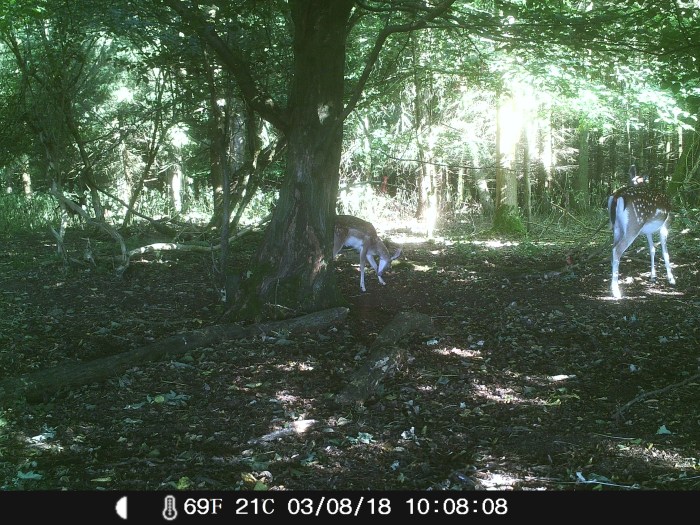
A few things that the pictures reveal. Firstly that the deer are roe deer with their distinctive spotty markings.  Secondly the books all say that roe deer don’t form into herds but these pictures seem to give the lie to that as there are about 20 or so in the group. Thirdly I always assumed that the deer came to the wood at night and lay down and slept. However, it would seem that over this two night period, they don’t start to settle down until the sun has long risen, say at about 9am. At around that time each day, a small group of does and their young can be seen gathering and lying down.

IMAG0145IMAG0149IMAG0159IMAG0161

Here is a short 20 sec video clip showing one doe and her young fawn.

Other events were a bit of a surprise. Here are a couple of video clips, each one is 20 secs long and the action sometimes is right at the end.


Who would have thought that a your deer would have trouble taking a corner at speed and the fox got a bit of a surprise when chased off by the does.

More next time………………..


Hazel charcoal burn out and a blown cover

The rainfall on Friday evening last week has helped freshen up the woodland plants a little, but as the temperatures are still 25ºC+ every day some of them are still struggling. That is apart from the nettles. Nettles would survive a direct hit by a nuclear weapon I think, they are amazingly resilient and in fact seem to be thriving under the current conditions. Certainly a combination of nettles that are growing like topsy and wearing shorts to combat the heat leaves a lasting impression throughout the evening after a day in the wood.

Earlier in the week I prepared and then loaded the retort with a charge of hazel logs. These were slightly easier to saw and prepare than the beech but I seemed only to be able to fit in four of the crates as opposed to four and a half of the beech logs. I don’t know whether this is just a one off but clearly the less you put in the less charcoal you get out.

When I went back up on Friday to unload the finished burn I had trouble getting the lid off. This is not new as usually I have to twist the top to free it from the chimney that pushes through the centre of the lid. However, when I lifted the cover I noticed that there was a very slight dusting of ash on the charcoal which is something that I haven’t seen before. It was not until I started to unload the charcoal that I noticed the issue. The chimney, which is also contains the fire, had weakened to the extent that my exertions in twisting the  top had “ripped” the pipe apart. My guess is that there were some smaller holes that had formed prior to the final burn and that some air had been introduced resulting in some of the charcoal burning and making the ash deposit. Thankfully this was only a very slight effect as the vast majority of the load was intact and looked perfectly sound.

The chimney was originally a bus exhaust pipe but in the retort has been exposed to some very hot temperatures and clearly has suffered from the treatment. It looks as if it is fixable, subject to what my big brother says, and so we will be back up and running very soon. One of the jobs is to have a look at the design and the materials used for the chimney:

  • Could it be a little thicker walled? The issue here is that the thicker walls may well impair the heat transfer across into the retort.
  • Use a more resistant metal such as stainless steel? Costs could be prohibitive and it is not easy to work with in terms of cutting and welding.
  • Replace with like for like recognising that it will fail after a while so ensure that it is easy to replace.

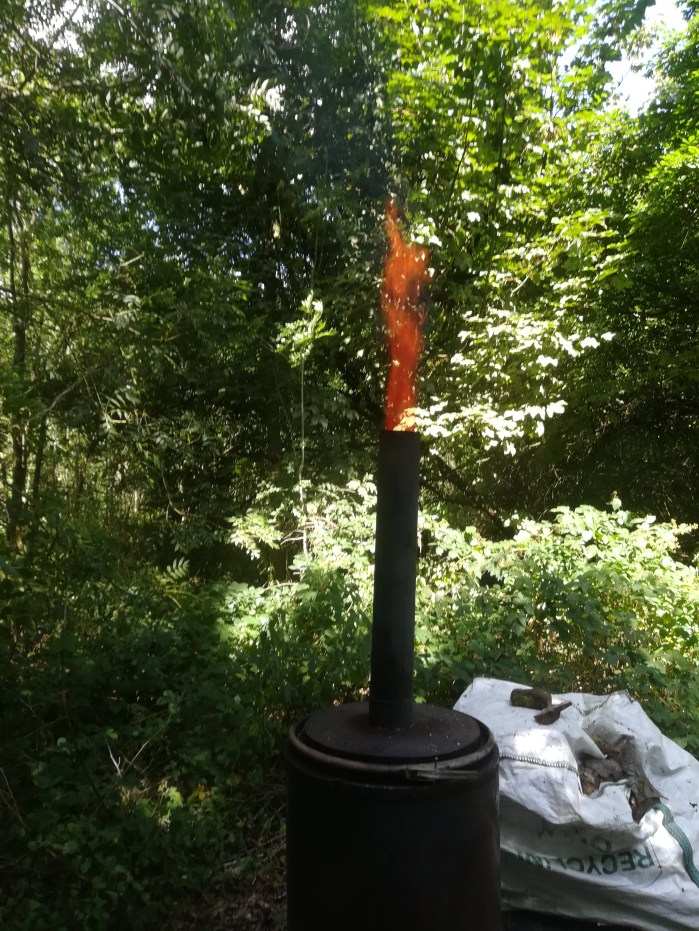
The good news is that the hazel performed well in the retort and if anything was slightly livelier than the beech with a flame shooting 3′ out of the chimney during the wood gas phase.

dav
a lively gas phase

The yield was slightly down in that there was just over 10kg produced as opposed to the usual 12kg. This may be simply down to loading less at the outset.

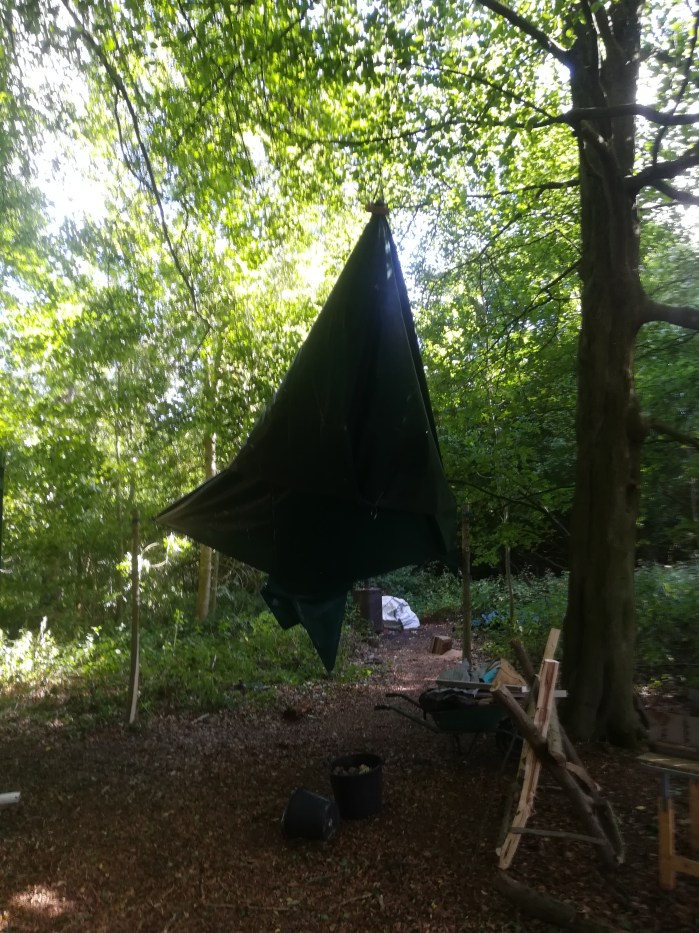
The weather broke on Friday with a series of thunderstorms and some very welcome rain. What was slight less welcome was the strong winds that grew as the weekend went on. A victim of this was the tarpaulin canopy that is suspended from one of the beech trees at the top of the wood. The manufacturers always seem to rely on eyelets at the corners that are sewn in and from experience don’t last the rigours of an outside life for very long.

dav
Two corner eyelets ripped out and the tent left dangling

Simple repair was to tie a knot in the remaining material at the corner, tighten a cable tie behind that knot and thread a second cable tie through the first just before the former was fully locked in place. That way the guy rope could be re-attached through the loose cable tie and the awning restored.

More next time………………………