Wheat, deer and…….hazel

Wheat, deer and hazel. Not a firm of solicitors but rather what caught my eye in Pop’s Wood. Well that’s seven weeks or more without rain……… until there was a thunderstorm at tea time today (Friday) and quite a lot of rain fell in a short period. Welcome relief as the temperature had been building throughout the week and had been 25 – 30°C every day.

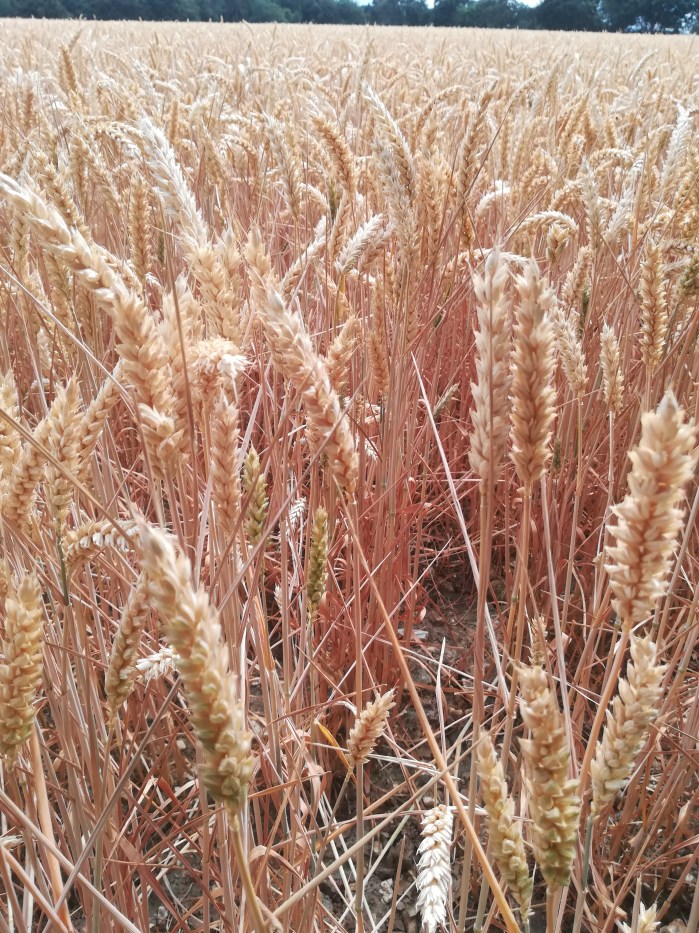
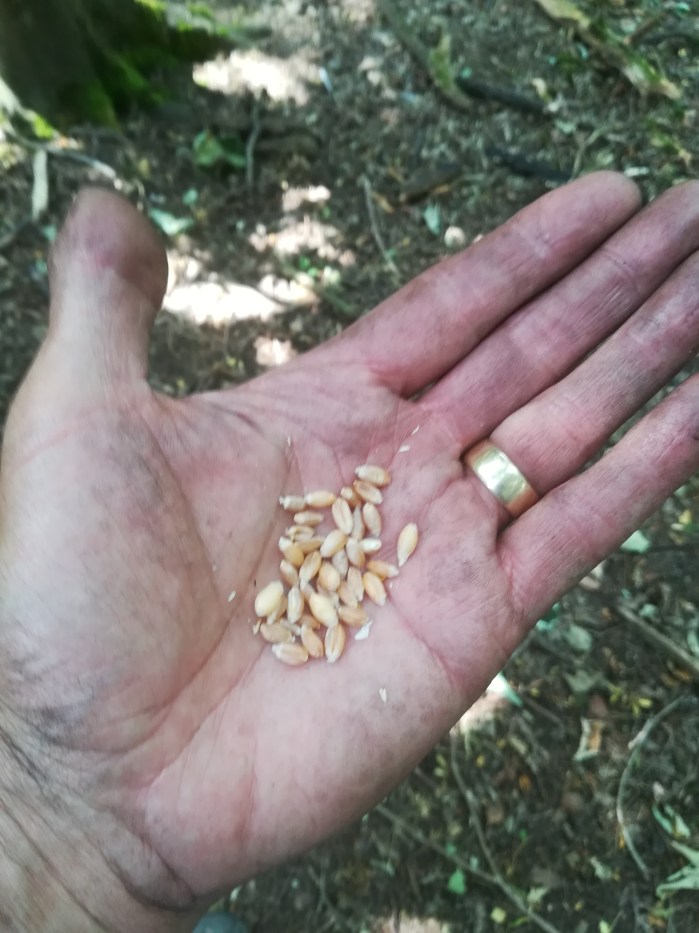
I presume that the hot dry weather is good for the wheat in the neighbouring field at the top of Pop’s Wood. It looks amazingly golden and is brittle to touch. I guess too little rain and the grain wouldn’t form properly but maybe the wet spring helped to set the seed and now the warm sun is ripening the crop nicely. I love the ages old association that we have with cereal crops and couldn’t resist picking an ear and gently separating the wheat from the chaff.
dav

The grains taste very floury – naturally doh (or dough?) – but they are also surprisingly sweet. I have no idea of the final destination for this particular field of wheat, but it certainly looks very healthy.

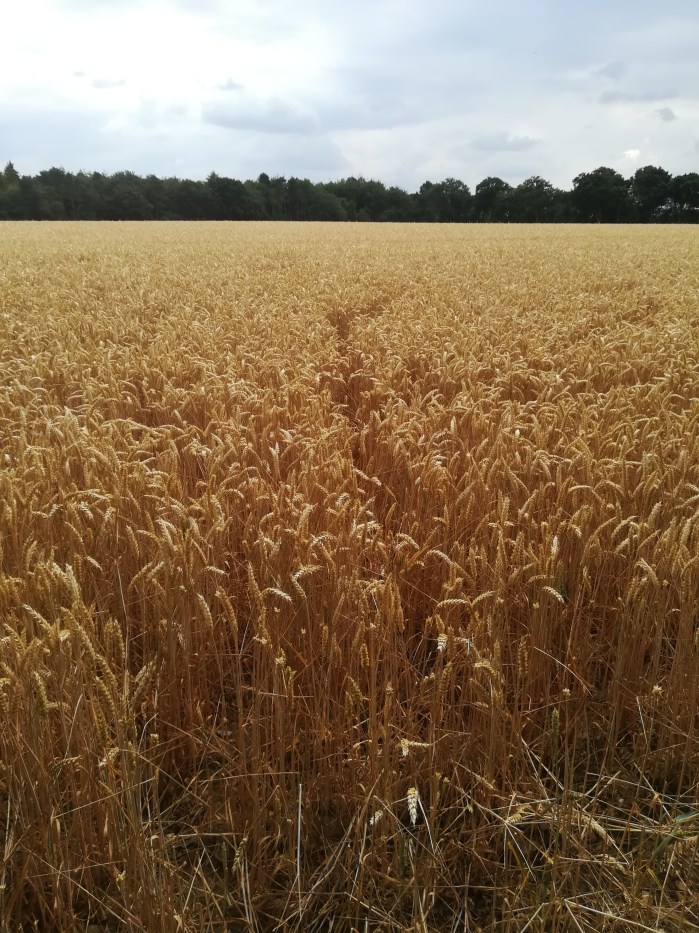
What the fully grown crop also reveals is the regular routes created by the herd of deer that frequently pass through and graze within Pop’s Wood.
dav
across the exposed field…….

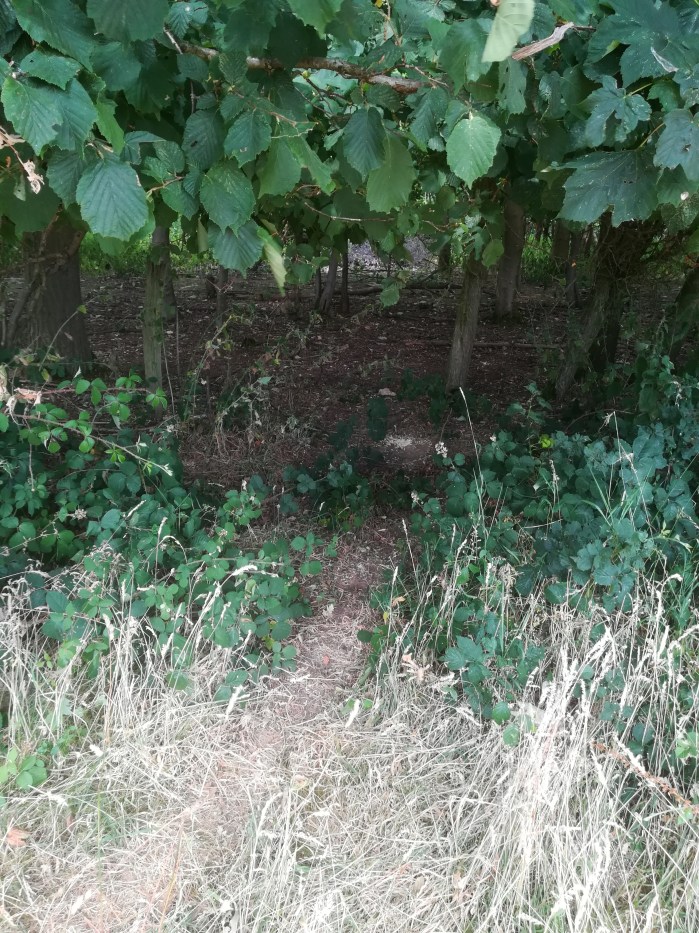
Now I am no deer stalker but when I spin around 180° it is very easy to make out the path that they follow into the wood.
dav
….and into the shade and a relative safety of the wood

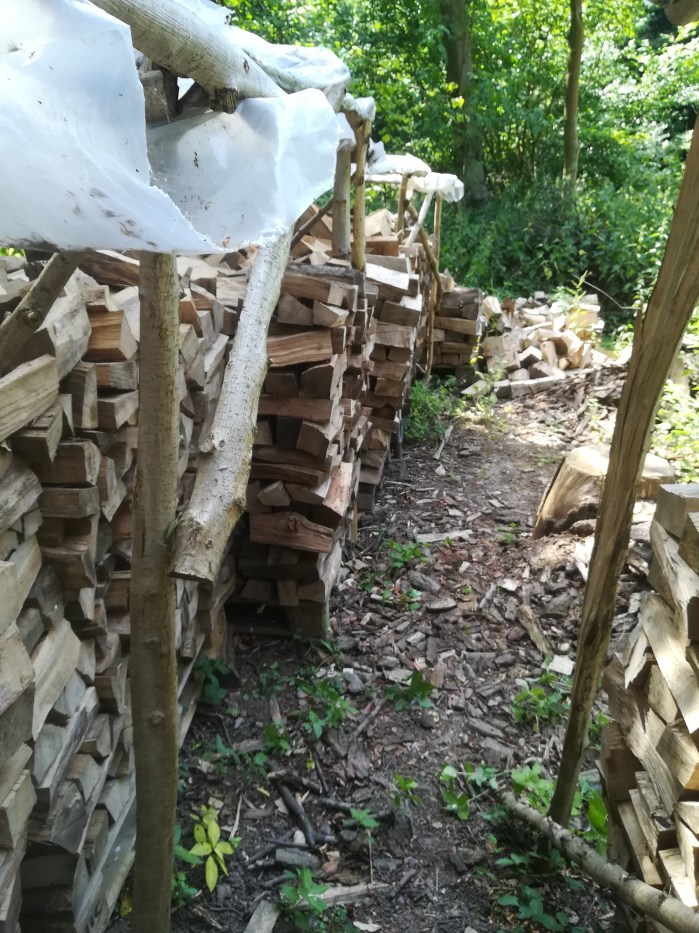
I am about to try making charcoal with the hazel branches that I coppiced back in the autumn/winter  of 2016. These logs have been stacked drying out since being cut and so should be fairly well seasoned by now. However I do think that they will still have a higher moisture content than the beech that I am currently using. So the idea is to explore whether in fact they are suitable for charcoal making; how long will it take to complete a burn; and, will the finished charcoal be suitable for use?
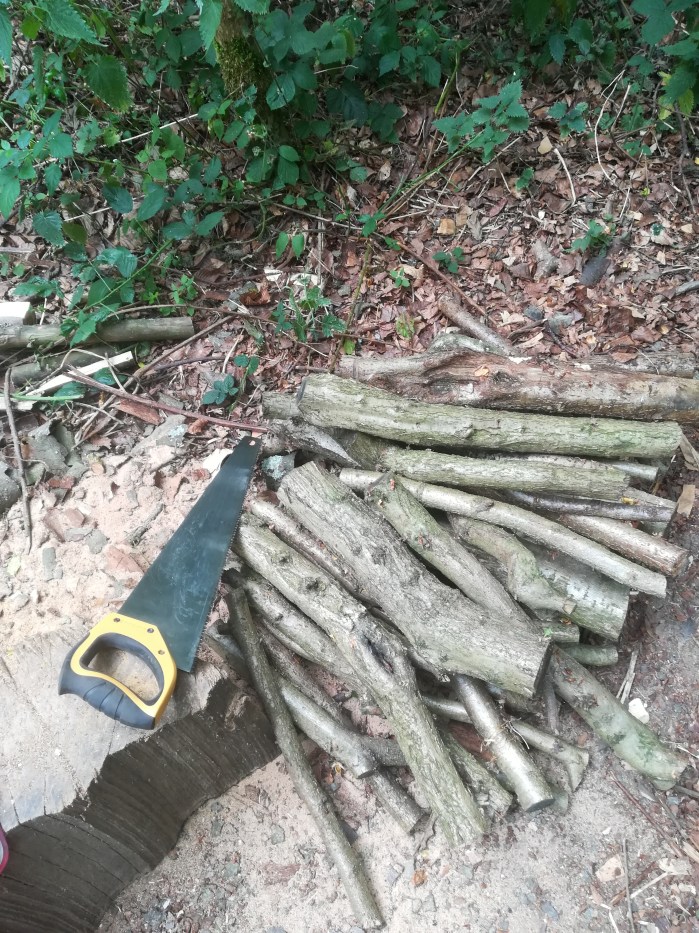
coppiced hazel branches ready to be prepared for the charcoal retort
coppiced hazel being prepared for the charcoal retort

If the answers to those questions are positive then that will be a great outlet/purpose to which to put the further coppiced hazel logs. In the autumn I plan to make a start on the first area of wood to be re-established as hazel coppice. There will be a few uses for the thicker felled hazel stems including being split and used as temporary fence posts to support the deer proof netting erected around the new stools. But also having a way of ensuring that all the coppiced wood is put to good use is very important. The first hazel wood charcoal burn will be this next week so I will include any feedback as we go.

More next time………….
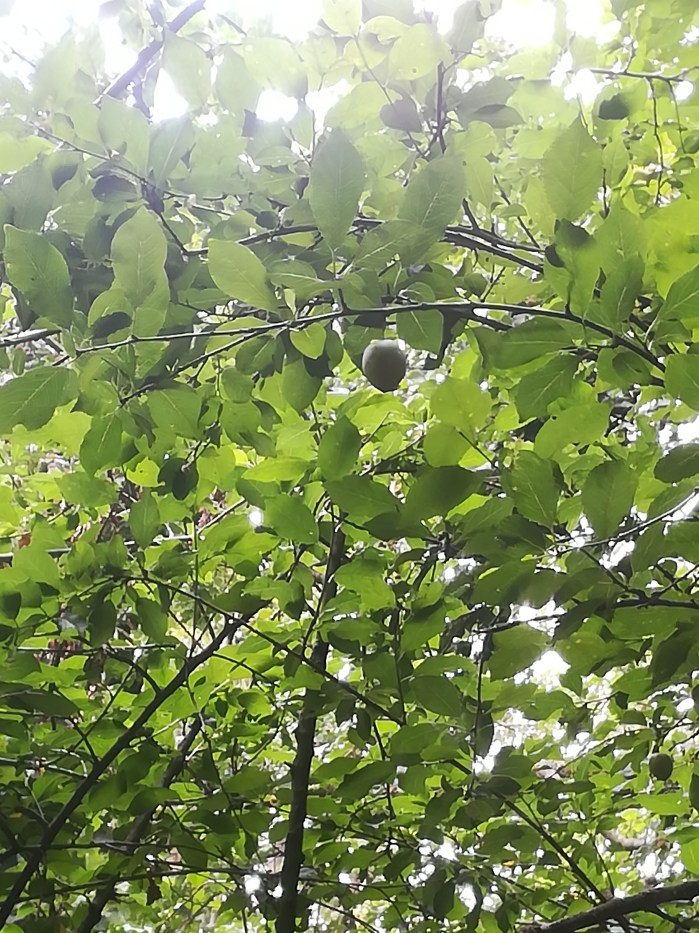
 

Not a plum job and what’s eating a sycamore?

Still no rain in Pop’s Wood so that must be about 6 – 8 weeks now. The trees seem to be coping with the combination of the dry and very warm weather which I find amazing. Pop’s wood is on a sloping site and so any water must inevitably run off down the slope, with no fresh rainfall to replenish what has run downhill you would imagine that the higher ground is by now becoming dryer and dryer. I guess only time will tell if there has been any real damage to the trees’ general health once we have been through the autumn and winter. If there has been structural damage or weaknesses set up in the surrounding ground or tree root systems then the stronger winds in autumn may prove hard to resist and maybe we will see some trees blown over. Hopefully not.

I was having a closer look at the cherry plum trees this week. It is a strange set up. In a very dense clump at the top of the wood is a group of say half a dozen cherry plum trees. These trees are bushy trees and though apparently quite healthy on closer inspection it becomes clear that a lot of the spread of the clump is due to a number of the larger trees having fallen over in recent years. These fallen trees have remained intact with their root systems still partially attached to the ground and so have survived the fall. The new growth has sprouted out vertically from these horizontal branches rather like a laid hawthorn hedge. So a group of trees that would ordinarily only take up say 200 ft²  now sprawls out over a much larger are of say 1000 ft². You could reasonably argue that this is an inefficient use of the land and you would be right. However, a clear advantage of having them laying flat is that the edible fruit is very easy to pick!


Having said that the trees are almost bare this year. This maybe as a result of the dry weather but I think that it is one of those fallow years following what appeared to be a bumper crop last year. Comparison is shown below; last year’s crop to this year’s growth.


I said earlier that the trees seem to be surviving well one of the cherry plums has suffered a broken stem which is only evident through the dead and drying leaves that protrude through the green canopy. Not sure what would have caused this as there hasn’t been any particularly strong winds and anyway the tree is in a relatively sheltered position. The breakage is about 20 feet above the ground and is in a stem of about 4″ diameter. This could well have been a diseased part of the tree or could be an indicator of the lack of water causing distress. Or maybe a combination of the two, in an already diseased section of the tree further stress caused by lack of water could well lead to a failure. One to watch out for as the summer progresses.

sdr
cherry plum with snapped stem in top quadrant of picture

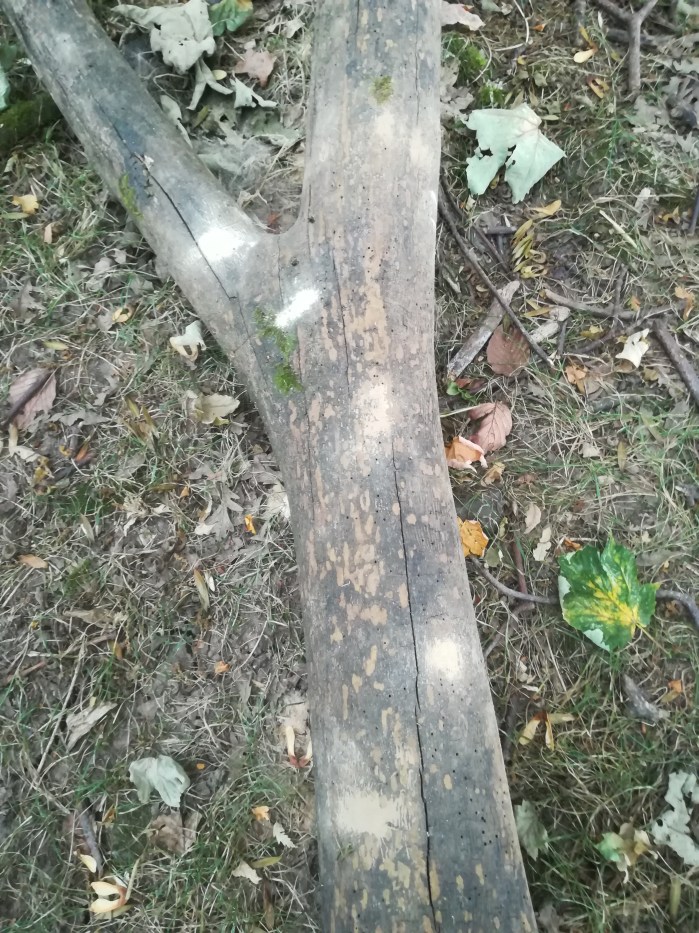
Woodworm. You usually think of woodworm being a pest that lives in houses and attacks indoor furniture in particular period pieces from an earlier age. However the woodworm, which is actually a beetle, evolved from a woodland setting where they eat their way through the dead wood on the forest floor. They generally prefer that the wood they inhabit and eat has a higher moisture content than generally exists nowadays in modern dried timber and our centrally heated homes so they are less of a problem nowadays. However, in days gone by people struggled to heat their homes with large stately homes being notoriously hard to heat. These indoor spaces and the air dried wood had suitable moisture levels and temperatures for the woodworm beetle to flourish hence the prevalence of them in period furniture.

dav
fresh sawdust from the wood worm

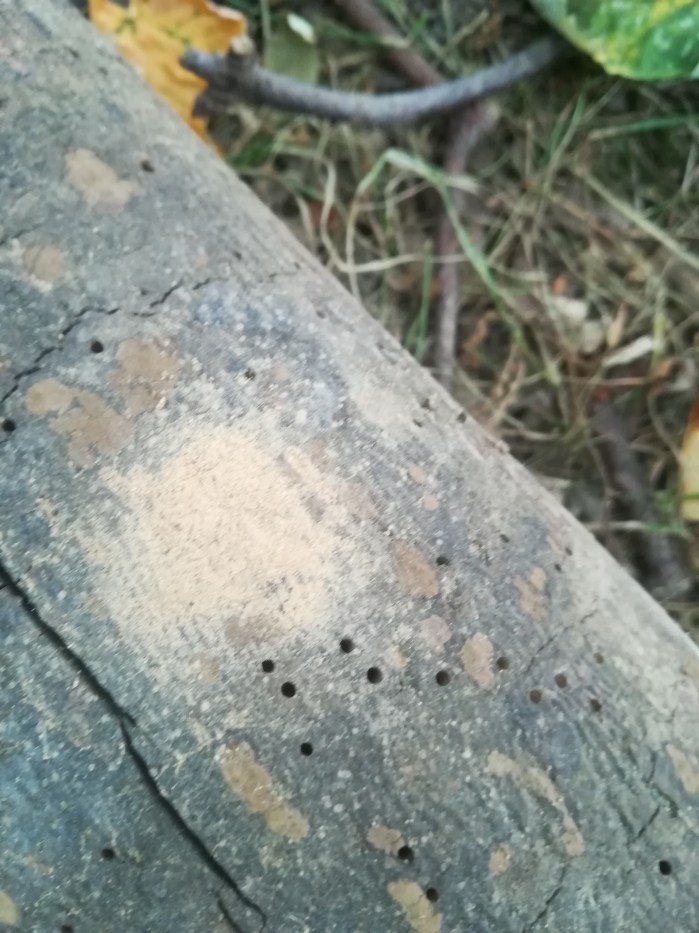
So here are a couple of pictures of the beetle in Pop’s Wood. The picture above shows a piece of sycamore that has been left on the ground and boy are those beetles making them selves at home. The lighter markings are piles of sawdust caused by the larvae, which was laid into the top layers of the wood, pupating and hatching as beetles and boring their way out. These then breed, lay eggs, and repeat the process causing further damage. The summer is the time for the larvae to hatch and so there is a lot of activity in those apparently dead pieces of wood. Great time to be a green woodpecker that ground feeds and must be gorging themselves at this time of year.

dav
fresh damage as woodworm larvae pupate and fly

More next time………..

Drying the wood out, no rain for over a month

Its been over a month now since there was any rain in Pop’s Wood. This is in stark contrast to the very wet winter and early spring where it seemed to rain every other day. The impact of this lack of water is becoming apparent and several of the fleshier plants are struggling.

Pop’s Wood has a varied floor covering but in many parts there is a very healthy growth of Dogs Mercury. This perennial plant is common in beech and oak woodland. The stem is hairy and unbranched, with more leaves present near the top than the base.  The leaves are dark green in colour, hairy, have a toothed (serrated) edge and an overall ‘spear-like’ shape – i.e. much longer than they are wide and they come to a point at the tip.  The leaves are arranged opposite to each other.  Plants may reach a height of about 15 in / 40 cm.

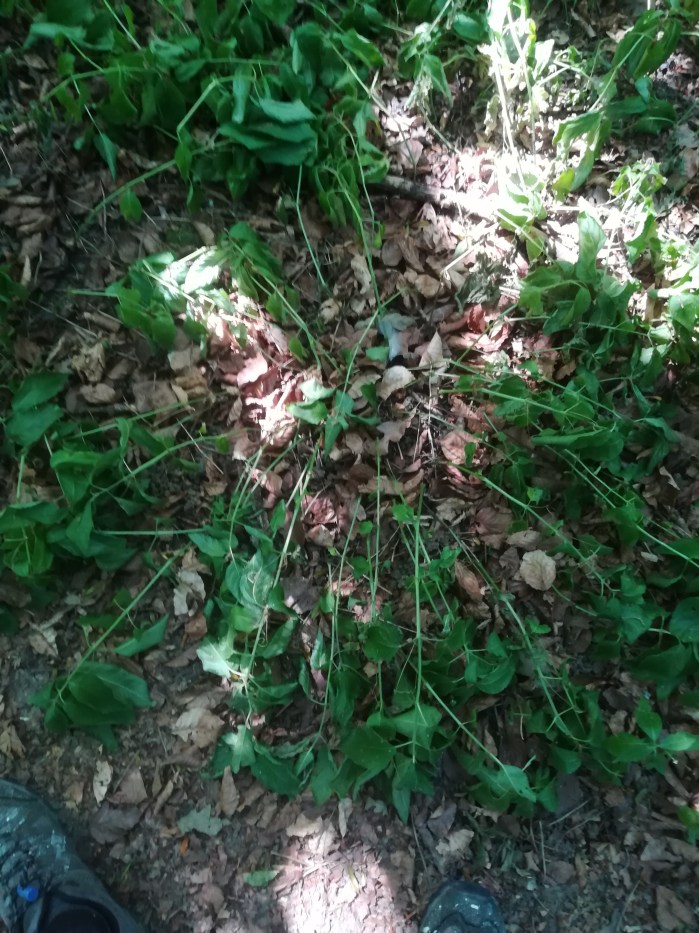
For the early part of the year this plant has flourished and, as usual, staked out its claim to a large proportion of the shaded areas of the woodland’s hardwood sections. But a month without rain and it is beginning to struggle.

dav
wilting under the heat

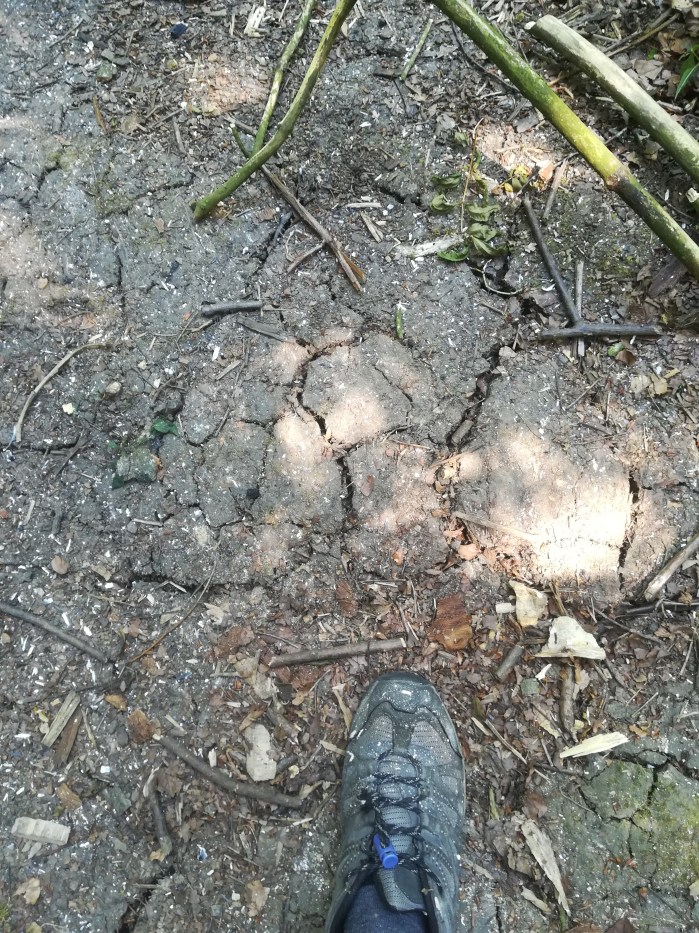
The ground is also showing signs of fatigue.

dav
cracking appearing in the ground (foot added for scale)

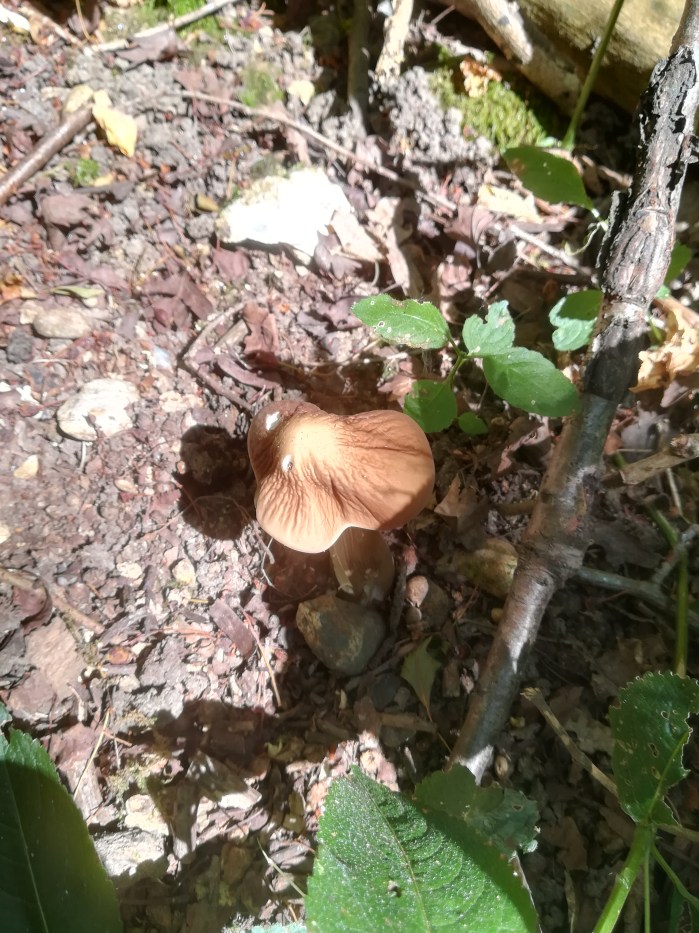
Weirdly even though there has been a prolonged dry period I found a mushroom seemingly quite happy with the conditions. I find it nearly impossible to follow the various identification charts for mushrooms but I think that this may be a Glistening Ink Cap. Not so glistening this weather but there you go.

sdr
glistening ink cap?

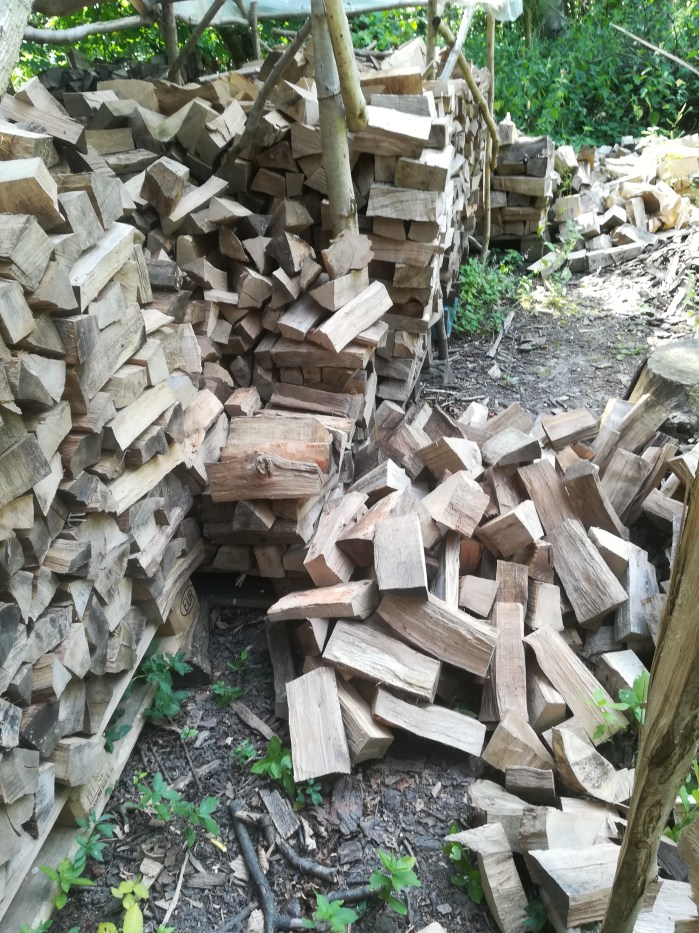
The warm dry weather is ideal for seasoning firewood. The piles that I finished chopping and stacking early in the year are drying out nicely. It’s not a very scientific approach but simply picking up a log and noticing that it feels less dense or lighter is a very good indicator that the water is being driven off and the overall moisture content of the logs is dropping. Talking of dropping, I noticed that one of the piles was looking a bit ragged and had slumped a little. No problem, soon have that fixed. I attempted to gently straighten a few of the more obvious culprits. Whoops……

dav
from wobbly to collapsed in an instance 

Not such a good idea it turns out as the whole of the front face of the pile simply collapsed as soon as I started. Still it gave me a chance to check the condition of some of the logs that have been buried at the centre of the pile. Happy to say that these are in very good condition with no signs of mould or growth which bodes well. Half an hour later and the pile is rebuilt and hopefully stable once more.

dav
re-stacked back in place

Very soon I will carry out a more scientific and reliable method for testing the moisture content of a sample of logs. The recommended approach is to gently dry them right out in a controlled way in an oven and weigh them before and after.

More next time…………………………

More boxing, how the oaks are doing and getting a buzz out of trees

The weather over the last week has been glorious, warm sunny days and cooler nights. Everything in the wood seems to be in overdrive to grow as fast and as tall as it can. Spaces that were seemingly empty have erupted into waist high nettles and piles of wood that stood out have been subsumed into the green advance.

Talking of green advance, the container box has now reached the top of the wood. The plan will be to use it as a base for some wood working including some planking of trees that have already been felled. Josh and I had a last push, or rather pull, to get it into place yesterday. very to have moved what seemed like an immovable object some 400 feet up through a woodland using only a winch and some bits of wood with grease on them. Also very pleasing to look back at the route and see that we didn’t have to take any trees out, damage any of the low lying branches or leave scar on the ground (or ourselves)!

It was a reasonably hot day and so wearing shorts seemed like a very sensible decision. That was until after a couple of trips through some nettles as the set up and used the winch. The nettle stings are uncomfortable as they happen but not hugely unpleasant, what is weird is the way that the sustained tingling goes on well into the evening and even the following morning. I wonder if they have any beneficial effect in the same way that bee stings are meant to be good for rheumatism? I bet the beneficial effect there is that the bee sting simply takes your mind off your rheumatic aches and pains.

Here’s a video taken from the top walking back down the route that the container took.

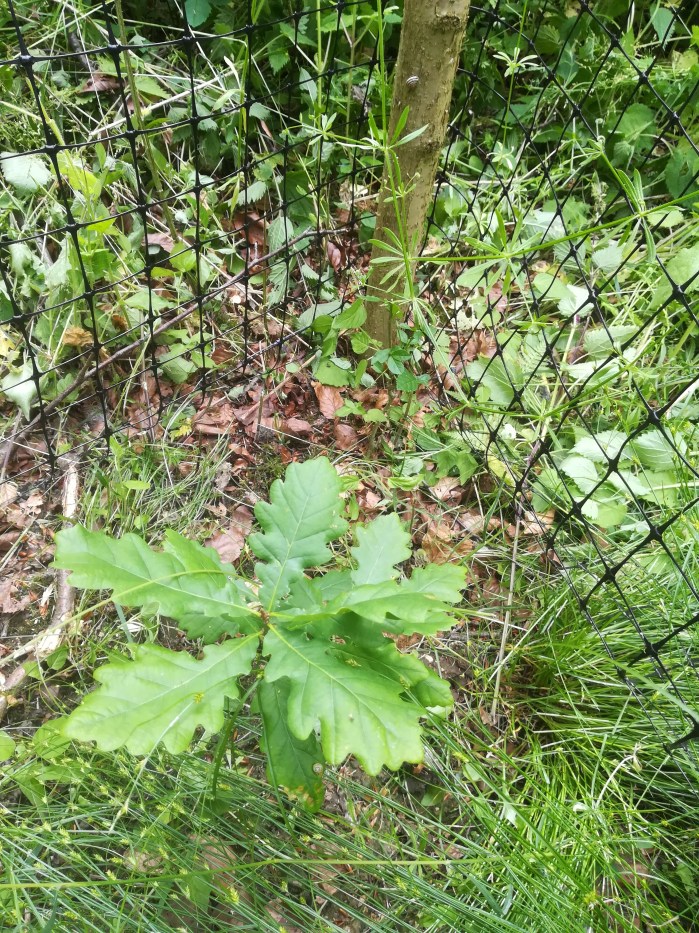
The sessile oak tree saplings that I was given back in April have settled down and are growing nicely. I built deer proof cages around them to try and protect them from the nibbling hordes and so far this approach seems to have been effective. The recent dry spell doesn’t seem to have harmed them but with the cool nights there is still quite a lot of early morning dew and I think this is providing sufficient water for their needs. The only maintenance necessary has been to clear way competing nettles and grasses so that the saplings have room to catch the light and flourish. Here’s hoping.

Just as we prepared to leave the wood yesterday evening we heard a buzzing sound. Really difficult to pin it down and we wandered around for a few minutes trying to make out where it was coming from. Eventually we narrowed it down to one tree and there in the bright evening sunshine just above one of the tree canopies was a mass of flying insects.  Not sure what species of insect they were or why they would be swarming. A few years a go I have saw a colony of bees land on an old barn where I worked and that was amazing. The swarm yesterday didn’t seem as concentrated as that but maybe what we saw was the start of a mass movement rather than the destination. The sound is very difficult to capture on a video/camera and so are the images but here is an attempt.

More next time…………

Charcoal, horse flies, an uphill struggle and Turtle soup?

Great weather to be outside and working in Pops Wood. I have busy on a combination of tasks this week namely making charcoal and continuing to move the shipping container up through the wood.

The process of making charcoal is now getting fairly slick and I can manage to empty out the previous charge, load up the retort with new fresh wood and get it fired up within about half and hour. That leaves me time to sort through, weigh and package the charcoal and then set to and prepare the wood ready to recharge the retort the next time. It is still an time consuming process where I have to be on hand to ensure that the fire is stoked up and fired up in order to heat the retort up quickly and set off the whole charring process. However, once the main wood gas phase has started there is about an hour when the whole thing becomes self sustaining and I am free to have my lunch, do the crossword and (once I have woken up from a quick nap!) get on with some other jobs.

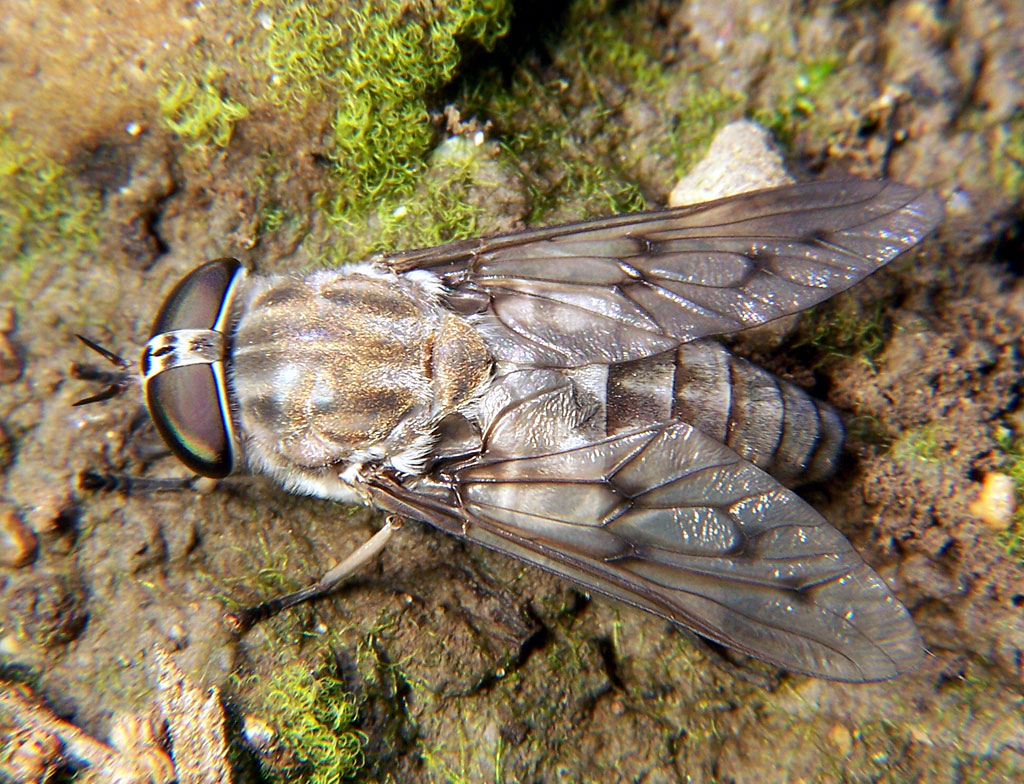
With the weather hotting up the horse flies have been out and about. These are sneaky little blighters and biters.

Whereas most flies buzz around you and announce their presence, invariably the first you know of the horse fly is when you feel its bite on your leg or arm. Their approach seems to be fatally flawed in that as soon as you feel the bite you have time to find the offender and squash it flat, very few of them seem to get away. I guess it works well on other animals other than humans that are less able to swat them as they feed. Apparently its only the female flies that bite and they do this to obtain sufficient protein from the blood to be able to reproduce. The male eats nectar only and whilst the female also eats nectar it needs the blood supplement to become productive. They are attracted by the smell, warmth of the skin and carbon dioxide that is breathed out, so working away in the wood getting a sweat on and breathing heavily make me a perfect target!

Once the charcoal retort has finished I have been carying on moving the shipping container. Whilst this is very slow progress it is one that I can do single handed and because it is slow, and doesn’t involve anything other than my manual effort, it is a very controlled approach.

Here is a time lapse of Josh and I a couple of weekends ago getting into the swing of using the winch and wooden runners.


One of the obstacles to negotiate has been a small ridge made up of flints rather like the base of a wall. here are some still shots of the box coming over this hump.

Its amazing what people throw away. Here is a curious example….

dav

A ceramic pot of real turtle soup. Here is an extract from The Museum of London site.

Turtle meat became fashionable in the 19th century and was usually imported from the West Indies. According to Law’s Grocer’s Manual (1898) the meat was popular at City of London aldermanic feasts and the Lord Mayor’s annual dinner at the Guildhall.

John Lusty Ltd was a manufacturer specialising in turtle meat. Based on Parnham Street in Limehouse, the firm was established in the mid nineteenth century by John Lusty, a ‘marine store dealer’. In the twentieth century the company advertised itself as a contractor to the Admiralty, the War Office and the Royal Family. In the early 1940s the firm had premises at 3 New Compton Street in the West End.

John Lusty Ltd was still manufacturing at Parnham Street in the early 1970s and was famous for its turtle soup. The brand is presently owned by the Leicester-based company Fosters Traditional Foods Ltd. This company took the commercial decision to cease making turtle soup about five years ago owing to public concerns over the conservation of turtles.

How bizarre! What on earth was it doing in Pops Wood?

More next time……


City Tree, butterflies and spit?

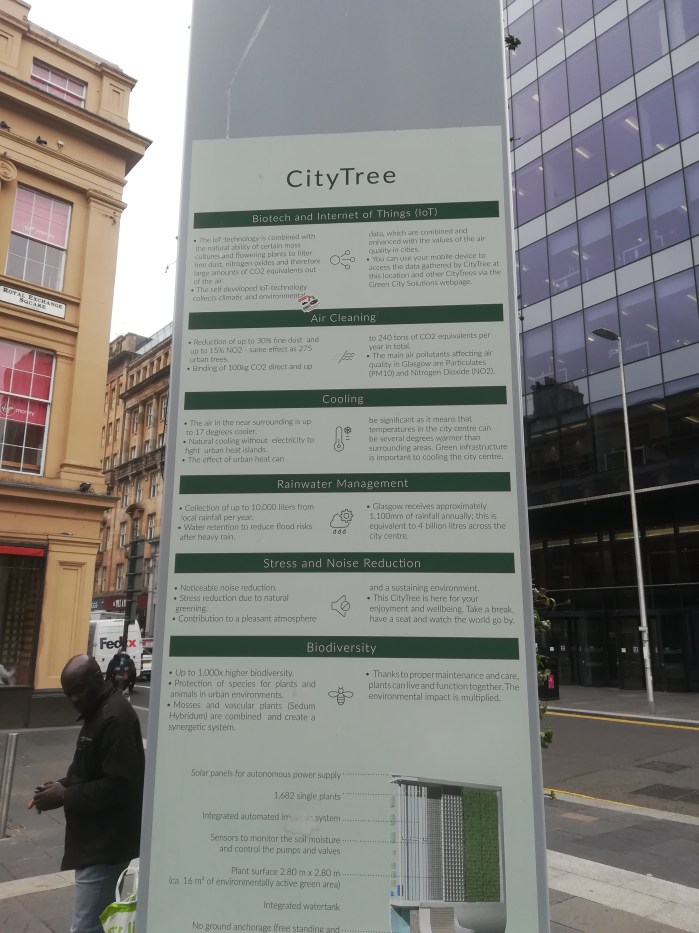
Whilst in Glasgow on a weekend break I noticed a thing called a City Tree. What is a City Tree? Here is an extract from the City Tree Installations website:

https://www.glasgowcitycentrestrategy.com/citytree-installations.htm

Created by Berlin-based Green City Solutions, the CityTrees contain a plant mixture of mosses and vascular plants which provide environmental benefits and introduce additional “greening” to the city centre by removing dust and nitrogen dioxide from the air.

The CityTrees include information panels which provide technical details about the installations and advice on air quality, health, and sustainable travel. The installations are largely self-maintaining, with solar panels providing power for irrigation and sensors which monitor the plants and the surrounding environment. Rainwater is also gathered and recycled through the irrigation system.

Here is a copy of each side and the amazing facts displayed.

dav
City Tree Glasgow

dav

The CityTree is a highly visual structure which, at 4 metres tall, nearly 3 metres wide and 2 metres deep, is said to have the environmental benefit of up to 275 urban trees.
The CityTree is made up of moss cultures which have a much larger leaf surface area than any other plant and can capture more pollutants. Each one costs about £20,000.

The huge surfaces of moss installed in each CityTree can remove dust and nitrogen dioxide from the air.

Manufacturer estimate that each CityTree can remove around 12.2kg of particulate matter and 240 metric tons of CO2 (greenhouse gas) annually.

Why are there so few of these City Trees, with this knowledge we should be planting these on every city street corner!

One of the benefits of making charcoal is that there is a lot of time spent leaning on a stick waiting for the next thing to need doing eg stoking the fire or raking out the ashes. This allows me to notice things around me like this butterfly sunning himself on my sack of fuel wood.

dav

Having looked it up when I got home I now know that it is a Speckled Wood and is widespread over S. England but absent from much of Scotland.

Here is another chap who appears to have had a bit chunk taken out of his left wing.

dav
Broken wing

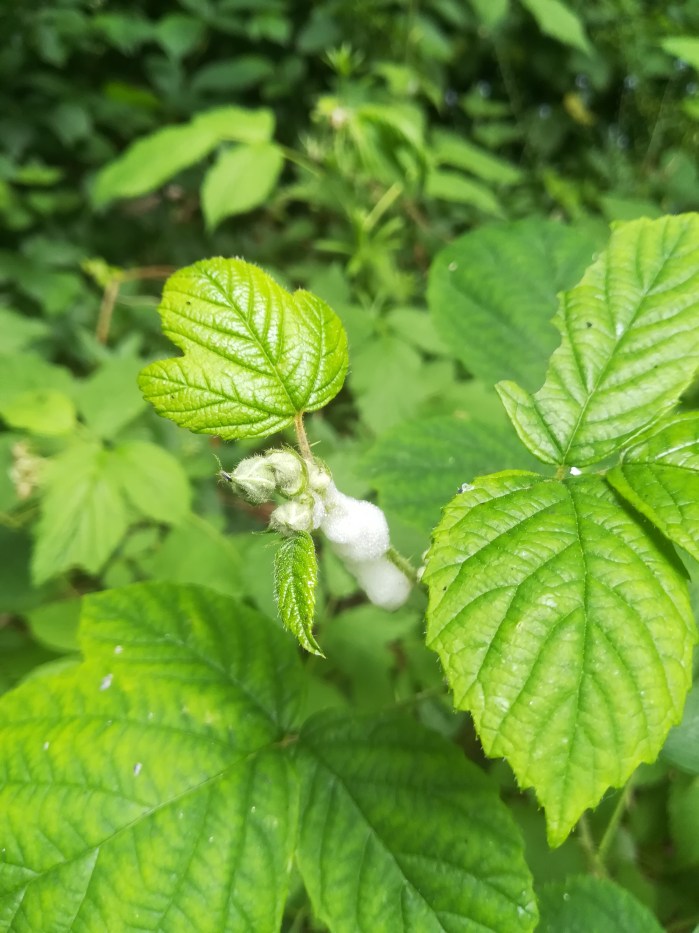
And finally a section of brambles have been attacked by an insect of some sort that produces a frothing spit. rather like the version that forms Meadow Spit but I am not sure.

dav I am making good progress with moving the container to the top of the wood. More next time……………………



Trying to box clever

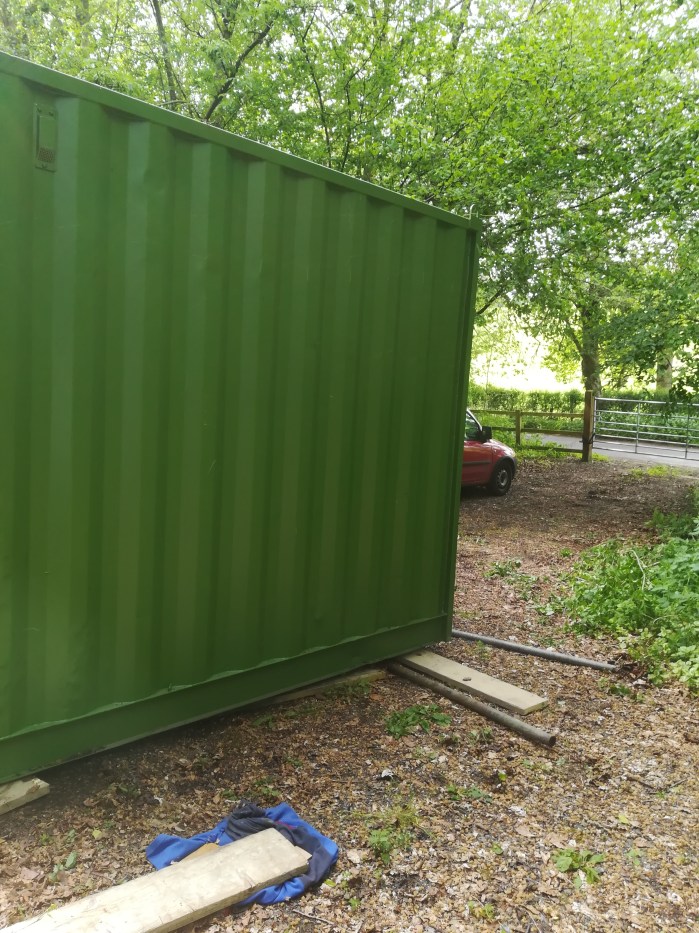
How do you move a one tonne metal box up a hill through a woodland? With difficulty is the short answer.

Having had a cut down container delivered to site the challenge is to move it up through the trees whilst trying hard not to cut down any of the branches or trees so that I maintain the unmanaged feel to the entrance.

A one tonne box is a very numb object. Adding to its lack of manoeuvrability are the protruding metal edges at each corner which dig in and drag along the ground surface.

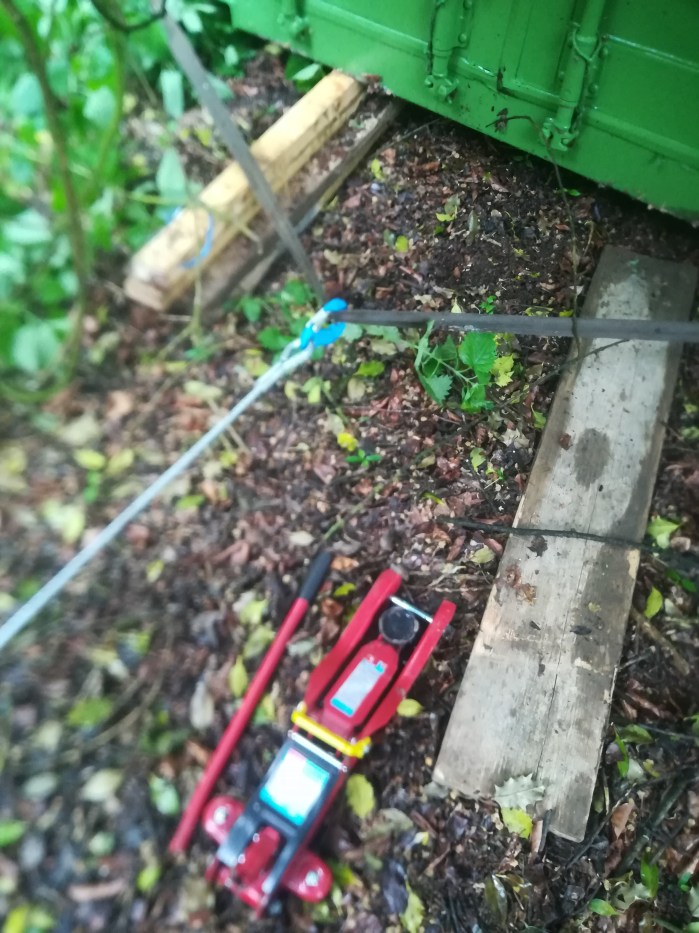
So the first job was to lift it up off the ground and get it sat on some wooden runners that would allow it to move a lot more freely (freely – its all relative). The first attempt at this  used a scaffolding pole and a fulcrum and managed to lift the box but was incredibly frustrating. Each time I managed to get my weight in the right place in order to lift the box, I couldn’t then reach what it was that I wanted to put under the lifted box. It was bit like that final scene from the Italian job where the coach is balanced over the precipice. Each time they move to try and recover the stolen  bullion, the gold bars slide a little bit further away. A far more practical approach has been to use a 2 tonne low profile trolley jack that slides under the box and is able to lift it up and leave me both hands free to insert the wooden runners. I have also greased the top rails of each of these wooden runners with a general purpose grease, apparently there isn’t a specialised “moving shipping container” grease available!

dav

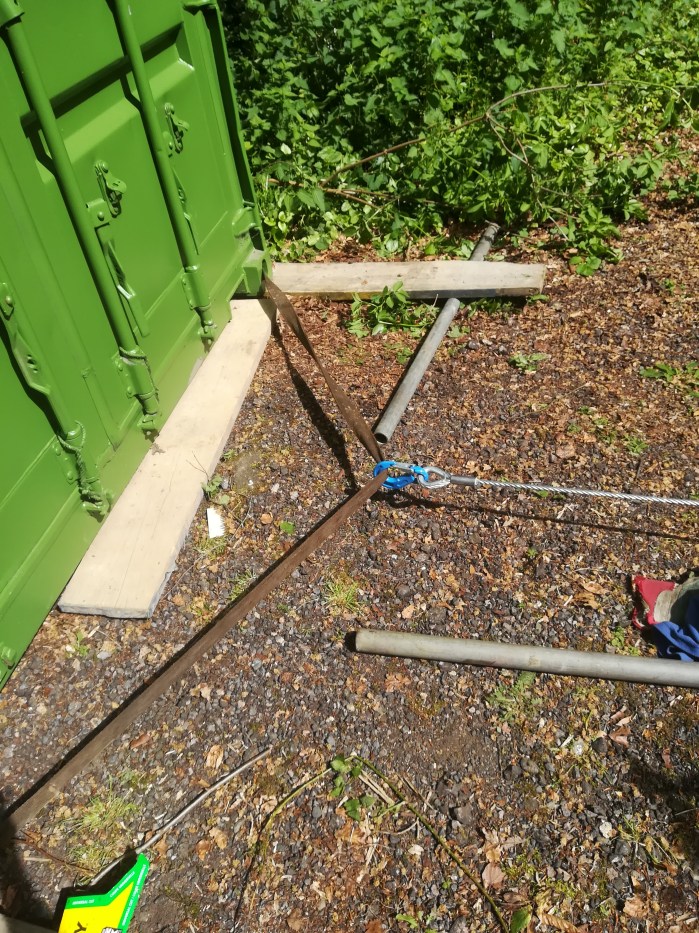
Once the box is lifted off the ground and so not digging in the next part of the process is  to be able to pull it up the sloping woodland. For this I am using a Tirfor. This is an amazingly effective and reasonably simple device that uses a pair of plier like jaws to gradually pull a metal wire through itself driven. The winch is manually driven by working the handle back and forth. You can get various capacities, I opted for a 1.6 tonne version so that I had plenty of muscle.

The Tirfor is anchored to a series of handily placed trees with a canvas sling that ensures that there is no damage caused to the trees.

Image result for tirfor manual

The approach has now developed into and involves setting the four wooden runners, one on each side at the front and one on each side at the rear. The winch is then used to pull the cable in so that the box moves along the runners. Each runner is about three foot long so that is the maximum travel in one pull. You then need to reset the whole thing ie pull the front runners out and push the rear runners in and repeat the process.

So all that’s left to do now is to repeat the process say about 200 times and before you now what has happened the box is at the top of the wood.

The reality is that progress is a lot slower and yesterday I managed only 80 feet. Still considering that this is a single handed tracking of a one tonne weight up a rough woodland floor I am very pleased that it moves at all.


dav
canvas hoist slings are invaluable

I will try to post a series of photographs showing the overall progress.

More next time…………..

A hard wood amongst hardwoods

The hornbeam is a native of the UK and is a member of the same family of trees as alder, birch and hazel namely the Betulaceae. It is commonly found in the south and south east of the country but can be found further north. I remember being shown around the Ecceshall wood near Sheffield and seeing their hornbeam tree – just the one, in the middle of the wood. Pops wood has a small grove of them at the top end. At the moment they are somewhat shaded out by larger beech and wild cherry but the plan is to thin these out and to give the hornbeam sometime in the sun and see if it thrives once more.

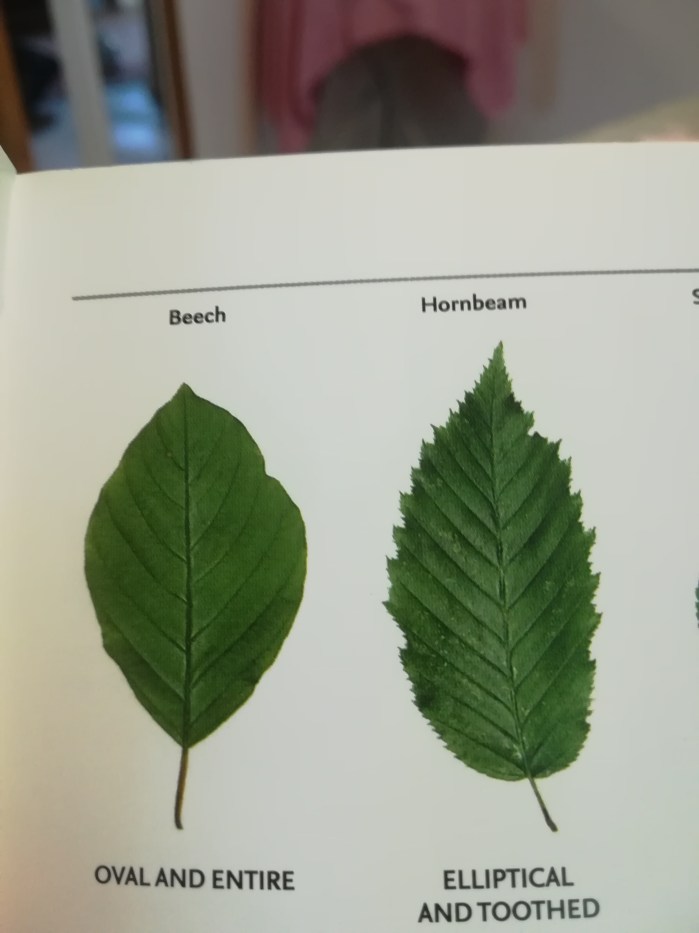
The hornbeam leaf is very similar to that of the beech tree but has some distinct differences shown below.

beech v hornbeam
beech v hornbeam

It produces male catkins that are then pollinated by the female catkins on the same tree. The female catkins then develop the fruit which is a small nut held in three papery seed wings formed into clusters that look a bit like hops hanging down in the late summer/autumn. Weird but the Hawfinch is the only British bird able to crack open the seeds. Now that is specialised.

Hawfinch

A tonic made from hornbeam was said to relieve tiredness and exhaustion, and its leaves were used to stop bleeding and heal wounds.

The hornbeam often has a twisted main trunk or bole. It looks a bit like a wrinkly stocking or elephant skin. In fact its often possible to see elephant faces in the trunks of hornbeams – have a good look next time.

phone pictures 637

The name hornbeam comes from the hardness of its timber – ‘horn’ means ‘hard’ and ‘beam’ was the name for a tree in old English.

Hornbeam timber is a pale creamy white with a flecked grain. It is extremely hard and strong, and so is mainly used for furniture and flooring. Traditionally used for the wood included ox-yokes (a wooden beam fitted across the shoulders of an ox to enable it to pull a cart), butchers’ chopping blocks and cogs for windmills and water mills. It was also coppiced and pollarded for poles.

Hornbeam burns well and makes good firewood and charcoal.

It thrives on heavy clay soil and likes living in amongst oak and beech trees so there you go, ideal for Pops wood.

Later in the summer I will be making charcoal with some pollarded stems that were taken down last year. It will be interesting to see how it compares with the beech charcoal produced to date.

More next time…………………….


Splitting cherry – better than I thought

One of the first jobs when begining to tidy up the fallen oak tree was to take off all the branches. These have been drying out in piles around where the tree fell for over a year now. I think most commercial operations would burn these on site straight away and that would be that. I decided that they would have a use and this week was the time to try and prepare them.

Part of the process when making charcoal with the retort is that you need a feed stock of suitable fuel (wood) to heat the oven up  so as to drive off all the water and volatiles and turn the wood in the retort into charcoal. I have previously been using scrap softwood which is fine but needs to be brought onto site which is a bit of a faff and seems odd when the wood is full of well…….wood. So the smaller branches will be turned into firewood and used to fire the retort.

Fine but first of all I need somewhere to store then and keep them dry ready for use.  I decided to build a simple frame that would contain the scraps of wood within a netting. My usual choice of wood is to take a few hazel poles but this time I decided to use a small wild cherry tree. These trees will all be taken down this autumn any way as part of the hazel coppice, so taking one out now is sensible and doesn’t sacrifice any other tree.

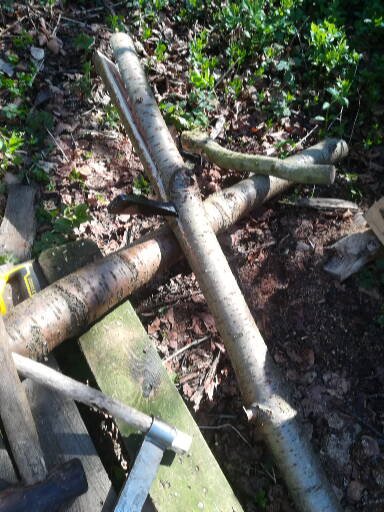
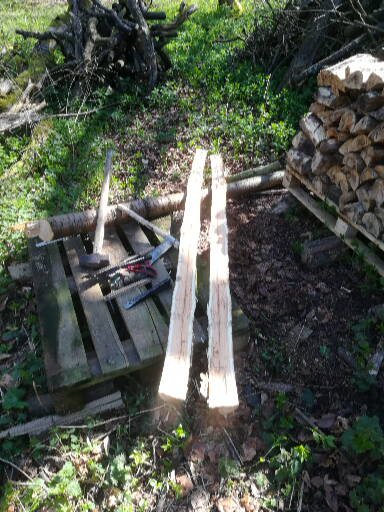
To make most use of the small diameter stem I set about splitting it into half and then half again where it was thick enough. Not having split cherry before I wasn’t sure how it would behave. Would it split cleanly and along reasonably straight lines? The answer is yes on both counts. Very satisfyingly the wood cleaved straight down the grain and was a lot less effort than I thought. I started with the fro but finished off the split using the two splitting wedges which proved very effective.

1524154089645

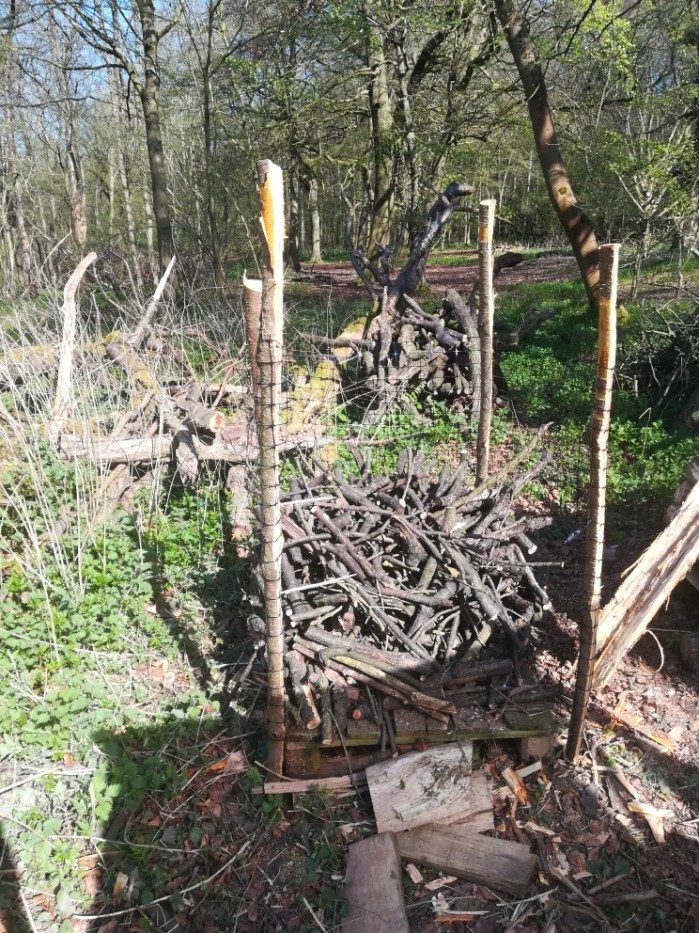
These split logs formed the corners and bracing bars for the silo pictured below.

IMG_20180419_153644_resized_20180504_015528296

The silo is now full and I have already used some for the most recent firing of the charcoal retort. The oak wood burns readily and performed well. Seems odd to have a bonfire and burn things just to clear them up when you can wait for a while and have the huge amount of energy stored in the smaller branches put to such a practical purpose.

More next time…………………

PS

dav

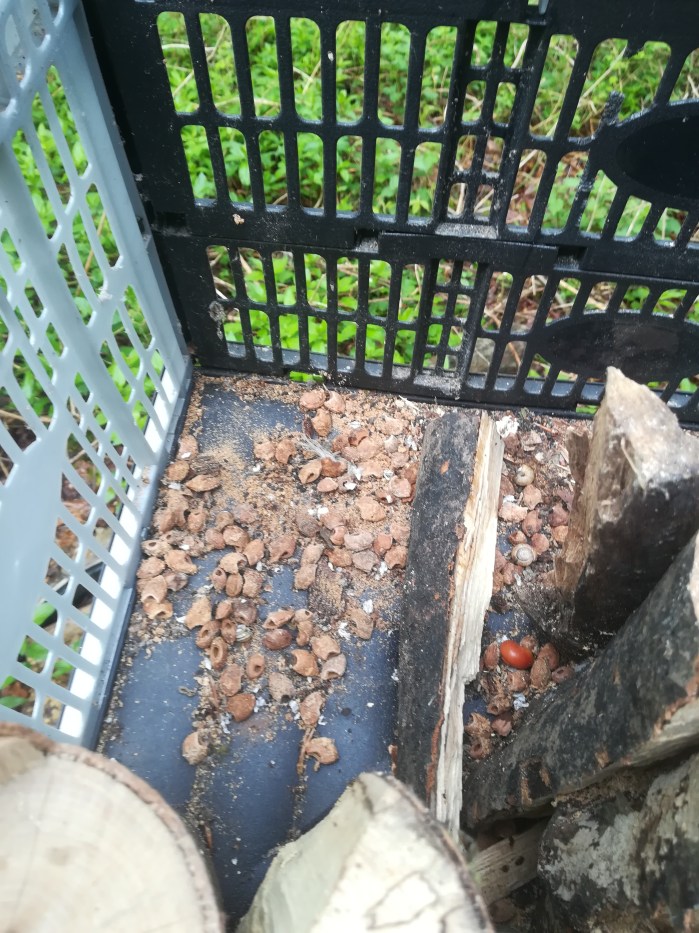
Before I packed the  charcoal retort away last year I ensured that I had prepared the beech logs for the next firing. These have been stood at the side of the retort in plastic boxes and under plastic sheeting over winter. The wood/field mice obviously thought this was a great place to come store and then subsequently eat the hazel nuts that they had gathered. At the bottom of each box were scores of empty hazel nut shells all with neat little teeth marks.

Life’s a beech and an unwelcome visitor

Bit of a change in the wood this week. Gone are the warm winds and unbroken sunshine and instead we are back to “April like” weather with broken sunshine and showers. One of the showers on Thursday was an unexpected hail storm which seemed so incongruous given that the week before was a glorious 25°C. Still maybe this colder weather will hold the bluebells back just long enough to make sense of a bluebell picnic that is happening in the wood in a couple of weeks time.

dav
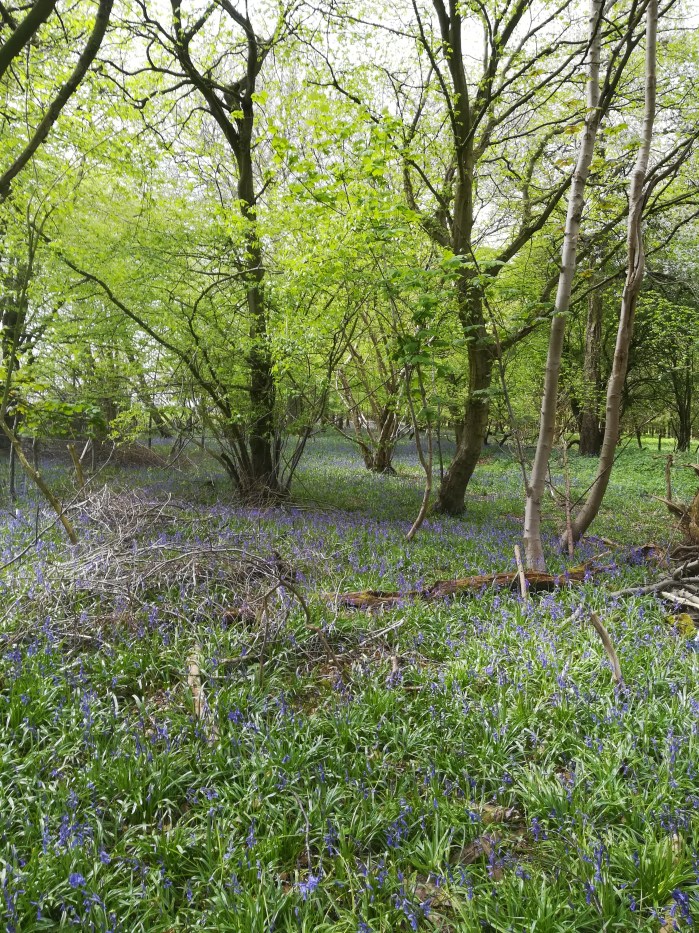
Bluebell carpet has bloomed during the warm spell

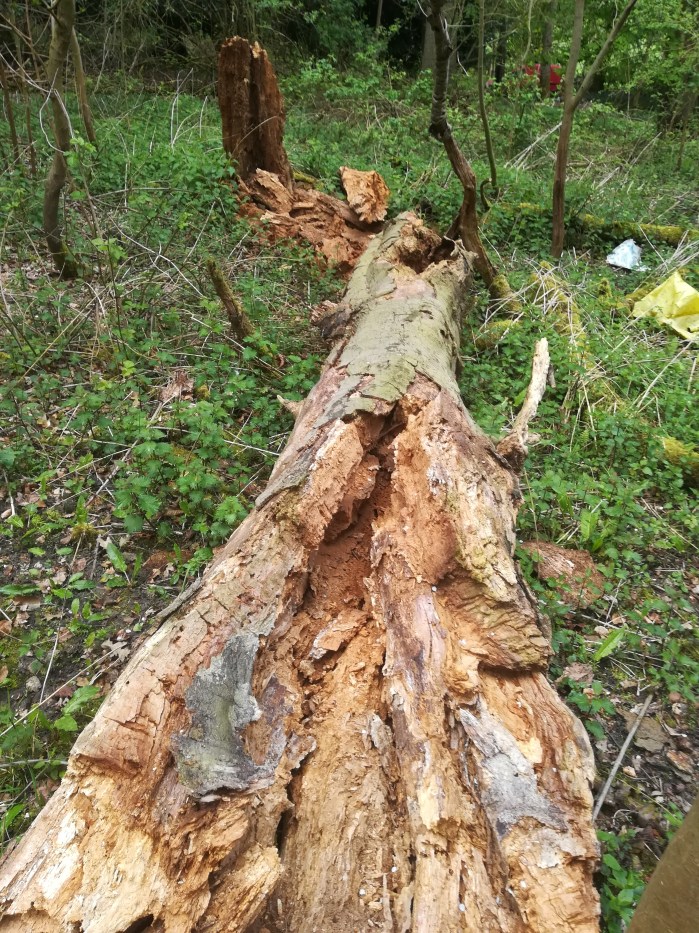
One new feature in the wood was a fallen beech tree. Or rather the remains of a previously dead beech tree that had stood for a while as a stump but has now succumbed and crashed to the floor. This is one of the stages of the death of a tree in a woodland setting.

  • Firstly the tree struggles to survive maybe through disease but in the case of the beech trees I am advised it is because they become waterlogged.
  • Secondly they die off and the soon after they lose limbs as they physically weaken. What is left then is a stump ie just the main trunk; and,
  • Finally that too falls.

Whilst this is not a great process in terms of managing a woodland for timber; this is a very important part of the woodland scene. Now that the tree is on the ground a whole host of micro life (including wood lice and their ammonia farts – see earlier blog) will inhabit the dead wood and decompose it fully to dust and enrich the soil. As is the cycle of life these insects become a part of a food chain for higher species and so the process continues. Leaving fallen wood is an essential part of woodland management.

As mentioned last week I was visited by a team from the Herts and Middlesex Wildlife Trust who came to the wood to update their flora and fauna report. Their expertise and detailed knowledge of plants and woodland trees is very impressive and in the brief chats that  had as they worked methodically through the wood were very informative.

One item that they were keen to point out to me is that I have an invasive species right at the gateway to the wood.

This is the Variegated Yellow Archangel. It is a relative of the dead nettle and produces a lovely yellow flower on variegated leaves. It is sold for planting in gardens but this species is listed on Schedule 9 of the Wildlife and Countryside Act in England and Wales therefore, it is also an offence to plant or otherwise cause to grow these species in the wild.

How these got into Pop’s wood is unknown but they are incredibly quick to colonise and appear to flourish in the poorest of conditions. Like a common nettle they send out runners that carpet the ground and set to root along their length. They can very quickly starve out other native species. There are few alternatives to carefully digging these out wherever and whenever they appear. This is a job for life, it strikes me, as the smallest piece of broken root left in the ground will remain viable and grow again the next season.


The native Yellow Archangel is very similar to the intruder, a stoloniferous (sends out runners) herb growing upto 30cm and forming extensive patches. The stolons are thick and root easily, thereby spreading the patch. The hooded flowers are yellow and the ‘tongues’ have red honeyguides. The stamens are hidden in the hood. Leaves are dark green and shaped like stinging nettle leaves.

The are two main approaches to controlling the invasive species;

  • mechanical, physically rooting out all the plants taking care to remove all the roots, and/or
  • chemical, using an appropriate herbicide to tackle the plant systemically.

My preference is to use a mechanical means initially and see how successful that approach is before taking any more serious action.

Guess what the attendees of the bluebell picnic will be doing!

More next time…………………………..