What a difference a week makes at this time of year. Some warm sunshine and a break in the rain and suddenly the woodland is coming alive and shrugging off the winter hibernation.
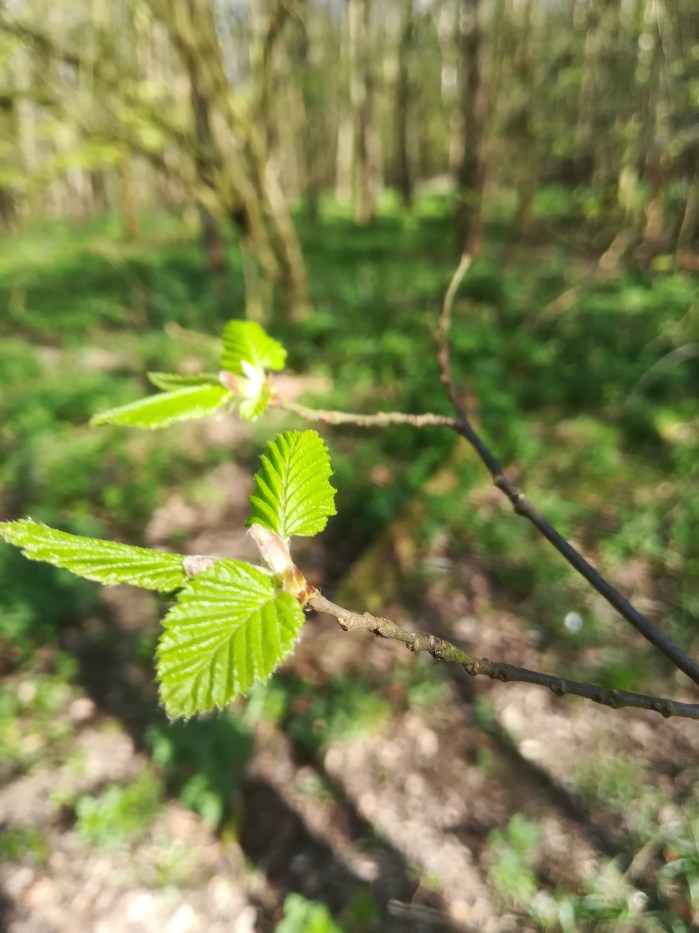
I was surprised to see that the beech trees at the top of Pop’s Wood are further on in coming into leaf than the hornbeam. In the garden at home it is always the hornbeam that is first into leaf and first to loose its leaves in the Autumn. But for whatever reason that is reversed this year.
Beech well on its way
Hornbeam just getting going
Great to see the beech filling out with its lime green leaves standing out against a beautiful blue spring sky.
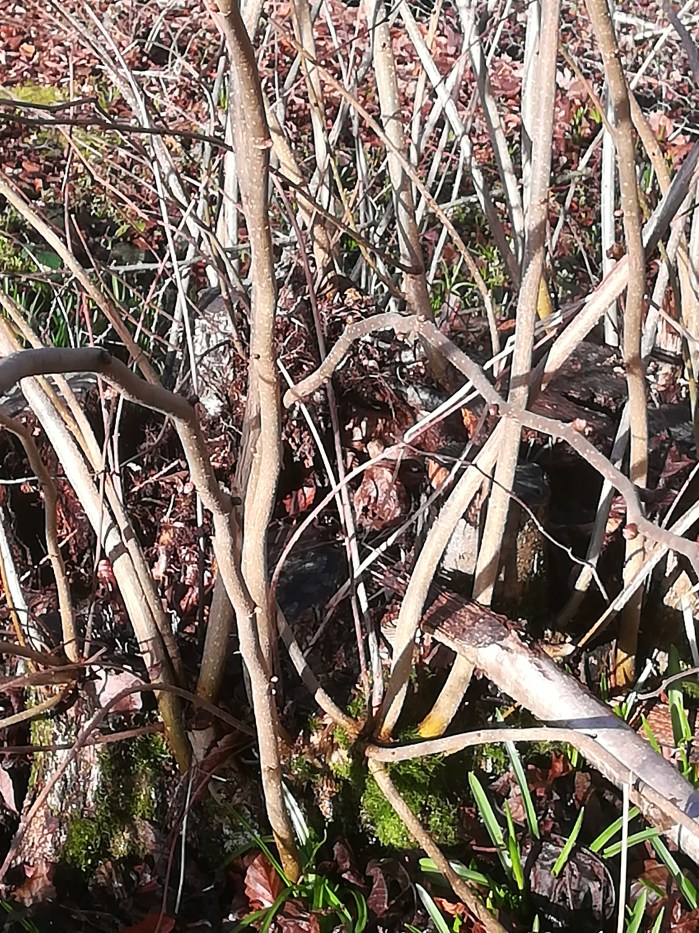
I was also very pleased to note that a hazel pole, that I used in the autumn to make one of the log wood shelters, is sprouting. When I made the structure I must have rammed one end of the pole into the ground, but this tenuous link with the soil has sustained growth and enabled a potential new hazel plant to survive.
one end in the soil
new growth on the cut pole
I intend to further explore this ability of the hazel to regrow from cuttings and carry out a more organised cutting propagation session in the autumn. I tried this earlier last year with some hornbeam cuttings but, despite early positive signs of the cuttings taking, they have all subsequently failed. The hazel appears to have a greater ability to survive and any successful cuttings will be used to increase the density of the hazel stools following this planned autumn’s coppicing.
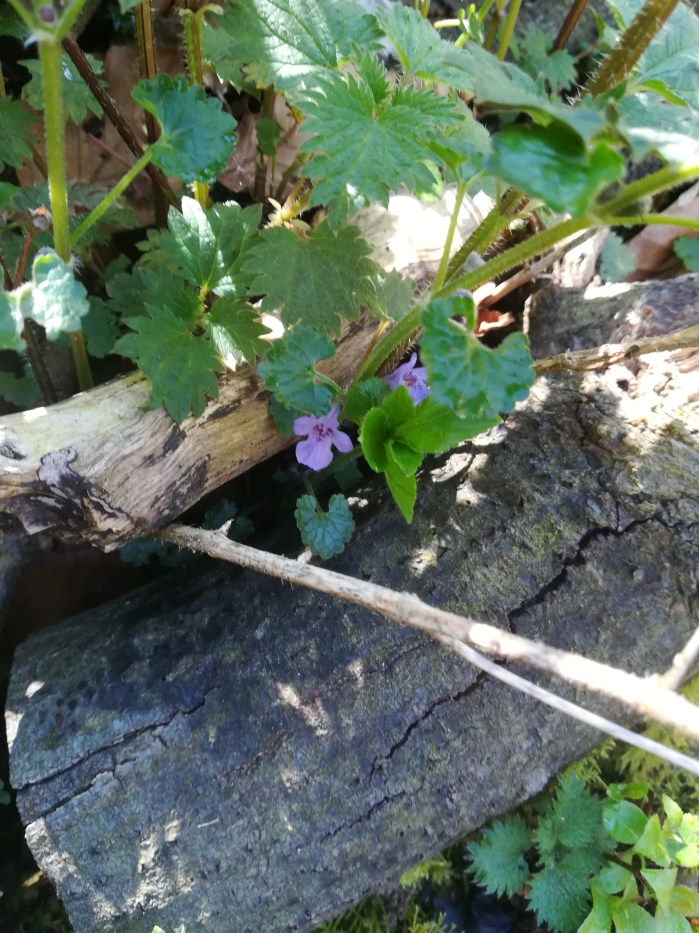
Also enjoying its time in the sun is this member of the violet family. I think that this is either a dog violet or a sweet violet. I will have a chance to quiz the experts as the Herts and Middlesex Wildlife Trust are visiting the wood on Thursday next week to update the flora and fauna report that they produced a few years ago. Either way its a very welcome addition to the woodland floor.
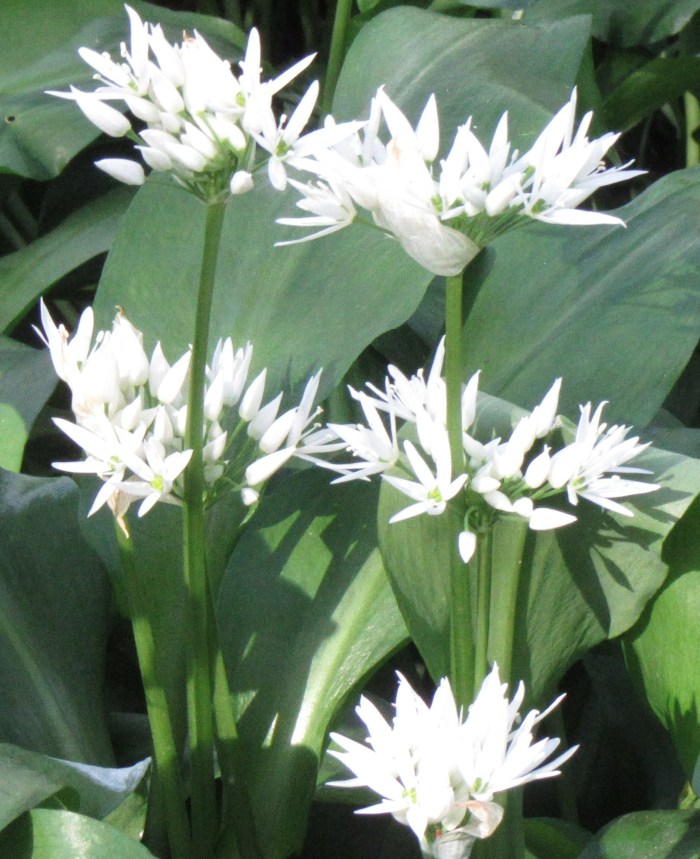
Allium ursinum – known as ramsons, buckrams, wild garlic, broad-leaved garlic, wood garlic, bear leek, or bear’s garlic – is a wild relative of chives native to Europe and Asia. It is a woodland plant that enjoys chalky soils and damp conditions. It grows in broad carpets across the shady parts at the bottom of Pop’s Wood just where the conditions best suit it. At this time of year it is beginning to come into its peak with a solid green covering of leaves and the start of a flower stalk. All this from a period of complete dormancy where, like any bulbous plant, it lies recovering underground having put all the strength of the previous growing period back into energy stores within the bulb ready for another annual surge.
Wild garlic is a really tasty ingredient.
Here are a couple of key foraging guidelines:
– Seek permission before foraging. In certain areas, plant species will be protected so it is important to do some research and check with the landowner before you start gathering.
– Only pick from areas that have a plentiful supply. Look for areas where you can find wild garlic in abundance and then only collect a small amount for personal use. Never completely strip an area as this could damage the species and deny another forager the chance to collect.
– Leave enough for wildlife and avoid damaging habitats. Many animals rely on plants for survival, so never take more than you plan to eat as this could also deny wildlife from a valuable food source. Be mindful about wildlife habitats and avoid disturbing or damaging.
– Never pick protected species or cause permanent damage. Britain’s wild plants are all protected under the Wildlife and Countryside Actwhich makes it illegal to dig up or remove a plant. Check the law before you forage or if in doubt, why take part in a foraging class with an expert and learn the basics.
Here’s a recipe idea that I picked up from the Countryfile web site created by Gill Mellor from River Cottage.
Wild garlic and onion bhaji with wild garlic raita
Wild garlic and onion bhaji with wild garlic raita
These bhajis have become a River Cottage classic. They are cracking with a good curry or served with drinks as a little appetiser.
Method
First, make the raita. Combine the yoghurt with the cucumber, mint and wild garlic and add the salt. Mix well and set aside.
To make the bhajis, combine the gram flour with the ground coriander, cumin, curry powder and salt in a bowl. Turn through the onion seeds, wild garlic and sliced onions. Stirring as you go, gradually pour in the beer or water until you have a nice and smooth, yet very thick, batter – you may not need all the liquid.
Pour the oil into a deep, heavy-bottomed saucepan to a depth of about 8-10cm and warm over a medium heat – you want the oil to be hot, but not too hot, because the onions and flour need to cook through without the outside of the bhajis burning – 165°C is perfect. You’ll need to cook them in batches, so don’t overcrowd the pan – drop large spoonfuls ofthe batter into the oil and cook until golden, about four to five minutes, turning once or twice. Drain on kitchen paper briefly and serve hot, with the raita alongside.
Superficially flints have nothing to do with wood or trees….or do they? I guess one connection is that they are an indication of the soil that is in your woodland and so what trees like growing there. Flints occur in chalky or limestone areas. The soil in Pop’s Wood is predominately chalky/clay with a rich leaf litter which has been deposited over years. There are instances where there are subtly raised banks which may have served as wall footings ie boundaries. There is a high concentration of flints in these locations as the original “builders” of the footings would have gathered together whatever materials were close to hand.
Flints are curious. I am not sure that I fully understand the chemistry but flint is apparently a sedimentary cryptocrystalline form of the mineral quartz. Diamonds are also a form of cryptocrystalline structure. I take from this that flints are made up of minute crystals closely packed into a dense structure giving it great strength.
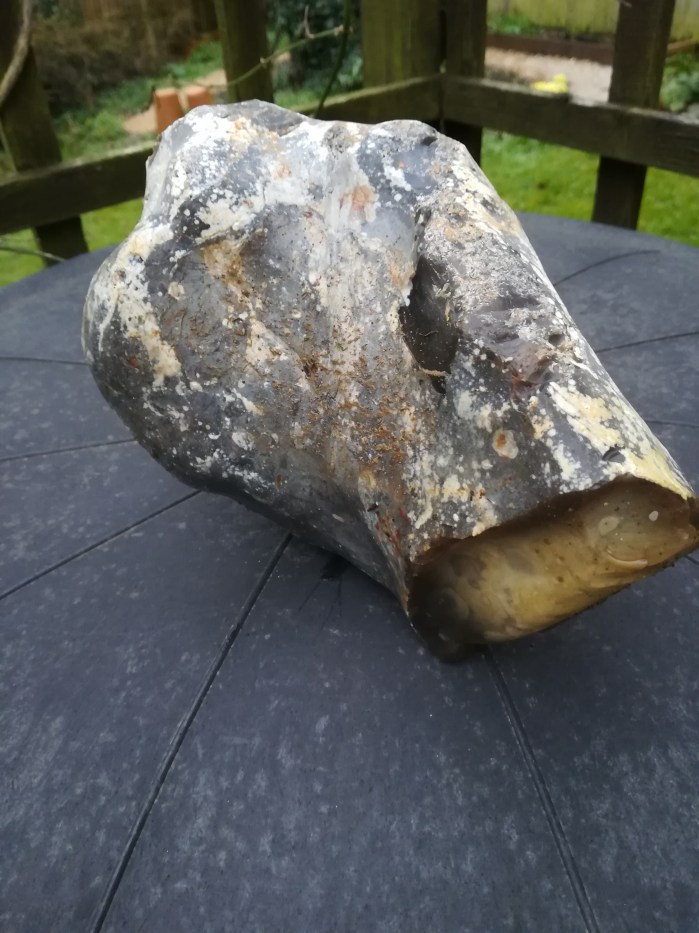
Some of the flints that you find on or just near the surface of the ground have distinct nodular shapes. These were formed when minute crystals of quartz settled into the empty burrow of an animal or insect millions of years ago and took on the shape of their surroundings.
Nodular shaped flint
Flint with white interior
Of course it is the properties of flint that would have been of most importance to those living in the ancient woodlands. Flint can be sheared or knapped to produce very sharp shards or to produce a cutting edge.
It is not difficult to imagine an axe being produced by knapping a block such as that above. That axe could then be used to shape fallen branches or even to cut down trees. The razor sharp shards were used to butcher animals and to process the skin and fur into usable clothing. Much later the discovery that red hot sparks are produced when a flint is struck by steel would have made the flint a valuable resource to carry around enabling fires to be started at will. Flints have also been used an incredibly durable building material and can be seen in many rural buildings.
The connections between the woodland and the flint didn’t seem immediately obvious but they go back a long way together and flint has almost certainly helped shape the woodlands that we have now inherited.
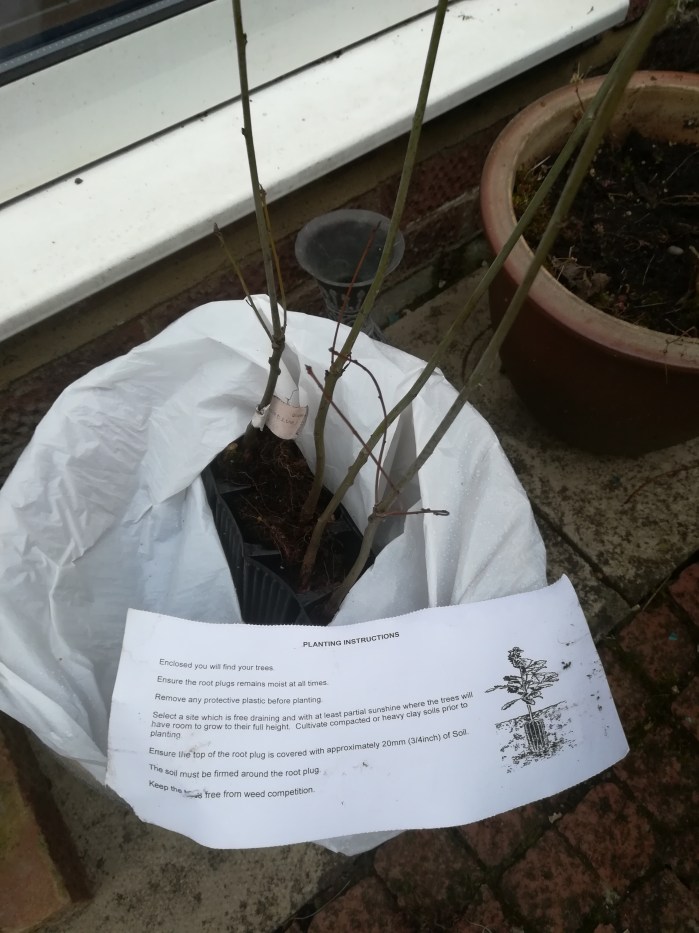
I was very lucky this week to be asked if I would like four oak saplings, I of course said yes and waited for them to be brought round to the house. I didn’t know what to expect. I don’t think that I was expecting to hear the sound of a large lorry reversing into the drive but was somewhat surprised when a friend turned up with a shopping bag with the four oak saplings just managing to peek out over the brim of the bag. Still from small acorns etc.
dav
Native UK oaks are split into two broad groups; the pendunculate, and the sessile varieties. The pendunculate oak is sometime referred to as the English oak, and can be differentiated from the sessile oak as their acorns grow at the end of long stalks or pendules. The pendunculate oak is incredibly important from a native wildlife perspective, it supports invertebrate life in abundance with several hundred moth species larvae feeding on its leaves. Even when it dies it supports life in the form of wood-boring beetle larvae and fungi.
Pendunculate laf
Pendunculate flowers
Pendunculate bark
Pendunculate acorns
The sessile oak tree has a domed shape and tend to grow in areas of higher rainfall than pendunculate oaks. The best remaining tracts of sessile oak are on steep slopes as they are hard to fell and these areas of trees are sometime referred to as hanging oak woodlands. Because of the damper conditions mosses and liverworts often flourish on the trunks and branches. Interesting that Pied Flycatchers reach their highest breeding densities when they nest in sessile oaks.
The acorns on the sessile oak grow directly on the twig without a stalk. The tree was once heavily coppiced for fuel and its bark was used in the leather industry in the tanning process, now its highly values as a support of wildlife.
Sessile leaf
Sessile acorns
Sessile trunk and bark
The bottom section of Pop’s Wood is sheltered and on a reasonable slope so maybe the new saplings would be successful there. I will have to have a good look and pick suitable spots. It did strike me that the very reason that the beech have succumbed is because of the damp ground so maybe the sessile oak could take their place.
The weather had perked up a bit by mid week so I went for a walk. Parking the car in Pop’s wood I set off on a very muddy bridle path running alongside the base of an adjoining piece of woodland. The woodland had been previously managed and appeared to have a reasonable density of hornbeam and hazel stools but they hadn’t been coppiced for a significant period.
Along the edge of the woodland and immediately at the side of the bridle path was a line of old oak trees. These oaks were just over three in diameter at breast height. A hug is the distance between an adults outstretched arms from finger tip to finger tip and is on average 5 feet (1.5m). So wrapping yourself around a tree is a good way of either getting arrested or determining the tree’s diameter. That in turn will give an indication of its age. The Woodland Trust has a ready-reckoner for estimating the age of a tree in their oak age estimator.
dav
dav
These trees had a diameter of just over 17′ so would come out as being 300+ years old.
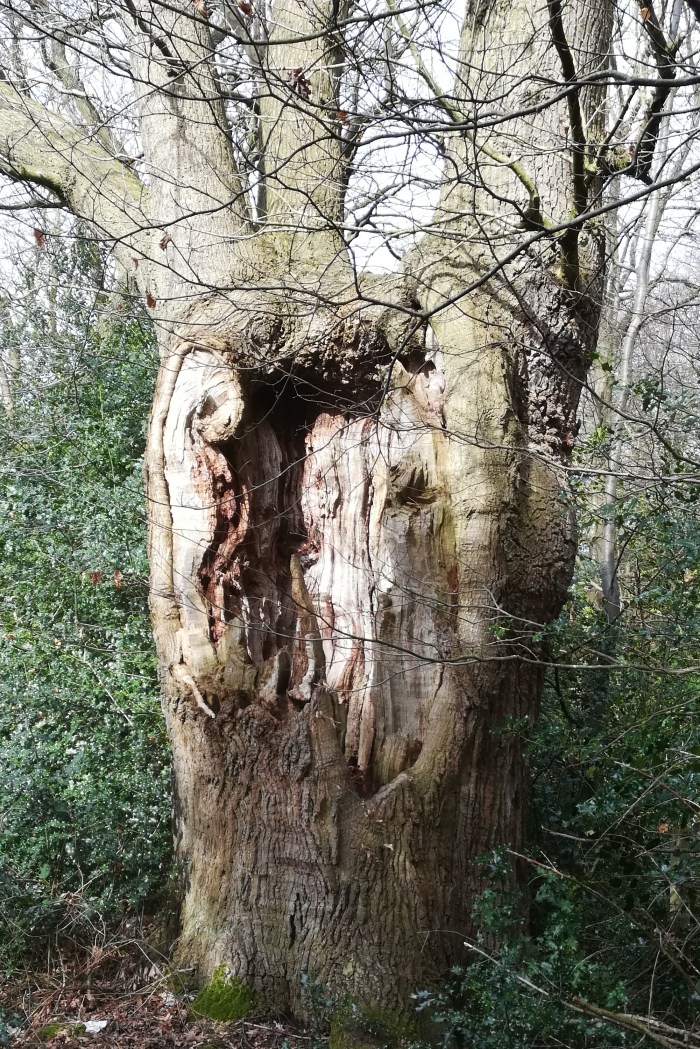
As can be seen by the shape of the trees they have been pollarded in their past.
Pollarding was preferred over coppicing in wood-pastures and other grazed areas, because animals would browse the regrowth from coppice stools but were unable to reach the regrowth on the top of a pollarded tree. Historically, the right to pollard or “lop” was often granted to local people for fuel on common land.
An incidental beneficial effect of pollarding in woodland is the encouragement of underbrush growth due to increased levels of light reaching the woodland floor. This can increase species diversity. However, in woodland where pollarding was once common but has now ceased, the opposite effect occurs, as the side and top shoots develop into trunk-sized branches. The thick growth of the pollarded trees severely restricts the light that reaches the woodland floor.
In the examples above, some of the pollarded branches have snapped off and taken with them a significant section of the original tree stem. In both cases this has created huge cavities that are large enough to walk into and provide great hiding places.
I wonder if these trees will continue to survive, the growth in the “new” top stems is so heavy and so out of proportion to the base that they look vulnerable particularly to strong winds.
However in the meanwhile they are great reminders of an ancient craft and are things of beauty in their own right.
In December 2016 I coppiced two hazel trees, these were my first attempt at this important aspect of woodland management. Like all new ventures there is a certain faith in the training and the theory that you have been taught but at the back of your mind is a nagging doubt that it could all go horribly wrong.
These hazel trees had previously been coppiced but had not been managed for twenty years or so. Having said that the stools were healthy and had vigorous growth. The most obvious sign of lack of management is the enormous variety in thicknesses of stems. Some had a diameter of 6″ with others the classic bean pole or whip diameter.
Hazel stools before coppicing December 2016
It is physically quite hard going to saw through the various stems as access is often restricted. Hazel is a relatively soft wood but cutting any standing tree has the dynamic elements of the weight of the branches either squeezing the cuts closed or breaking open unpredictably. I found that taking the branches down in stages helped ie taking the majority of the branch down and taking the weight off the stool allowed the close up work to be done under more controlled conditions. It is important not to damage the stool, by perhaps the branches ripping away as they are partially cut, as the stool is the engine room of the regrowth.
Before
During – with logs sawn and stacked
After – stool ready for layering
During the cutting process its important to identify a number of healthy stems and select them for layering. This is a process whereby the stem is partially cut near to the stool and bent over and pinned to the surrounding soil. Prior to pinning the bark is scratched off the side that is in the soil to encourage the growth of new roots. Hazel has the ability to put down roots and generate new stems along these layered lengths and so eventually propagate a whole series of new stools that can be separated from the “parent” and establish themselves as new independent stools.
Shows the layered stems
At this stage you hope that you haven’t hacked away too much and that your enthusiastic but amateur efforts will not prevent mother nature recovering and regrowth starting.
I am happy to say that approximately 15 months later the stools are once again flourishing.
new growth some 4′ tall in the first year
quite a tangle of growth but all healthy
Did the layering work? Well here is a short video tracing one of the layered stems and the prolific regrowth that has followed.
Safe to say that I had to protect fence off the coppiced stools in a small compound to protect the new shoots from the nibbling deers; but this effort would seem to have been worthwhile. This was a small scale trial venture into the world of coppicing but it has given me confidence in the process and my approach to scale up this next autumn and tackle a larger number/area at the bottom of the wood adjacent to where the turkey oak came down. This is when the woodland starts to change and be brought back into management. Sounds draconian but hazel coppicing encourages a wide range of habitats for butterflies, dormice, reptiles other birds.
I mentioned a few weeks ago that the wind had brought down a part of a dead beech tree, well this week I spent a day on that beech clearing up the fallen wood. There is a great value to having dead wood and standing dead wood in particular in a woodland.
The Forestry Commission state that “Deadwood supports a large and complex food chain and is an essential element of any sustainably managed woodland. Decaying wood produces humid, protected niches for invertebrates, plants and fungi which in turn help form the woodland soil and directly support other plant, bird and animal populations. Many of the species reliant on deadwood are now rare or endangered.”
What should I do with the fallen branches? Do I have to leave everything that falls to rot away on the floor? Again reference to the Forestry Commission web site indicates that a 5% volume of dead wood is a suitable rule of thumb target for a healthy woodland. This equates to 1 in every 20 stems will be a either a dead stem or contain a significant amount of dead wood. Using these guidelines and on the basis that I am trying to make the woodland work from a financial perspective,I have determined that I should use the fallen timber but leave the remains of the standing dead beech and simply work around it.
dav
dav
dav
As can bee seen from the pictures above there was a significant volume of timber to be recovered. My intention for the smaller diameter wood is to process it to charcoal using some of the scrub branches as fuel to fire the whole process. The advantage of the beech having been dead for a while is that the wood is fully seasoned and has a very low water content.
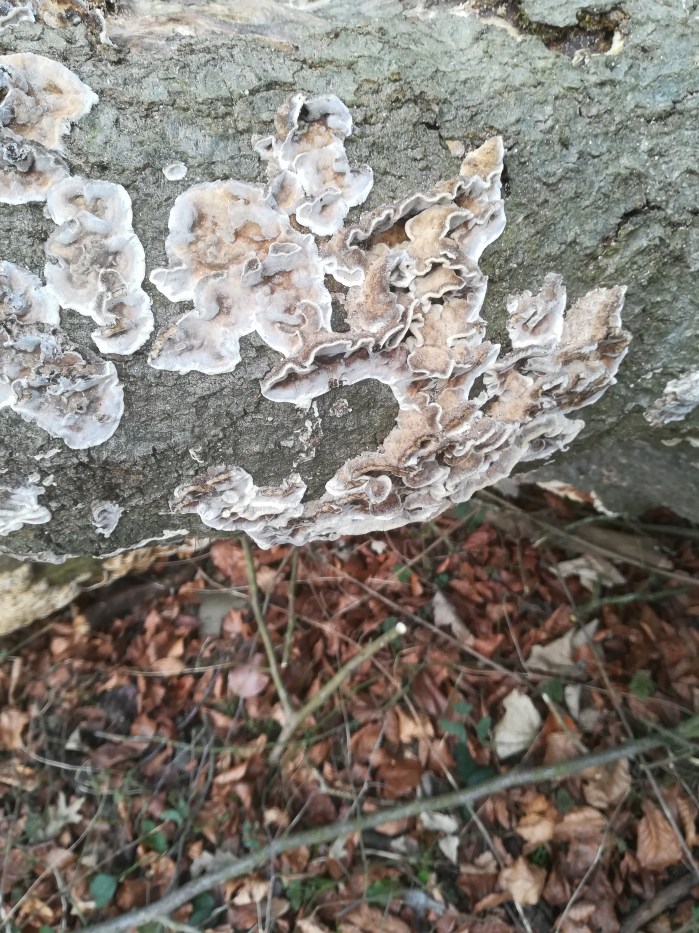
Fungal infection on the outside of the beech
A lot of the bark of the tree was covered in a fungal infection as shown above. Not sure what sort of fungus this is but will do some more homework and try and find out.
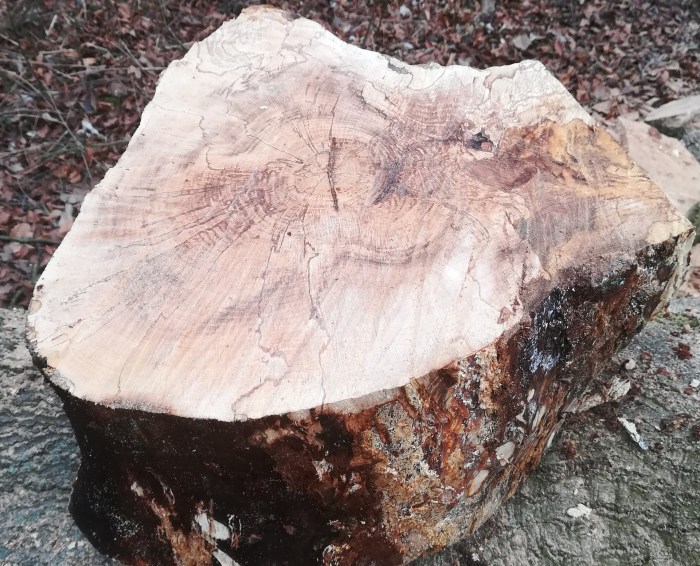
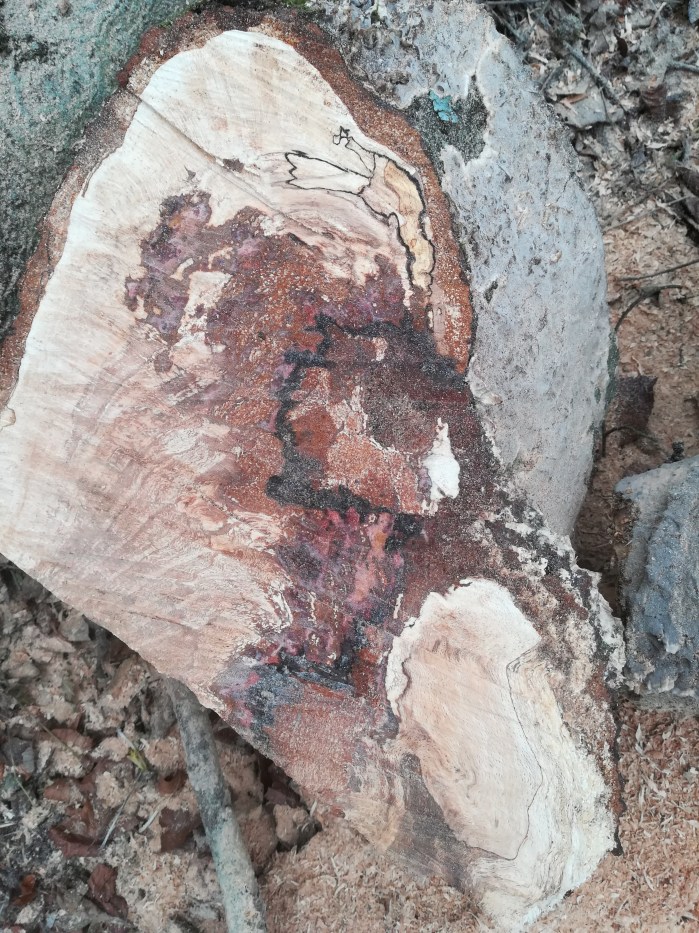
The upshot of this and other fungal infections is that the grain within the felled tree has taken on a significant and attractive transformation. This process is known as SPALTING and is highly valued amongst wood turners and cabinet makers. The main picture shows a small section that I recovered with a view to making a turned wooden bowl.
Here is a another close up of that same piece of wood.
Spalted beech
Turns out there is a massive amount of great deal of variety of spalting processes involving different species of fungi and the order in which they attack the host tree. Here are a few of the main varieties:
White rot – the mottled white pockets and bleaching effect seen in spalted wood is due to white rot fungi. Primarily found on hardwoods, these fungi ‘bleach’ by consuming lignin which is the slightly pigmented area of a wood cell wall. Some white rotting can also be caused by an effect similar to pigmentation, in which the white filaments of a fungus, such Trametes Versicolour is so concentrated in an area that a visual effect is created. Both strength and weight loss occur with white rot decay.
Brown rots, the ‘unpleasing’ type of spalting, do not degrade lignin, thus creating a crumbly, cracked surface which cannot be stabilized.
Both types of rot, if left uncontrolled, will turn wood useless.
Zone lines (looks my examples have these) are dark dotted, winding lines and thin streaks of red, brown and black. This type of spalting does not occur due to any specific type of fungus, but is instead an interaction zone in which different fungi have erected barriers to protect their resources.They can also be caused by a single fungus delineating itself. The lines are often clumps of hard, dark filaments. Zone lines themselves do not damage the wood. However, the fungi responsible for creating them often do.
Who knew!
The beauty of what you discover in nature is primarily to be marvelled at with the understanding of how/why it occurred coming a close second.
It was just over a year ago in December 2016 that a group of us had a hedge planting day in Pop’s Wood. The hedge was a mixture of native hedge plants made up of hazel, hawthorn and field maple. The plants came as bare rooted spindly single stems and looked very vulnerable once in the ground. See the very first Tim Burr blog in March last year earlier blog dated.
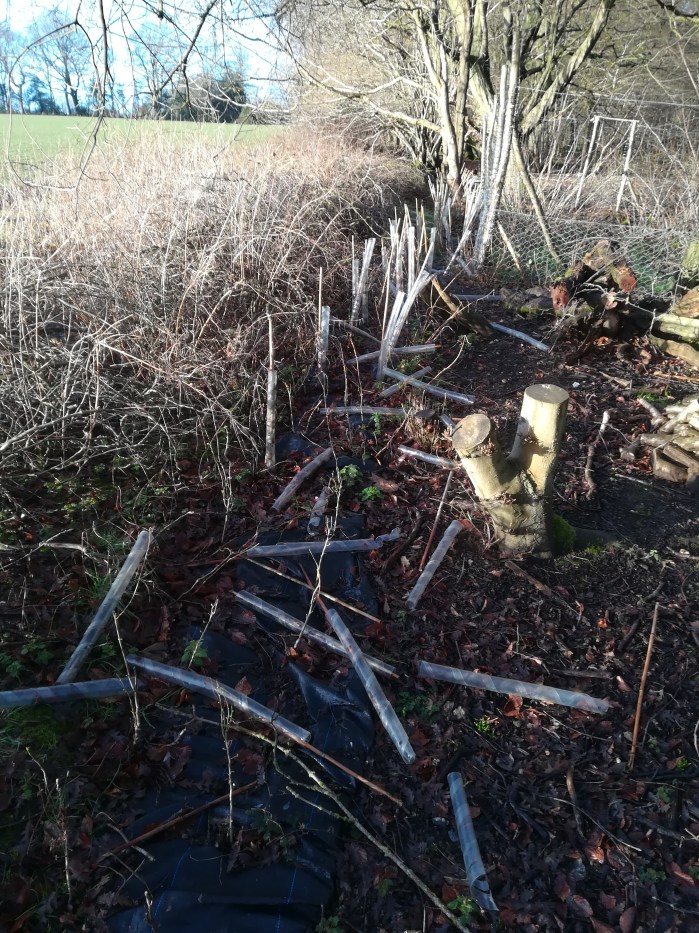
During the year I have lost count of the number of times that I have reinserted the stakes and replaced the plastic protection tubes. I don’t quite understand the mechanism that either the deer or badgers use to disturb the covers but they are incredibly effective. As the picture below shows the plants spend most of their time uncovered and exposed to the ravages of whatever passes by.
The hedge is constantly disturbed by passing wildfife
This week I had a closer look at the plants on a short section near the fenced off nursery cage and was very pleasantly surprised to note that the vast majority of the plants have survived and are showing signs of life ie budding. In the 15 yard stretch there were originally 55 plants put in and 50 have survived. When the saplings were put in they were each cut back to about half their original height, this was intended to encourage them to branch out and so thicken up.
dav
dav
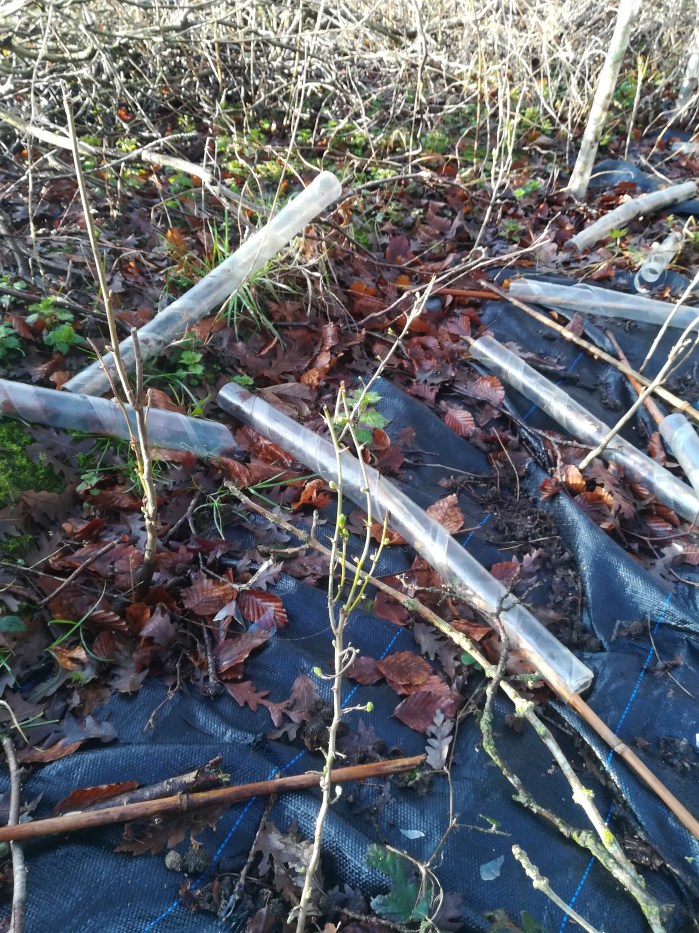
Looking down the tubes that had remained upright, each one was packed with dead leaves from last seasons growth. I wondered whether this was beneficial or detrimental. Did the leaves act as an insulator and protect the new buds from the worst of the frost, or did they simply block out the light and prevent the air from circulating and so run the risk of rot? I decided that the latter was a bigger risk, that coupled with the fact that if the tubes kept getting knocked over the plants were not going to have a chance to grow upwards and actually form a hedge. So for a short section I have removed the covers and stakes and left the plants to fight it out with what ever comes along. Maybe a bit risky but lets see what happens.
Early signs of the saplings branching out and bushing up
The photograph above shows the result of the initial cutting back of the sapling. There is clear evidence of the several branches being formed immediately below the cut and those branches themselves forking out. Who knows it the survive then they might well be a lovely bushy hedge in the years to come.
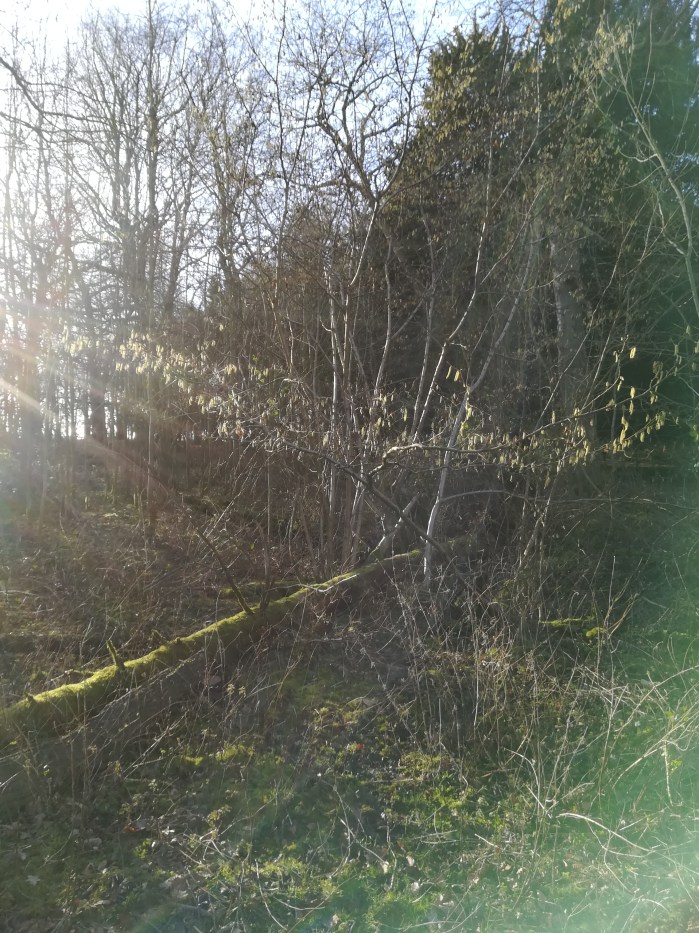
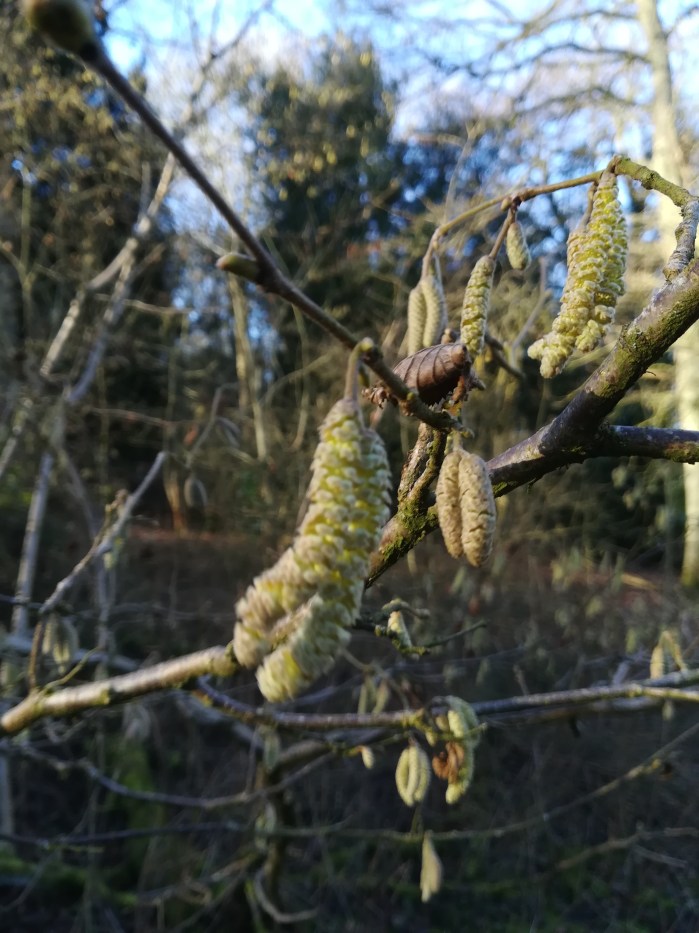
Hazel is a member of the birch family and is a great tree to have in the wood. The main picture shows a spindly hazel tree covered in catkins caught in the low winter sunshine. The hazel is a survivor of a previous impact from the rotting pine tree stem that can be seen crossing the picture. Despite some years ago being hammered by the falling pine the hazel has managed to put down new roots and start to grow from those new roots. Hazels have this amazing ability to take the knocks and make the best of whatever new situation is thrust on them. This stems from the tree being able to convert branch buds into roots when placed in contact with the soil. Various other woodland plants have this property including honeysuckle and brambles.
The drooping catkins are one part of the hazels reproductive approach. They are the male flowers and appear in autumn. The catkins are stuffed full of pollen which when brushed or shaken billows out in a small cloud.
The female part of the hazel looks like a bud at the base of the male catkin but will have a small red flower. These flowers will form sometime between February and April and be there before the leaves come out. The male and female flowers exist on the same tree with the nuts forming on the female flower and maturing in late summer/early autumn.
I will be very lucky if I get to harvest any of the hazel nuts as they are loved by the grey squirrels, field mice and the occasional dormouse if we have them in the wood.
Unlike hazel the wild cherry seems to be a strict adherent to the three score years and ten approach. That is once the wild cherry reaches its allotted time it simply keels over and takes whatever is in its path out with it. And once on the ground it simply rots away incapable of regeneration it would seem. However the wild cherry bark is made of sterner stuff than the branches and it survives intact whilst the branch rots away. this leaves the impression of a skeleton inside the clothes that it was wearing when it fell over.
After a very wet start to the week yesterday was a great day. Sunny outbreaks with a light wind, mild temperature and dry! Great to be out and working in the wood even though it is a bit heavy going underfoot with certain parts quite muddy.
I have been steadily working through the knotty lumps of the turkey oak that I originally put on the “too difficult” pile but now need to tackle. The easiest way is to use the chain saw and simply cut the gnarly, twisted grain bits into fairly regular lumps that can be stacked for seasoning. When you consider that an axe splits wood along the grain in a split second it is quite a laborious and time consuming process to cut through every inch of the way. But rather that than leave the wood to rot. I am keen to get this part of the wood processing completed before the warm weather comes. That way the logs will have maximum time to dry out and be ready for potential sale in the autumn.
Looking forward and planning over seasons and lifetimes for planting is a feature of working in a woodland, and one that is both satisfying but also challenging. It seems to be that whatever task you plan to undertake should ideally have been started yesterday, or last month. An example of this is the planned pollarding of the sycamores at the top of the wood. I thought that this would be an ideal job to move onto after the turkey oak, only to read that the sap starts to rise very early in sycamore trees and that any work on them should be done in December. This way the tree is in its least active/most dormant phase and has the best chance of recovery and resuming a healthy growth pattern after the pruning. I know that often there is scope for ignoring these “rules” but it strikes me that if you are working on an established tree that has invested thirty years in growth to date then it is worth respecting the best advice and not risking that investment by being cavalier in your approach. So one to add to the calendar for the winter.
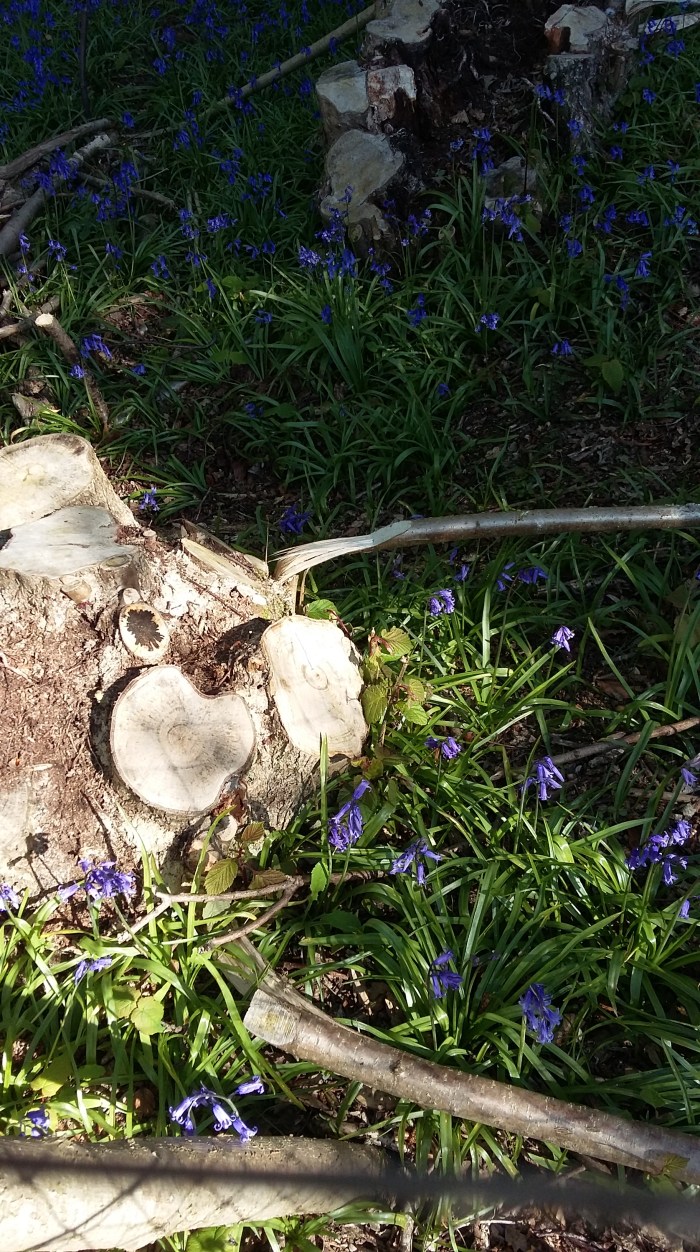
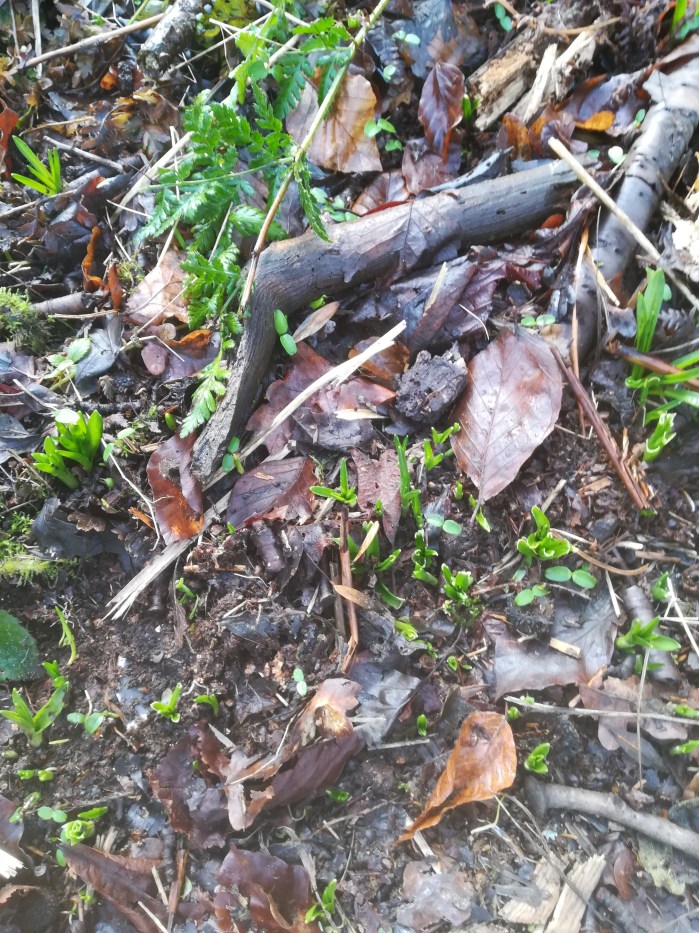
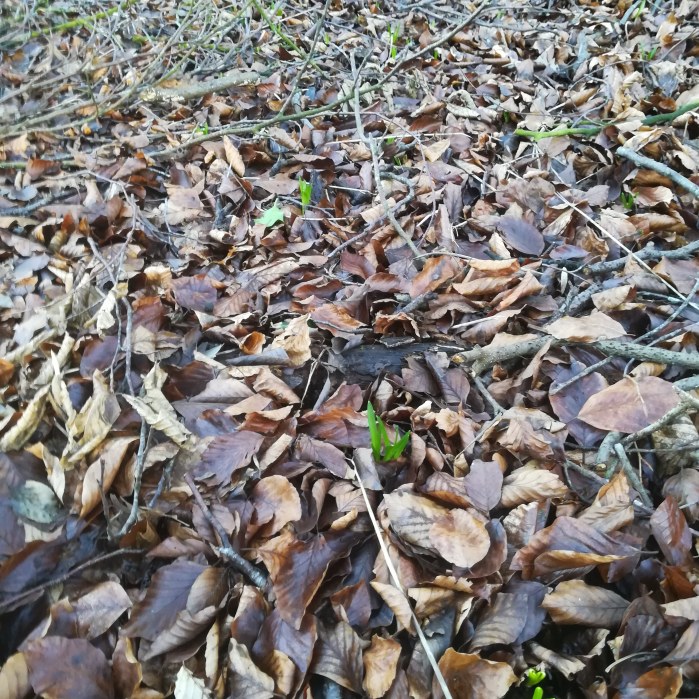
It is all very well planning ahead and doing things at the right time but it is also very important to enjoy the woodland in the here and now. There are signs of stuff growing again in the woodland. The wild garlic is beginning to show through the leaf litter, this bodes well for later in the spring and more homemade pesto using the fresh green leaves. The bluebells are also starting to show, this show of blue wild flowers for me represent all that is great about a woodland in spring – can’t wait. The catkins on the hazel are now absolutely full of pollen and ready to spread their seed and to set fruit (nuts) for the autumn.
dav
dav
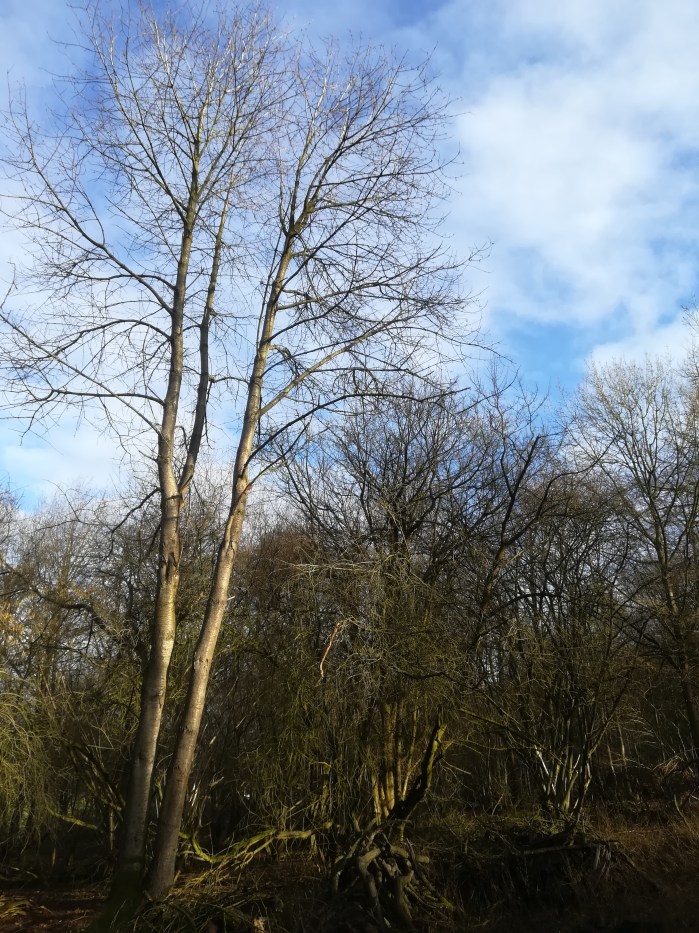
It has been a very windy winter and the woodland is looking as stark as I have seen it with virtually no leaves left on any of the trees. As the sun is climbing gradually higher in the sky the sunlight is falling again directly on the bottom part of the wood after and absence of 3 months or so. With no leave canopy the light gets right to the ground and encourages all the seeds to get going again and have their time in the sun. Huge relief to think that I am not responsible for any of the scheduling or processes involved. I don’t have to mark anything down on the calendar, look up when to, or how to……all I have to do is to sit back and enjoy the show.



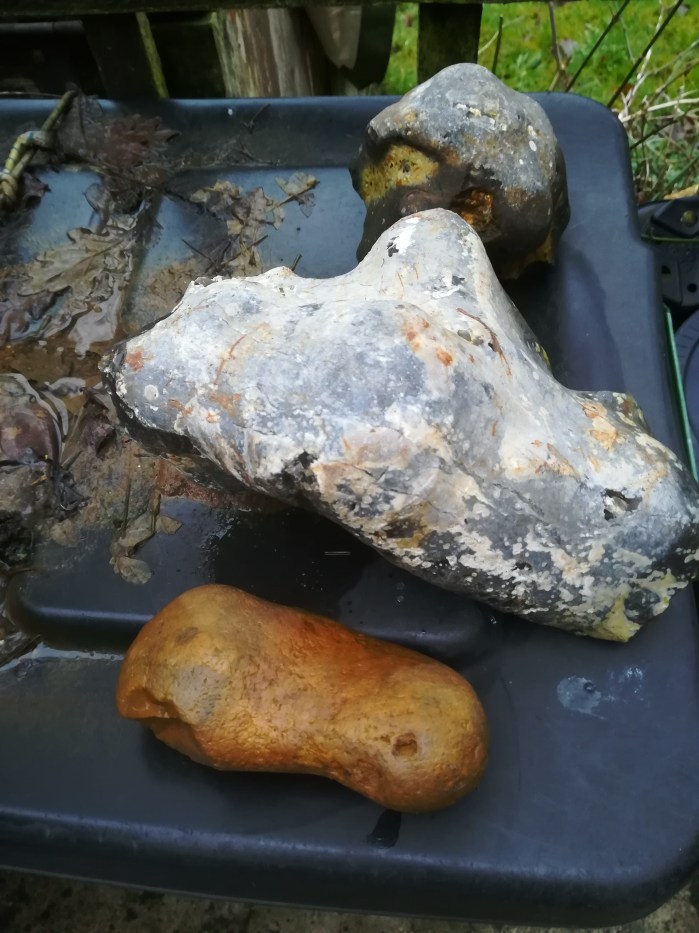


 It is not difficult to imagine an axe being produced by knapping a block such as that above. That axe could then be used to shape fallen branches or even to cut down trees. The razor sharp shards were used to butcher animals and to process the skin and fur into usable clothing. Much later the discovery that red hot sparks are produced when a flint is struck by steel would have made the flint a valuable resource to carry around enabling fires to be started at will. Flints have also been used an incredibly durable building material and can be seen in many rural buildings.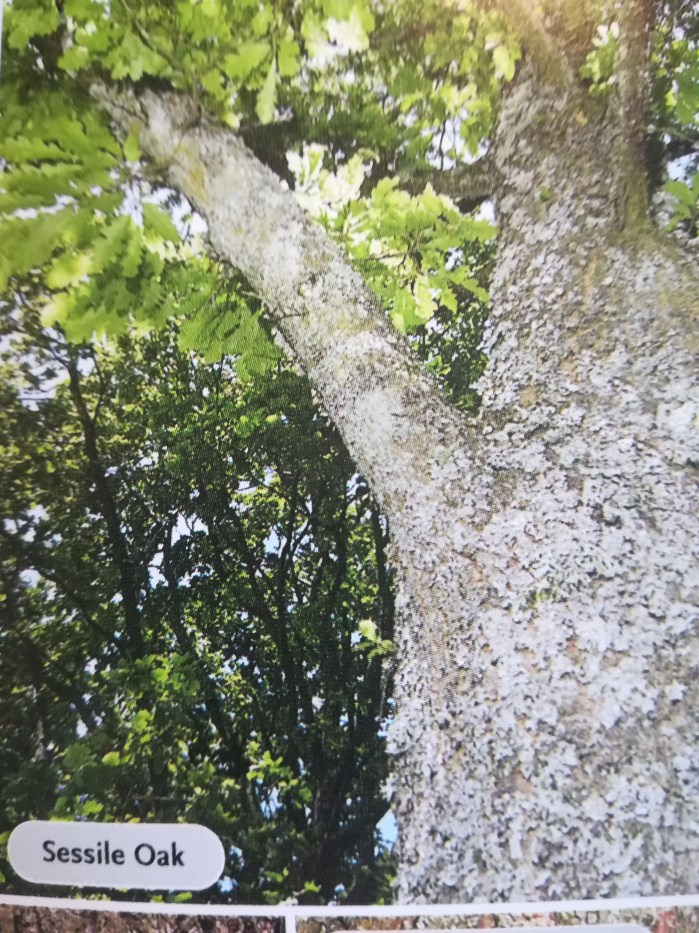















 Tim Burr