Wow – so that is what 30°C feels like. Incredible to note that one day earlier in the year I set off from the house to go to Pop’s Wood and the thermometer in the van indicated that it was -6°C; driving home on Wednesday evening the same thermometer showed +32°C – a temperature range of 38°C. Amazingly the trees and new hedgerow seem to be coping very well with the hot weather and the lack of rain. I guess the hedgerow plants have had time to put down a decent root system since they were planted in November/December and handily have benefited from the shade provided by the overhanging trees. Interestingly the badgers’ behaviour has changed during the dry spell in that they have taken to digging up the weed suppressant mat which the hedgerow is planted through, I guess in an attempt to find worms and other bugs sheltering there. This has meant that I have had to re-secure various sections of the matting after they have been left flapping in the breeze. The extent of the damage caused is a reflection of how determined and powerful badgers are as diggers and scavengers.
The hot weather has resulted in me wearing shorts all week and I take everything back about nettles being amazing. My legs have been repeatedly stung as I pushed my way through the undergrowth to recover the beech from the various log piles that I formed as one of the first jobs when I took over Pop’s Wood. Nettle stings are not hugely painful but their effect has an incredible sustained impact across the day. The initial sting is a sharp feeling as we all know but then there is a sort of “buzz” that goes on throughout the day and well into the evening. This buzz is not altogether painful but is a very curious sensation.

Not sure what the evolutionary purpose of stinging humans is but apparently the original and remaining purpose of the nettle’s sting is to dissuade other animals from eating or uprooting it. The nettles leaves are covered with tiny, hollow, hook shaped hairs that act as hypodermic needles and embed themselves in your skin and inject a mixture of formic acid and histamines hence the swelling. It would appear that the folk lore about dock leaves being an effective remedy is based on fact as it has been found that the dock leaf contains an antihistamine.
Nettles have a history of being used for food; medicines and clothing.
Food : The young leaves have a flavour similar to spinach mixed with cucumber when cooked, and are rich in vitamins A and C, iron, potassium and calcium. Soaking stinging nettles in water or cooking them removes the stinging chemicals from the plant, which allows them to be handled and eaten without injury. After the stinging nettle enters its flowering and seed-setting stages, the leaves develop gritty particles which can irritate the urinary tract – so not a good idea to eat he leaves late in the season. In its peak season, the nettle contains up to 25% protein, dry weight, which is high for a leafy green vegetable. The leaves are also dried and may then be used to make a herbal tea, as can also be done with the nettle’s flowers. Contemporary uses include their use in cheese making, for example in the production of Cornish Yarg.
Medicines: Nettles have been used in traditional medicine (as tea or fresh leaves) to treat disorders of the kidneys and urinary tract, gastrointestinal tract, cardiovascular system, influenza, rheumatism, and gout. Amazing! Being flogged with nettles was reckoned to offer relief from arthritic pain – well it would certainly take your mind off it for a while.
Textiles: Nettle stems contain a fibre just below the skin which has traditionally been used in similar uses as flax or linen. The process involves soaking away the plant cells to leave the fibrous material behind that can then be dried, spun into a thread and then woven into cloth. Nettles grow easily and quickly and, unlike say cotton, do not need any pesticides. The fibres are coarser than cotton but finer than linen. Historically, nettles have been used to make clothing for 2,000 years, and it was planned to make German Army uniforms from nettle during World War I due to a shortage of cotton. To bring the story up to date if you Google “nettle cloth” or “nettle clothing” there are modern styles being made now out of nettles. Good to know that such an abundant, low input, naturally indigenous resource is being used once more.
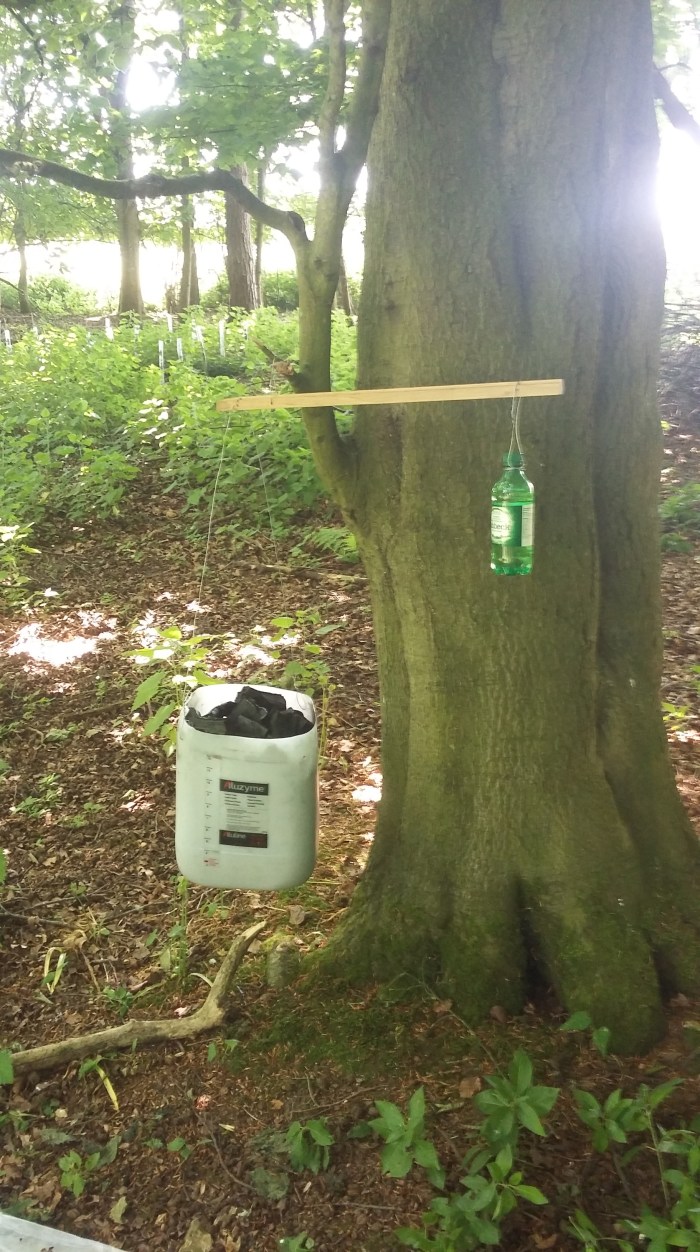
Other activities in the wood have included several more charcoal burns and an attempt to make a simple balance beam weighing scale to measure out the completed product. This was an an alternative to using the bathroom scales at home which was becoming increasingly unpopular.
I wanted to make a device similar to those used at the weighing in process for boxers where a large weight ie the boxer is placed at a fixed point on one end of a beam very near the fulcrum and a smaller weight is placed a much larger distance away from the fulcrum. In this way the smaller weight is made to balance with the larger weight. This approach allows the weight of the boxer, or charcoal in my case, to be worked out by comparing the distance of the smaller weight away from the fulcrum and using this ratio to multiply the small weight by and bingo – the perfect weight for David Haye.
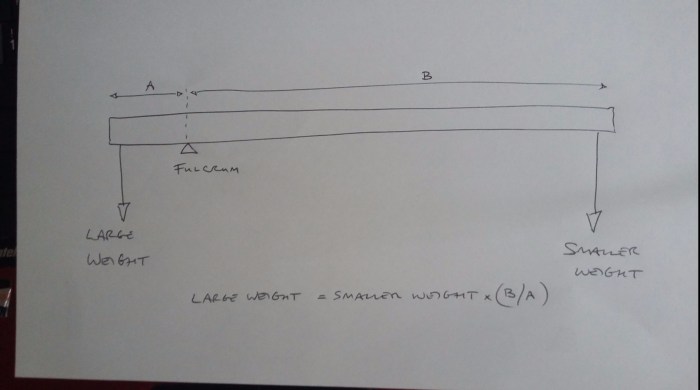
This theoretical approach was fine until applied in practice when the thing would just not balance at all! I (not so quickly) realised that I had made a schoolboy error of forgetting that the weight of the beam itself would have an effect on the balance. Once I had thought that through and corrected the simple approach above then it worked a treat.
More next time

 Tim Burr
Are you selling your charcoal?
LikeLike
Yes indeed. Also planning for Tim Burr to have a stall at the village fete on 9th July when I guess there will be a chance to see if there is a wider demand.
LikeLike