The tree canopy at Pop’s Wood is rapidly losing its thick covering of leaves as Autumn progresses. The beech tree which is a bit slow to start in the spring develops a very thick canopy of leaves over the late spring and summer to the extent that it shades out virtually everything else underneath. It is not until this time of year when the beech leaves start to fall that the light once again penetrates through to the ground. Yesterday was a picture, the beech was back lit by the soft afternoon sunshine which accentuated the golden yellow of the faded leaves still left on the branches and threw into sharp relief the huge structure of the tree itself. What a lovely sight.
Chopping wood is not always the most interesting activity but it has the advantage giving you a good workout with plenty of time to think whilst also concentrating on not chopping any of your limbs off. Another advantage is that there are occasional aspects that catch your eye and make you marvel at the beauty of the wood that you are handling.
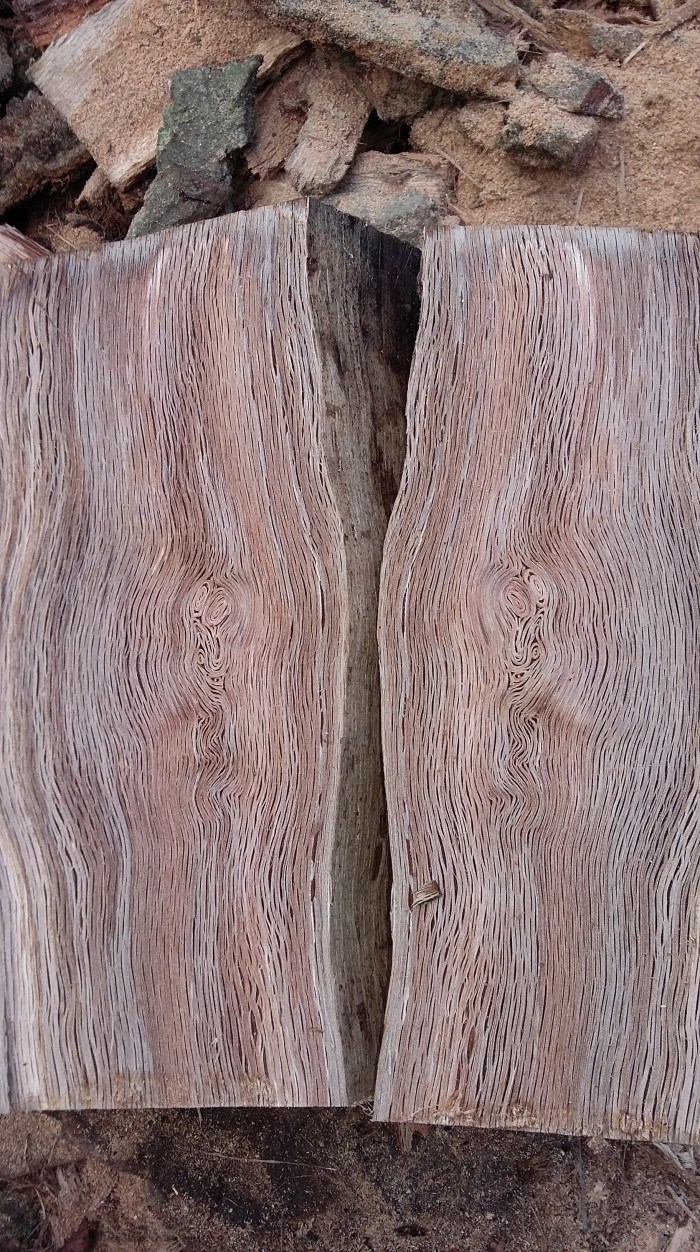
The complexity of the grain patterns in the picture above are amazing. Why did the tree develop this particular loopy series of scrolls? Was it the point where a branch started out from the main trunk? What we can be certain of is that the growth would have been a pragmatic response to an event of some form and would not have been for artistic reasons. The visual effect though is artistic and stunning. It always makes me think at this stage that I am the first human being to have ever seen this part of the tree, this is the first time that it has been exposed to the outside world……and now you can see it as well.
Part of my management plan for Pop’s Wood was to take down some sycamore trees and replant a stand of ash trees that I would then coppice on a 10 – 12 year cycle. So every 12 years or so each of the trees would be cut back to just above the ground and the stump left to regrow over the next cycle. When we walked around this part of the wood the adviser from the Wildlife Trust suggested that a better approach may be to pollard the existing sycamore and fence of the immediate area around the existing sycamore trees to allow natural regeneration of further sycamore saplings from the fallen seeds being allowed to survive and not be eaten by deer. This suggestion could be a good idea for a number of reasons:
- The ground conditions are obviously suitable for growing sycamore as the trees are healthy;
- Ash is going to struggle to survive the die back disease and sycamore is seen by some as its natural successor as it appears to be less prone to disease;
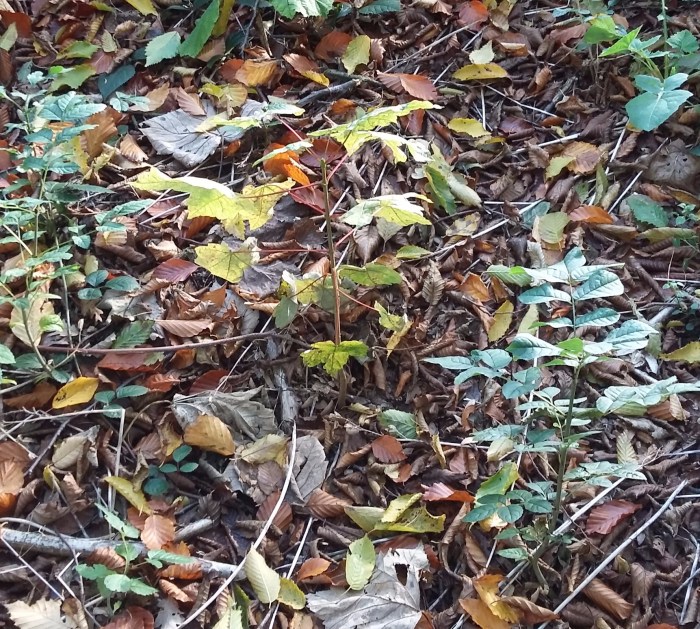
- natural regeneration is already happening in the fenced off hazel compound that I erected last autumn, there are about a dozen healthy sycamore saplings (see picture below) that have thrived since they have been protected from deer grazing ; and,
- Pollarding, which is pruning a tree back to the stump but above deer grazing height, minimises the damage that deer can do to the regrowth and so makes the enterprise a lot cheaper and virtually maintenance free.
There are other considerations which need to be carefully thought through:
- Will the fresh growth on top of the stumps be susceptible to wind damage and tear away;
- how is it best to cut a reasonably mature tree back for the first time because it involves working at height with either power or hand tools; and,
- will the resulting growth be suitable for anything other than firewood?
The Forestry Commission are generally supportive of the approach and the world seems to becoming a little less unfriendly towards the sycamore. It was introduced in Medieval times and seems to have been treated as a new comer ever since. Given that it may well come to the rescue in terms of filling the gap formed by ash dieback perhaps it is time to embrace the sycamore and let it feel loved……sycamour.

 Tim Burr