Bachelors Buttons and lessons learnt

Bit of a gap since my last blog, no real reason other than a break for summer holidays and then simply getting out of the habit/routine.

Life in Pop’s wood has taken a very definite turn towards autumn with a litter of leaves now covering a lot of the ground. The hornbeams are first out of the traps in the spring and are usually the first to lose their leaves in the autumn. Unlike the oak or beech that  keep some of their withered leaves on throughout the winter; the hornbeams drop everything and stand bare against the sky from now onwards.
20171021_075546

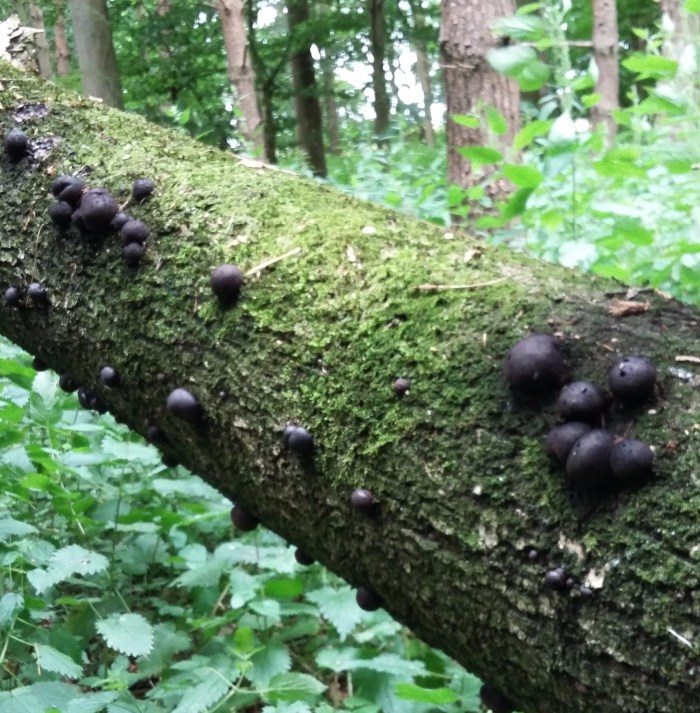
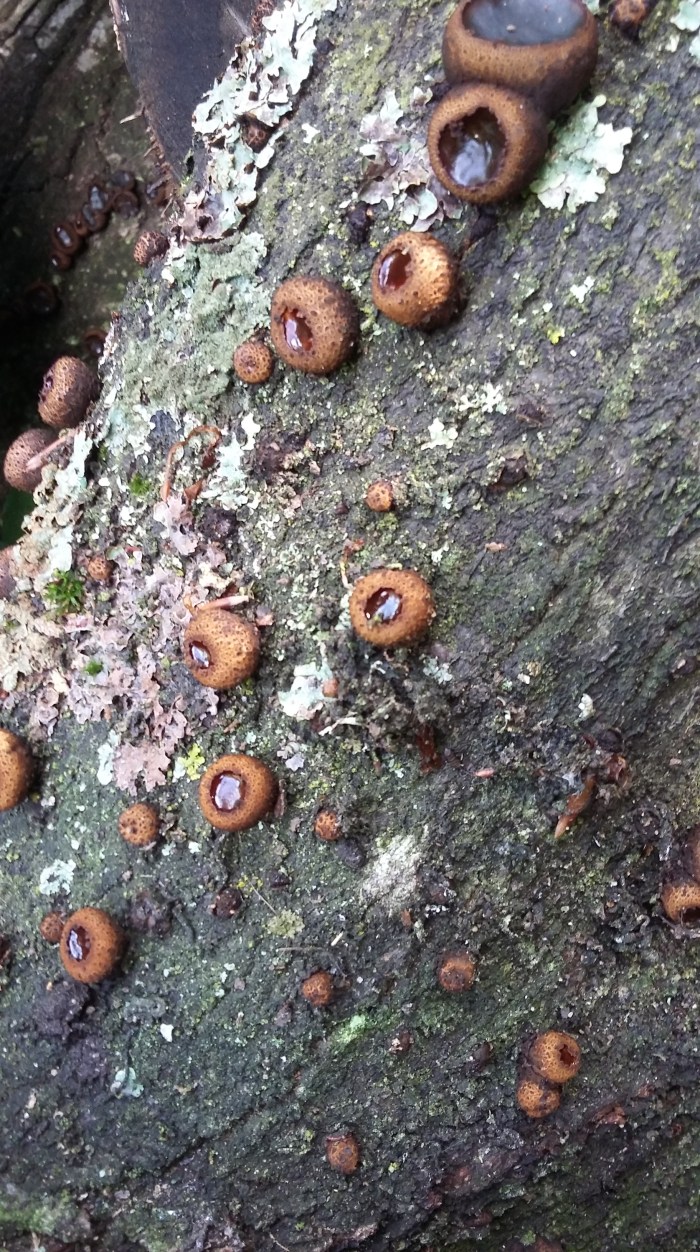
Lots of fungal growth some of which is quite exotic and others that are amazingly prolific. One such fungus that I had noticed back in September is apparently very common amongst fallen trees particularly oak. So no surprise that the fallen turkey oak is a great space for them to proliferate.
20170803_100850


These are called Black Bulgar or Batchelor’s Buttons, this fungus grows in groups on fallen timber. It has black flat-topped discs with brownish tightly rolled over edges when young, and gradually opens up to become more cup-shaped up to 1½” across. It feels rubbery but watch out as the black spores that are produced on the upper surfaces come off and blacken your fingers.

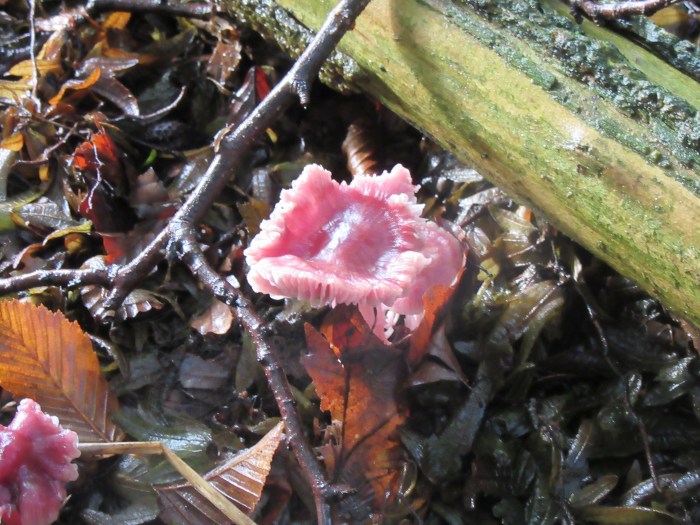
The more exotic is shown below:
IMG_0599

I have no idea what this is called but it looks wonderful.

These last few weeks I have been concentrating on chopping the large sections of oak into stackable firewood that can be left to dry out (season) over the winter and then be sold next autumn. In commercial terms I guess that I have contrived to do just about everything that adds cost to the final product. But am a bit  wiser for next time, immediate thoughts :

  • Cut the large sections of the trunk and branches into the final length right at the point tackling the fallen tree. Lengths of  say between 10″ and 12″ make them suitable for domestic use. The temptation was to try and process the main trunk quickly by chainsawing large sections (hoops) off at a time but this had led to the need for secondary cutting which I am now having to complete.
  • Process the wood as promptly as possible so that the finished firewood has time to dry out during the summer. Clearly the more surface area that is exposed to the sun and air the better and the quicker the moisture levels will drop to say below 20%.
  • Ideally the wood would be stacked immediately adjacent to the point at which it is to be loaded for transport to market. This is a choice as to whether to make the wood very accessible for yourself (and anyone else who fancies lifting it onto a truck) and creating the need to double handle the logs. I have opted for security and have stacked the wood away from the entrance to the wood and will simply have to move it again nearer the time for sale

In order to prevent the wood piles becoming soaked very time it rains or snows I have made some crude canopies from polythene sheeting (packaging from a mattress) and the hazel poles harvested from my hazel coppice trial last year. This should hold off most of the weather and allow the wood to season over the winter.

Hopefully next spring I will have assembled the solar log drying kiln on site and will be able to accelerate some of this process. More next time.

 

Wood land management – such a plum job

Tree identification can be very difficult in winter when all you are presented with is a bare silhouette of the branches and the bark of the stem to consider. The task becomes slightly easier in spring when the leaves form and certainly by the time the fruit or seeds have emerged then it should be relatively straight forward.

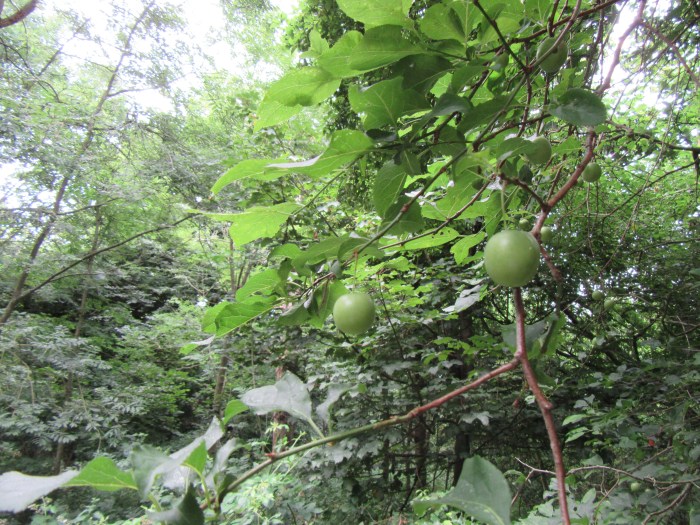
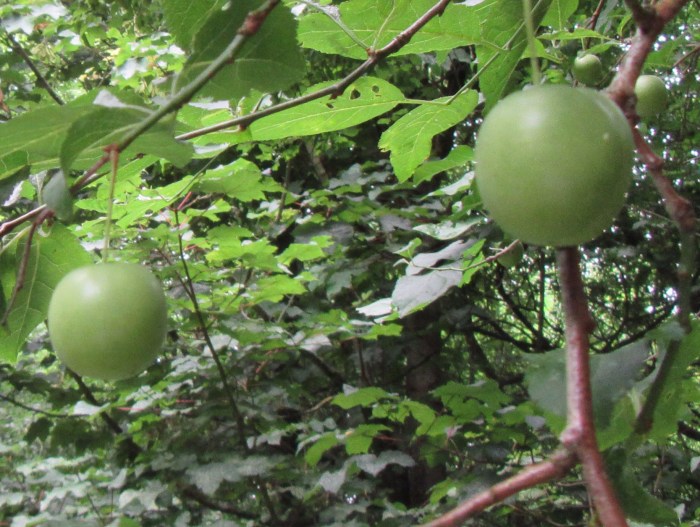
Well. I have had three goes at identifying one particular set of trees/shrubs in Pop’s Wood and have got it wrong on the first two occasions. At the first attempt I identified the mystery tree to be a blackthorn and was looking forward to picking the sloes in autumn and making some sloe gin. When the fruit appeared they were a lot bigger than I excepted and strangely the wrong colour. This didn’t put me off though and I dismissed the size and colour discrepancies and celebrated the fact that they were huge sloes.

IMG_0494
What I thought were huge green sloe berries on a blackthorn

Closer scrutiny and a more sober look at the crop made me have second thoughts and having consulted the text books I realised my mistake and so at the second attempt very confidently identified the tree as being a crab apple. The size and colour of the fruit made it unmistakable. How silly of me to think that is was a blackthorn. This was good news as the wood from a crab apple is good for firewood and is suitable for carving.

The fruit on the “crab apple tree” matured and ripened over the next few weeks to a gorgeous deep, well….. plum colour and were soon ready for harvesting. The tree has sprawled over the years and so is quite close to the ground and it was easy to clamber in amongst the low lying branches and pick a huge bag of crab apples. At home we have a book called “A year in a bottle” which details various fruit that you can preserve as they ripen and store for use later throughout the year. There was the usual crab apple jelly and jam recipes but also a really nice sounding way of making a crab apple lemonade which only took a week or so to ferment. I assembled the ingredients, carefully washed the crab apples and then started to remove the stones from their centre. Hold on a minute – crab apples don’t have stones in them. Back to the “A foolproof guide to identifying trees” hand book!

20170803_141046
Cherry plums – who would have guessed

It turns out that the crab apples were a lovely plum colour because they are in fact lovely cherry plums. In a way that is better than crab apples as they are a lot more edible.

So this week I have mainly been eating stewed plums and custard. I guess that that is it as far as the identification of this particular tree goes. They say that the proof of the pudding is in the eating and that process turned out to provide the absolute fool proof evidence in this case. Not so sure that approach would work so well with mushrooms.

More next time.
More diseases than you can shake a (dead) stick at…..

A sombre week this week.

Ash-die-back is a serious threat to all ash trees in the UK. It was first confirmed in Britain in 2012, Chalara dieback of ash, also known as ‘Chalara’, ash dieback or Chalara ash dieback, is a disease of ash trees caused by a fungus called Hymenoscyphus fraxineus. It is fatal for the tree.

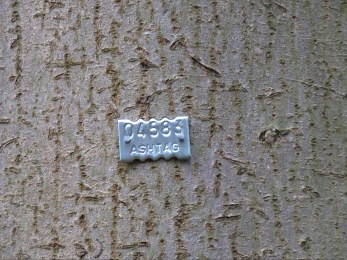
In the Autumn last year I enrolled with a project called AshTag.  AshTag was developed by Adapt and the University of East Anglia in 2012 and transferred to the Sylva Foundation in 2015 and has worked under the Defra-funded Living Ash Project (www.livingashproject.org.uk).

The idea is that woodland owners from around the UK register a number their trees with the AshTag initiative and open up access to monitor their progress against the influx of the ash die-back disease. This initially involves nailing a tag to a tree and sending in photographs and GPS references for that tree to the AshTag site. I did this back in November 2016 and this week I received a visit from two tree specialists Jo and Steve. They are currently on a tour visiting various sites across the south of England monitoring the extent of the disease.

IMG_0254

The bad news is that some of the ash trees in Pop’s Wood have got ash die-back disease. Jo quickly identified my first ash tagged tree to be suffering and pointed out its very thin canopy and branching of intermediate buds along a horizontal branch a feature that is not natural in ash trees. This latter effect is an attempt by the tree to grow more leaves and so maintain its growth. There is apparently nothing practical that can be done to prevent the progress of this disease other than rely on nature. Nature has an incredible ability to generate variations in trees some of which will develop a natural resistance to the disease through the process of natural selection.

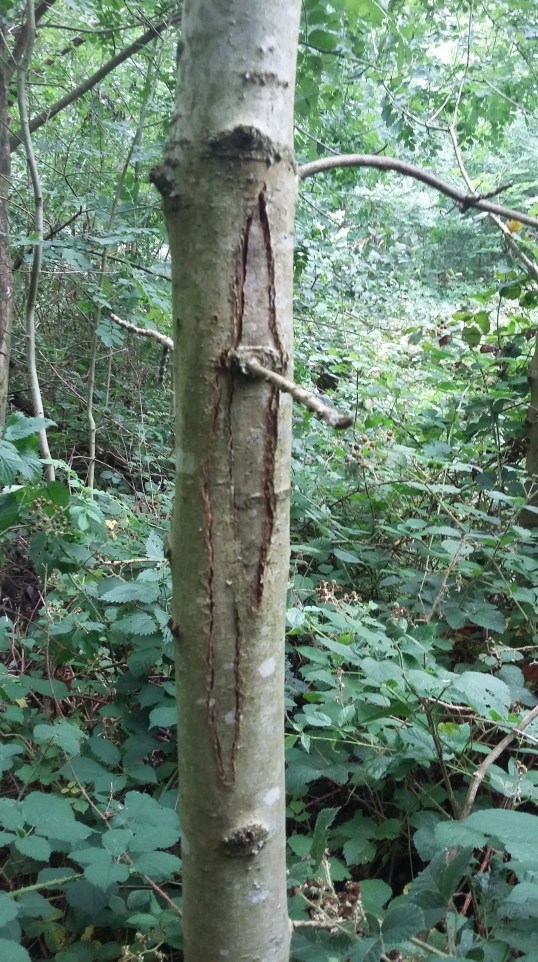
There is a small copse of a perhaps a hundred or so self planted ash saplings in Pop’s Wood that could prove to be of interest to the project. There are signs that some of these saplings have already been infected by ash die-back. The fungal infection enters the branch through the leave stem and makes its way along the branch into the trunk of the tree. The picture below shows the tell tale diamond shaped scar lesion left where the fungal infection enters the main trunk.  However, some of the saplings are healthy and the intention  is to refrain from any management intervention but to leave the saplings to “fight it out” over the next few seasons and see which ones continue to thrive.

20170803_121415

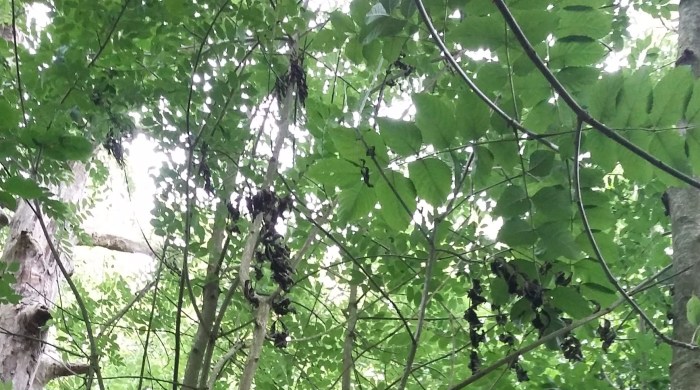
The main picture at the head of the blog shows evidence of die-back ie where the leaves on a seemingly healthy sapling have shrivelled up and are set to drop. These have been infected by the fungus and will drop to the floor where the fungus will continue to feed and grow. At this stage next year the fungus will be ready to spore and these spores will be blown onto new leaves reinforcing the infection throughout the tree and neighbouring trees.

I was told that there is no real action to take other than if I was planning to use a particular ash tree for timber then I would be advised to fell these over the next 2-3 years as the fungal infection can stain the normally white timber and ruin its resale value. Its value as firewood remains unchanged which is a good fall back option.

So the plan for the project is for woodland owners to continue to monitor the progress of their trees and for the project to revisit in  say 2 -3 years time to check on whether any trees are continuing to remain unaffected. There will then be a more active phase where formal propagation of new plants from these trees will be undertaken to establish a resilient successor population of ash trees.  A real waiting game.

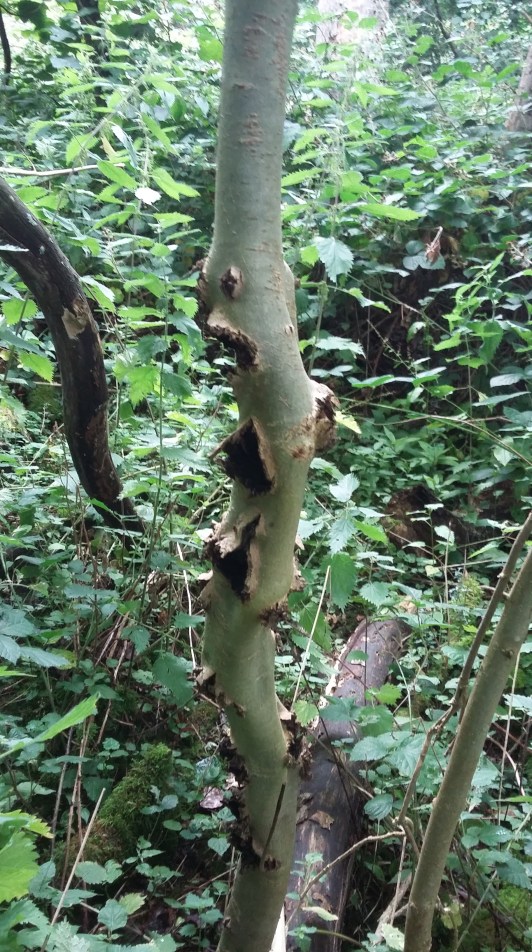
Just to add to the gloomy picture there is also evidence of canker on some of the small saplings. Canker damage looks like the tree has burst open at the point of infection.

20170803_121358

It is generally due to infection by the fungal pathogen Nectria galligena. Doesn’t look great and the tree will struggle to recover. But as these are in amongst the ash die back saplings I will leave them to struggle on at this stage and rely on the survival of the fittest to sort out which will survive to maturity.

More next time………

The importance of piles and sorting out a pile problem.

We have been through a spell of very unsettled weather this last week, it is almost like a very warm April ie periods of sunshine and then showers of rain. Every day has been a mixture of heavy overcast skies interspersed with some sunny periods and then a short shower of rain sometimes quite heavy. Makes it difficult to plan for outside jobs particularly if you have a lot of set up of tools etc. The marked difference from say a couple of weeks in the daylight is dramatic, when it has been overcast it has been really gloomy. It makes perfect sense of the expression “feeling under the weather”, you do feel to be weighed down somehow by the dark clouds. I guess this just goes to emphasise/reinforce the positive feeling of those moments when the sun does burst through; the whole landscape becomes brightly lit once again and the features become more sharply defined rather like an image coming back into proper focus.

Despite the unreliability of the weather there has been a lot of activity harvesting the crops in the fields around Pop’s Wood. The field of rape seed at the top of the wood has been collected with only the bottom couple of inches of ghostly stalks remaining, this leaves the deer exposed once more as they wander between the neighbouring woods. It will be interesting to see what the farmer plants as the next crop in the field.

20170728_082727

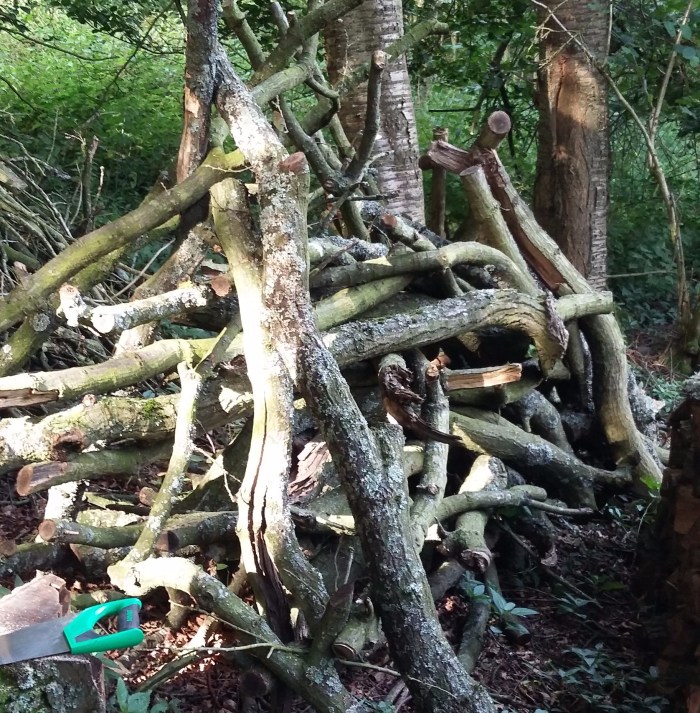
During the process of clearing up the fallen turkey oak after it was blown over by Storm Doris, I cut off the thinner diameter branches and stacked them in discrete piles. This created room to be able to get to the main branches and trunk and also made the site safer to work in with the chain saw. You want to have a good firm foothold and also have a clear exit worked out when using any mechanical devices.

The huge oak “banjoed” quite a number of other trees as it crashed to the floor. Amongst the tangled wreckage were branches from neighbouring beech, cherry, ash, hazel and elder trees. As I cleared up these branches I was very careful to separate out each of the different trees and create different piles for each species. This has paid dividends later as I now know which branches are from which tree and can process logs into firewood and be confident when I sell them as being a single species batch ie they are all oak or beech etc.

Yesterday I tackled one of the six piles, here are the before and after shots:

All sawn up using a hand saw so no further noise or exhaust fumes to breathe in. Also no need to wear the safety trousers which in summer are like personalised “sauna pants”.

I quite like having random piles of branches laying around the woodland, they appear very natural and have a pleasing complexity. However I also like the finished stacked pile which is in itself a thing of beauty and a lot more practical for further processing into sell-able bundles.

The remaining branches that are not thick enough for firewood will be sawn up and used to make charcoal so nothing should be wasted.

More next time……


So what does the word “burr” mean, and does new growth answer a question?

Tim Burr is a deliberate play on words but the “Burr” part is drawn from the vocabulary of the woodland.

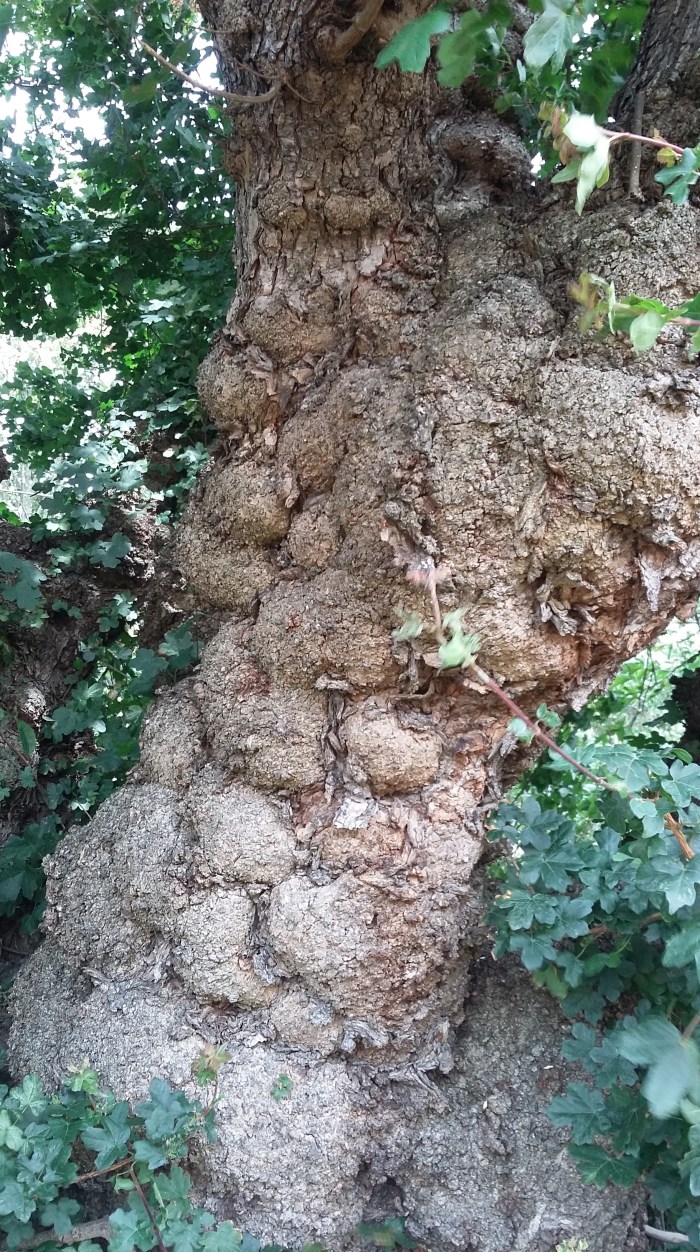
A burr is an abnormal growth which looks like a rounded lump on the side of a tree. The absolute mechanism for their growth is not fully understood in that there is no reliable method of initiating a burr to grow successfully. However, it is understood that a burr results from a tree undergoing some form of stress. It may be caused by an injury, virus or fungus or perhaps insect infestation.

Here is a picture of a field maple seen yesterday on a walk in Essex that is covered in growths but appears to be healthy despite these additions.

20170721_135958

The grain pattern inside of a piece of burr wood is extraordinarily intricate as it is made up of a series of knots and so ignores the normal layered grain of the parent tree. For this reason the wood is valued for wood working.


The dashboards of certain cars like Jaguars and the Riley Elf were made from real walnut burr wood at one stage so there must have been a reasonably reliable supply of the material during that period. Imagine the skills needed to make a wooden dashboard, complete with brass hinges for the glove compartment, and compare that with the bland plastic injection versions used today. Nowadays the same visual effect can be produced on a large scale on flat sheets of say plywood through the use of printed layers.

I like the fact that a natural abnormality can produce something more valuable than the original, like a grain of sand in an oyster producing a pearl.

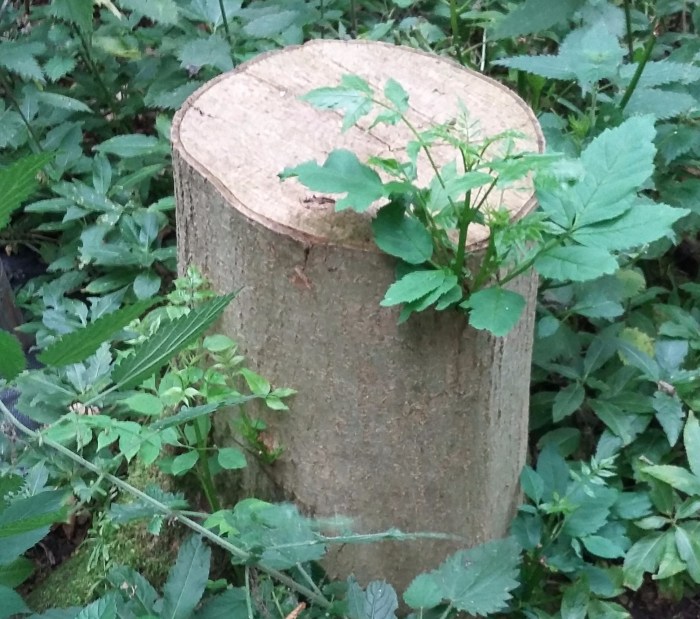
Back in April I commented about flying ants emerging from a section of an ash tree that I had cut down. The tree was felled to reduce the canopy cover and allow direct light to reach the new hedgerow. These ants apparently do not attack live wood but bury into dead wood to lay their larvae which then eat their way out and emerge to start the whole cycle again. At the time it was felled the tree wasn’t in leaf so I wondered whether it was in fact dead before it was cut down. But a recent inspection showed new growth on the tree stump.

20170714_113050.jpg

Good news in that the new growth will grow into and become part of the hedgerow; bad news in that it doesn’t really solve the mystery of the flying ants emerging from the cut out section as it would appear that the tree was alive all the while.

I am quite happy not knowing the answer…..more next time.


Meeting your fete, having your cakes but not eating them and crab apple gin?

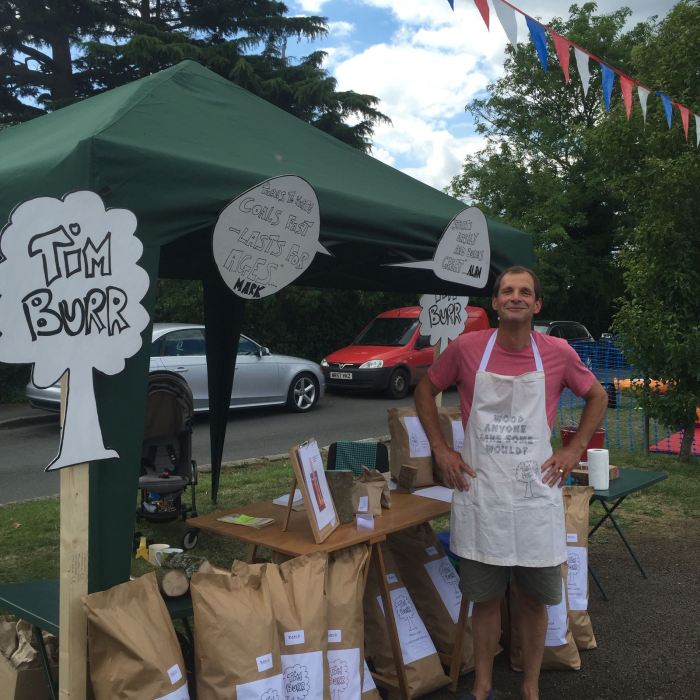
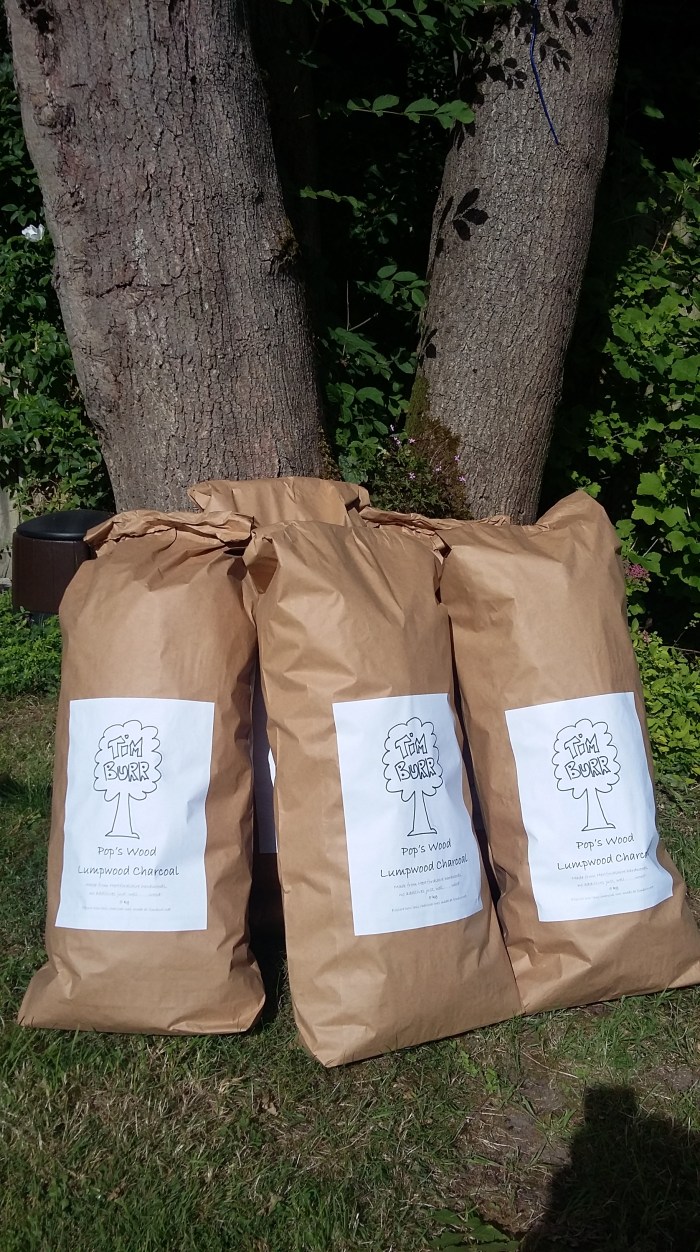
Last Sunday was the local village fete and on a last minute whim I had decided to take a stall to try and promote/sell some of the lump wood charcoal and raise awareness of the firewood and biochar.

We were very lucky with the weather and had a glorious sunny Sunday afternoon and a good crowd. I was very pleased with the level of attention that the stall attracted, lots of people were interested to understand how the charcoal was made and seemed genuinely fascinated by the process  and I was able to sell some of the bags. Funny how we all tend to take so many products that we buy for granted without questioning how things are made any more.  That’s the great thing about craft stalls, they remind us how things used to be made. I suppose at some stage we used to not only know how things were made but also the local person who made them. It seems that there is an opportunity to re-start making some of what we use with all the advantages that that process brings.

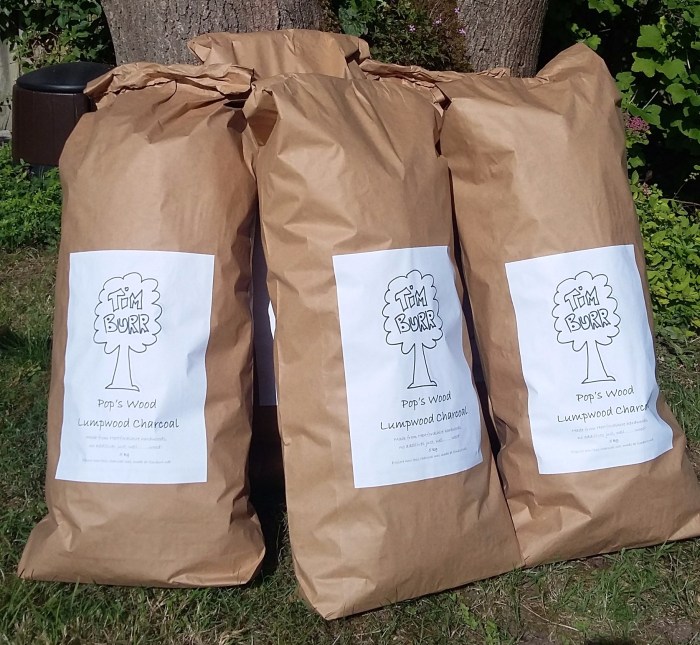
Ninety percent (90%) of the UK’s charcoal is imported from either South Africa or South America. If we assume that this charcoal is produced in each of those countries at the very nearest point to the UK that means that the imported charcoal has travelled a minimum of 1,100 or 4,000 miles respectively. By a quick comparison the total journey miles for Tim Burr’s lumpwood charcoal is 25 miles. So there has to be a case for buying and using local charcoal – saving the planet one BBQ at a time!

20170616_084634

Here is a rather pleasing clip of a piece of Tim Burr charcoal being dropped and the lovely, almost metallic, sound that it makes. Audible evidence that it has been thoroughly hard charred to drive off the other impurities.


I was in Pop’s Wood yesterday and had a walk around some of those bits of the wood that I don’t ordinarily pass through. I walked past a fallen ash that must have collapsed before I bought the wood. It is clearly dead but hasn’t quite reached the ground as it fell against an adjacent spruce and is still leaning heavily against that tree.

What I noticed this time around is the abundance of King Alfred’s cakes that are growing on its sloping trunk.

20170714_113805
King Alfred’s cakes

King Alfred’s cakes are named after the legend of King Alfred being distracted during a baking session and overcooking the buns. They are also sometimes known as Cramp Balls as carrying them was thought to be a cure for cramp. They are a fungi and are usually found on dead ash trees although they can grow on beech as well. When cut open you can clearly see growth rings as they put down an discrete layer as they grow on a seasonal basis – so the larger they are the older they are. King Alfred’s cakes can be very useful for lighting fires because the inner flesh, once dried out, can be easily lit by catching a spark from a “firesteel”(this is an “artificial flint” which creates a spark for starting fires, much used in bushcraft).  The spark ignites the flesh of the fungus and, in true Ray Mears style, will respond to being gently blown and although it burns slowly like a barbecue briquette, once it has been lit it is possible to transfer the glowing part to a ball of tinder and get a flame started. Must try this and try and make a video for another time.

I must offer an apology and a correction to last week’s post. What I thought was a blackthorn bush is in fact a crab apple! The picture of the fruit that I posted last week and talked about there being a bumper sloe berry crop is in fact a crab apple. Whoops.

Apparently the fruits are not that attractive to browsing animals, they will ripen, fall and only when they start to rot will the deer and rabbits have a go at eating them. They are a very hard, very tough and sour fruit but can be turned into a delicious jelly simply with the addition of a huge amount of sugar. The timber is very hard and closely grained which makes it useful for wood carving and turning. It also makes excellent firewood which I had already picked up on as I have been using some of the dead branches to stoke the charcoal kiln. Here is a repeat of the picture from last week but this time with an accurate caption.

IMG_0494
sloe berries on a blackthorn The readily identifiable wild crab apple fruit just appearing on the immediately recognisable and unmistakable wild crab apple tree.

More next time……..

What happens after the flowers are finished and does less mean more?

Back on the 13th May I wrote a post commenting about the brilliant colours in and around Pop’s Wood, in particular the luxurious deep blue of the bluebells set against the vivid backdrop of the yellow rapeseed flowers in an adjoining field. Both these sets of flowers have now faded and the wood and its outlook have reverted to muted shades of green. There is also less sunlight as the tree canopies have fully developed and blocked out large parts of the sky – the woodland floor is in deeper shade. It looks a lot duller to be honest,  a lot less vibrant and alive than earlier in the spring.

But stop and take a closer look, lift a leaf or two and peer underneath; here is where the action is at the moment.

Wild raspberries beginning to fill out and ripen on self planted bushes scattered around the edge of the wood – these have a very pleasant sharp tangy taste to them.

Blackberries are forming as the flowers are pollinated, the bushes have a combination of some flowers and some fruit already set so plenty more to come as the season progresses.

The trees are getting in on the act with evidence of the wild cherries all around on the floor where the birds have helped themselves and dropped the half eaten fruit – that’s one of the reasons why there are so many wild cherries dotted around in the wood I guess.

The hazel trees have a lot less obvious flowering/blossom period but they have been through the cycle and the nuts are now beginning to form in small clusters – you have to be very quick off the mark to get any of these before the squirrels and dormice take them.

The sloe berries are shaping up really well and look very healthy. Bodes well for the traditional sloe gin over Christmas and New Year.

The bluebells have all gone to seed and look a shadow of their former magnificent selves. Green seed pods that are gradually drying and browning have taken the place of the iridescent blue flowers. Soon these seed pods will crack open and the seeds will get blown on the wind to hopefully form a new plant or get eaten by a passing pheasant.

Bluebell Lifecycle

The rape seed flowers have been pollinated and the seed pods have formed. These are light green at the moment and quite flexible. Later in the season they will dry out and become black and brittle. At that point they are ready to be harvested and crushed to release their bright yellow oil.

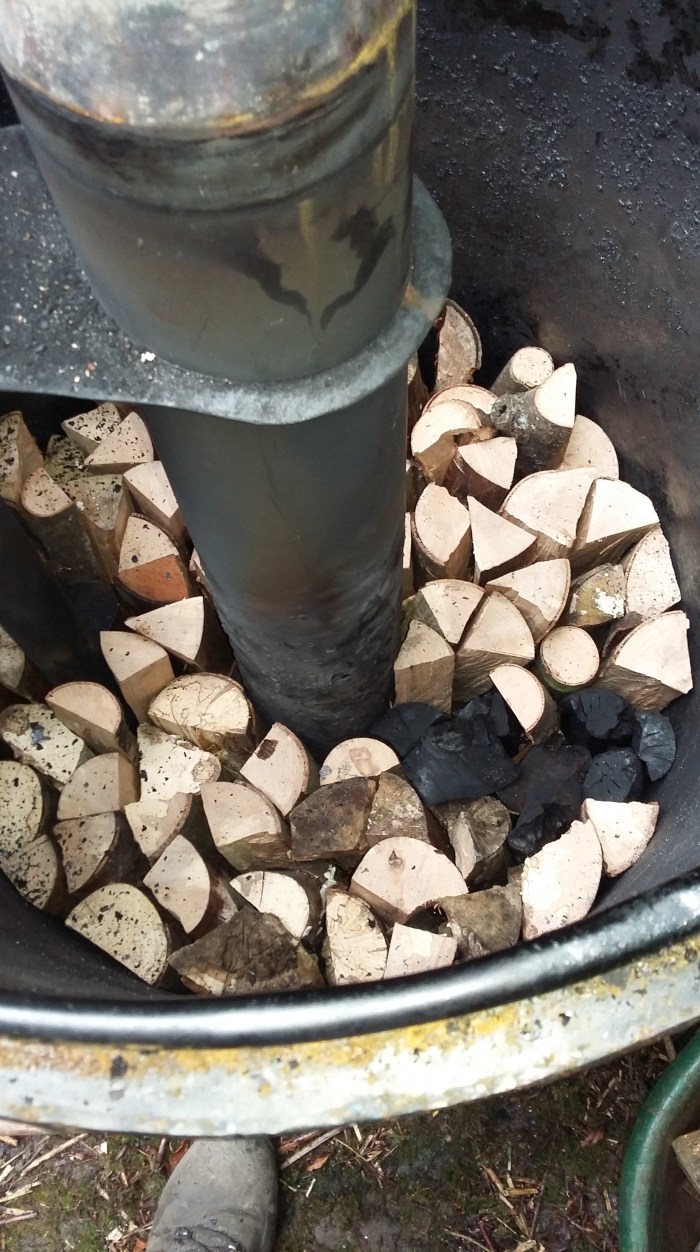
Last time I wrote about the disappointing results of my attempt to increase the volume production of the charcoal by tightly packing as many beech wood logs as possible into the kiln. This week I have continued to explore the optimum amount to pack into the retort and there have been much better results. My latest adaptation is to loosely pack in an initial layer at the bottom of the kiln. These logs are positioned “randomly” to achieve a reasonable efficiency of packing but with enough air space for the hot air to circulate. The next three layers of logs are carefully packed in side be side and positioned vertically one on top of the other until the kiln is full to the top.

The results from this approach have been positive. Previously I was taking out between 11 kg and 12 kg of charcoal after each burn. Under this latest approach I have achieved a 15 kg and a 17 kg discharge. This represents an improvement in efficiency of between 25% at a minimum and 55% at a maximum. Not bad for simply paying a little more attention to the way that the process is managed.

Snap shots below showing the dramatic reduction in the amount of brown ends before and after:

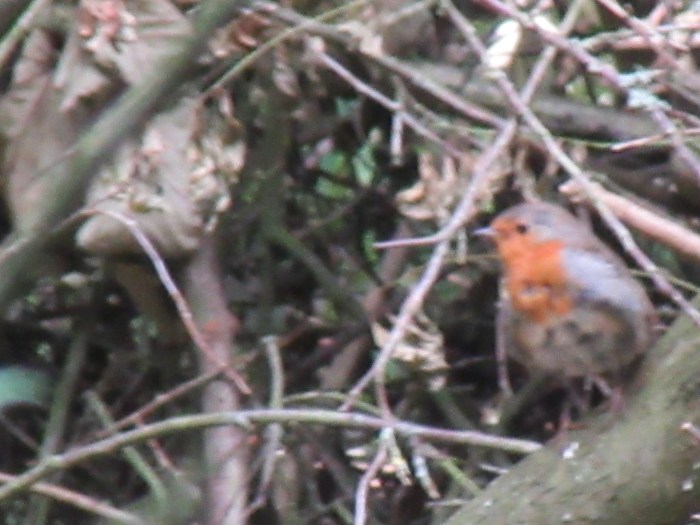
Finally it is easy to get spooked in the wood sometimes with all the strange noises. I was startled yesterday by two birds erupting into an almighty argument at the tops of their voices and flying repeatedly around pecking at each other in the midst of a nearby blackthorn. After a few frenzied minutes one of the birds “won” and all was quiet again. Who were these aggressive combatants?

IMG_0500

Robins! The photograph was taken with the zoom lens at some  distance so not very sharply focused but is that damage to its red breast feathers that can be seen? Was this as a result of the fight? I had previously understood that robins were very fiercely territorial but never witnessed it at first hand until now.

More next time…….

The butterfly effect and packing it in.

Well it has cooled down a lot, so much so that the trousers are back and I wore my fleece whilst sat having my lunch on Thursday. The temperature was less than half that of this time last week! Pop’s Wood also had a drenching over the earlier part of the week. Tuesday saw a series of thunderstorms rumble through with torrential downpours as they passed overhead. This is a welcome relief for the trees and plants which were beginning to look a bit dusty and dry. The trouble with heavy rain after a long dry spell is the amount of soil that is washed away through the rivulets which quickly form on the surface. Apparently it takes quite a while for the rain to actually soak through the surface of the soil and start to add moisture to any appreciable depth. Still it did rain for most of Tuesday and Wednesday so it should have had a beneficial effect.

One of life’s real luxuries is to sit and do nothing; a challenge outlined in “Leisure”  a poem by Welsh poet W.H.Davies:

What is this life if, full of care,
We have no time to stand and stare.
No time to stand beneath the boughs
And stare as long as sheep or cows.
No time to see, when woods we pass,
Where squirrels hide their nuts in grass.
No time to see, in broad daylight,
Streams full of stars, like skies at night.
No time to turn at Beauty’s glance,
And watch her feet, how they can dance.
No time to wait till her mouth can
Enrich that smile her eyes began.
A poor life this if, full of care,
We have no time to stand and stare.

Whilst sat in my wheelbarrow (they make excellent armchairs) having my lunch a mouse ran across in front of me and stopped to have a look before carrying on it’s way. I had caught sight of one at roughly the same spot a few days earlier but it stayed undercover, obscured by the brambles. I will sit there again and see if I can persuade him/her to have a photograph taken next time.

What I also saw and did manage to photograph were three different sorts of butterflies that were all flitting around the bramble and nettle patch next to my “dining room”.


The main picture shows a Comma which is a real eye catcher, the Comma caterpillars, I have since researched, feed on common nettles, elm and hops. Pop’s Wood can provide the first two but no sign of any hops yet.

Top right is a Large White characterised by the creamy white over lapping wings with a grey smudge at ther tips., apparently this one can be further identified as a female as it has two spots on its forewing.

Bottom right is a Ringlet with smoky brown wings. This one may be a female as the male apparently has darker wings but I am not sure how you can tell when only presented with one at a time. This butterfly only flies between June and July so a very short lived beauty.

Lovely to watch the butterflies land on a plant and slowly re-open their wings as the sun comes out and they spread themselves out to take in the warmth.

On a more business like footing – what governs how much charcoal you can make in a single burn? A simple question but given it is a physical process I guess there are a large number of variables that can affect the outcome. However perhaps an obvious and important component is it depends directly on how much “raw” wood you put in in the first place.  On the last burn I set out to test this out.


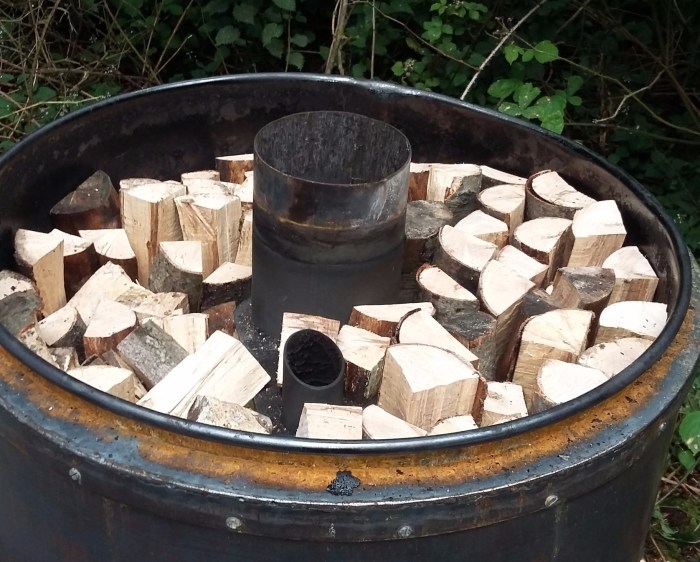
The picture on the left shows how I have been loading the kiln to date. These are fairly irregular chunks of wood of various lengths and diameters tipped intothe kiln from the bags that I store them in overnight.They are then roughly positioned to fit them in but are at all angles, anywhere from horizontal to vertical. Lots of air gaps and a very “inefficient” way of packing the restricted volume. The picture on the right shows exactly the same logs but this time very deliberately packed in with all the logs placed vertically and really crammed in to fill the space. As you can see there was a lot of room left over when compared to the original fill demonstrating that the amount of wasted air space had been dramatically reduced.


The pictures above show my “armchair” with the two additional loads of wood that I was able to fit into the efficiently packed kiln. I reckon there was an increase of about 25% by volume. I was very keen to test out whether this led to more charcoal being produced as a 25% in efficiency would be quite remarkable.

20170629_095119
Kiln tightly packed to the brim

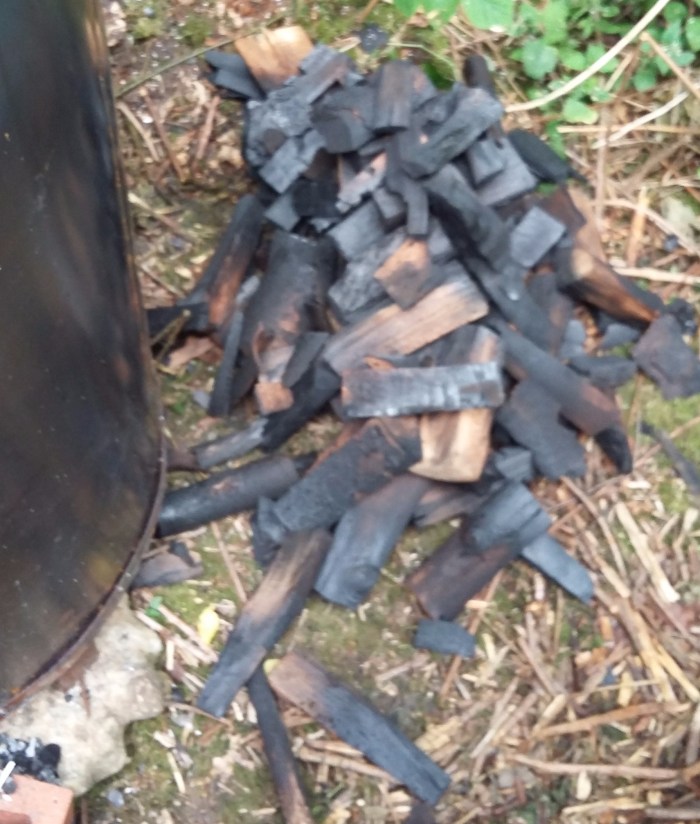
When I came to inspect the completed burn yesterday morning it was disappointing to discover that the burn had been anything but complete resulting in a large number of brown ends which took some sorting through. Some of the logs at the bottom of the kiln appeared, at their lower ends, to be virtually unscathed by the whole charring process and looked exactly as they were when they were loaded. Clearly not what I had hoped for.

20170630_081310
Brown ends – sadly the amount almost matches the additional logs loaded!

What could have happened? I had noted that during the burn itself the process never really seemed to get going. Maybe I wasn’t as attentive as I should have been to ensure that the fire didn’t drop away but kept its ferocity – this wouldn’t have helped the conversion process.

However I think that the main reason is that the air gaps present in the original inefficient loading method were actually vital to ensure that the hot air circulated around the full load driving off the moisture and the volatiles and completing the conversion. The tightly packed logs prevented this airflow and actually insulated each other from the effects of the heat transfer. So perhaps an seemingly inefficient approach is in fact more efficient over all.

Having said that I would imagine that there is  an optimum load that balances the airflow and increases the overall capacity. Still a lot to learn.

More next time……


Hot air and getting stung legs – it’s all in the balance

Wow – so that is what 30°C feels like. Incredible to note that one day earlier in the year I set off from the house to go to Pop’s Wood and the thermometer in the van indicated that it was -6°C; driving home on Wednesday evening the same thermometer showed +32°C – a temperature range of 38°C. Amazingly the trees and new hedgerow seem to be coping very well with the hot weather and the lack of rain. I guess the hedgerow plants have had time to put down a decent root system since they were planted in November/December and handily have benefited from the shade provided by the overhanging trees. Interestingly the badgers’ behaviour has changed during the dry spell in that they have taken to digging up the weed suppressant mat which the hedgerow is planted through, I guess in an attempt to find worms and other bugs sheltering there. This has meant that I have had to re-secure various sections of the matting after they have been left flapping in the breeze. The extent of the damage caused is a reflection of how determined and powerful badgers are as diggers and scavengers.

The hot weather has resulted in me wearing shorts all week and I take everything back about nettles being amazing. My legs have been repeatedly stung as I pushed my way through the undergrowth to recover the beech from the various log piles that I formed as one of the first jobs when I took over Pop’s Wood.  Nettle stings are not hugely painful but their effect has an incredible sustained impact across the day. The initial sting is a sharp feeling as we all know but then there is a sort of “buzz” that goes on throughout the day and well into the evening. This buzz is not altogether painful but is a very curious sensation.

Image result for nettle pictures

Not sure what the evolutionary purpose of stinging humans is but apparently the original and remaining purpose of the nettle’s sting is to dissuade other animals from eating or uprooting it. The nettles leaves are covered with tiny, hollow, hook shaped hairs that act as hypodermic needles and embed themselves in your skin and inject a mixture of formic acid and histamines hence the swelling. It would appear that the folk lore about dock leaves being an effective remedy is based on fact as it has been found that the dock leaf contains an antihistamine.

Nettles have a history of being used for food; medicines and clothing.

Food : The young leaves have a flavour similar to spinach mixed with cucumber when cooked, and are rich in vitamins A and C, iron, potassium and calcium. Soaking stinging nettles in water or cooking them removes the stinging chemicals from the plant, which allows them to be handled and eaten without injury. After the stinging nettle enters its flowering and seed-setting stages, the leaves develop gritty particles which can irritate the urinary tract – so not a good idea to eat he leaves late in the season. In its peak season, the nettle contains up to 25% protein, dry weight, which is high for a leafy green vegetable. The leaves are also dried and may then be used to make a herbal tea, as can also be done with the nettle’s flowers. Contemporary uses include their use in cheese making, for example in the production of Cornish Yarg.

Medicines: Nettles have been used in traditional medicine (as tea or fresh leaves) to treat disorders of the kidneys and urinary tract, gastrointestinal tract, cardiovascular system, influenza, rheumatism, and gout. Amazing! Being flogged with nettles was reckoned to offer relief from arthritic pain – well it would certainly take your mind off it for a while.

Textiles: Nettle stems contain a fibre just below the skin which has traditionally been used in similar uses as flax or linen. The process involves soaking away the plant cells to leave the fibrous material behind that can then be dried, spun into a thread and then woven into cloth. Nettles grow easily and quickly and, unlike say cotton, do not need any pesticides. The fibres are coarser than cotton but finer than linen. Historically, nettles have been used to make clothing for 2,000 years, and it was planned to make German Army uniforms from nettle during World War I due to a shortage of cotton. To bring the story up to date if you Google “nettle cloth” or “nettle clothing” there are modern styles being made now out of nettles. Good to know that such an abundant, low input, naturally indigenous resource is being used once more.

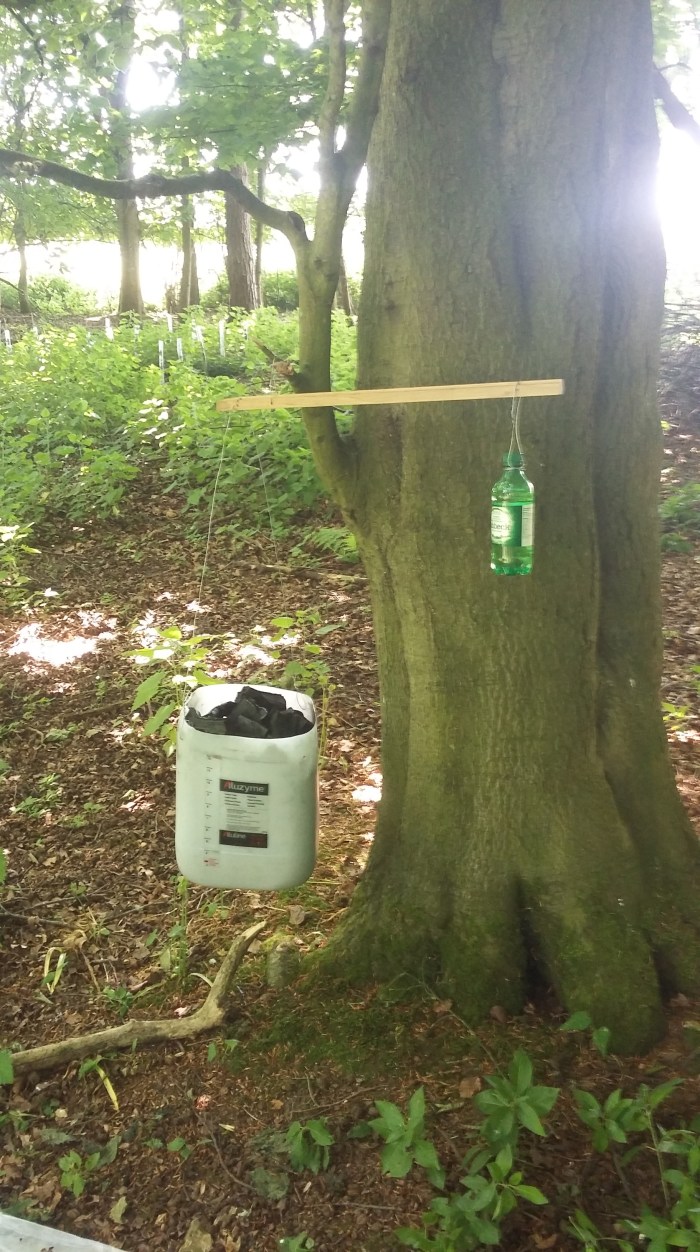
Other activities in the wood have included several more charcoal burns and an attempt to make a simple balance beam weighing scale to measure out the completed product. This was an an alternative to using the bathroom scales at home which was becoming increasingly unpopular.

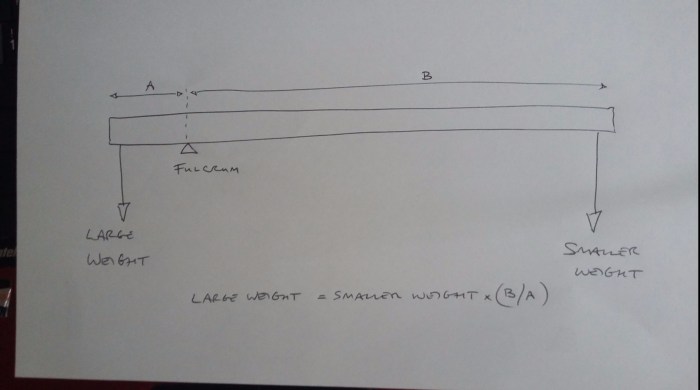
I wanted to make a device similar to those used at the weighing in process for boxers where a large weight ie the boxer is placed at a fixed point on one end of a beam very near the fulcrum and a smaller weight is placed a much larger distance away from the fulcrum. In this way the smaller weight is made to balance with the larger weight. This approach allows the weight of the boxer, or charcoal in my case, to be worked out by comparing the distance of the smaller weight away from the fulcrum and using this ratio to multiply the small weight by and bingo – the perfect weight for David Haye.

20170625_080037.jpg

This theoretical approach was fine until applied in practice when the thing would just not balance at all! I (not so quickly) realised that I had made a schoolboy error of forgetting that the weight of the beam itself would have an effect on the balance. Once I had thought that through and corrected the simple approach above then it worked a treat.

20170619_105332


More next time

Getting the hang of it and making a small glade.

It has been very warm in Pop’s Wood this week with glorious sunny weather and the temperature reaching 23°C – 25°C each day. Ideal for standing next to a very hot kiln. Pop’s Wood is oriented approximately east west along its length with a downward slope across its width from the top which is south facing and the bottom which faces north. The charcoal retort is located at the top of the wood and is in a small clearing adjacent to a small copse of beech trees on one side and a very overgrown blackthorn on the other. This means that the retort itself is in full sun or dappled shade for most of the day which makes it a very pleasant spot to sit and monitor the progress of each burn/try to do the crossword. During the very first burn I was very much focused on ensuring that I was on hand to observe the whole process really closely and so found myself not doing anything else for the whole day. That’s fine but one of the thought processes behind having the charcoal retort was that it could be an “in the meanwhile” activity efficiently converting the smaller branches into a more valuable resource whilst I got with other things.

I am now on the fourth burn and beginning to get the hang of the whole process. If you don’t want to read all this guff go straight to the animation link below.

  • The first phase, which begins at the point that the lid has been put on and the fire is lit, is pretty hands on. The important task is to keep the fire stoked up to ensure that the retort reaches and stays at a high temperature as soon as practicable. The best way of stoking the fire is to drop pieces of firewood down the chimney, this way they land directly on top of the existing flames and ignite and burn in the chimney itself and roar away. This vigorous burn helps create a strong updraught and acts to “pull” the steam, that is being driven off the logs in the retort, down through the smaller inner exhaust tube and back into the flames and away up the chimney. This phase lasts for about 2 hours
  • The second phase is less easy to define but involves the wood in the retort continuing to dry out and release the water vapour in its cells and gradually enter the next phase where the rest of the volatile compounds that make up the wood turn to gas. Basically this is everything else apart from the pure carbon (charcoal) that will be left. These gases are driven off right from the start but are diluted by the steam in the early stages. It is not until they reach sufficient concentrations in the exhaust flow that they splutter into life. You can hear this start with the occasional extra roar as the gases briefly ignite and then go out again. This phase lasts for approximately 1 hour.
  •  The third phase is where the gases being driven off reach such a volume/concentration that they start to burn continuously and at this stage the whole process accelerates. The gas flame roars up the chimney and heats up the wood in the retort further; this drives off more gas and this burns so making the retort hotter driving of more gas etc. At this stage there is no need to provide any more firewood as the gas is providing all the heat and is self sustaining. This section can go on for between 45 mins and 1 hour and provides an ideal time to get on with something else.
  • The fourth phase marks the point when the gas flame begins to falter as the last of the volatile gases are evaporated from the wood. There is a noticeable drop in the roaring noise in the chimney and is a clear signal that more firewood is needed to maintain the oven temperature to complete the cooking process. I guess you could simply stop at the end of the gas phase and leave the oven to burn out and cool down. However, the result would be an incomplete burn and a lot of the wood would be left as brown ends and not charcoal. To try and maximise the production of charcoal and minimise the brown ends I have been carrying on heating the oven for another hour or so making the burning phase approximately 5 – 6 hours long.
  • Finally the oven is left to cool down overnight. This ensures that the residual heat continues to completely cook the wood. Critically the retort is left with the lid tightly shut so that air doesn’t get into the oven and allow the charcoal to ignite. This would leave just a pile of ash in the morning!

Here is an animation of all those words……….just click on the link and then play the presentation as a slide show.

Retort animation v2

Trying to be more efficient and multi-task whilst the burn is in progress is becoming easier. During the last session I had time to prepare all the logs for the next burn and create a small sunny glade next  to the retort site.

This involved taking down a very spindly sycamore that had started to rot off at its tip and thin out an adjoining blackthorn. Really encouraging to see the size and number of sloe berries already formed on the tree. Bodes well for a bumper sloe gin season later in the autumn. Traditional to pick after the first frost but may not be able to wait that long.

I plan to erect the solar log drying kiln on this spot over the next couple of weeks. The delay has been largely as a result of the pieces being too big to fit safely into the van! Not a great result but should be remediable and then we will be able to start that project.

Enough for one week so I will pick up the nettle story another time.