Charcoal making is an ancient craft and should be celebrated as a true act of alchemy.
Here is how it is made – if you don’t want to read all this guff go straight to the animation link below.
- The first phase, which begins at the point that the lid has been put on and the fire is lit, is pretty hands on. The important task is to keep the fire stoked up to ensure that the retort reaches and stays at a high temperature as soon as practicable. The best way of stoking the fire is to drop pieces of firewood down the chimney, this way they land directly on top of the existing flames and ignite and burn in the chimney itself and roar away. This vigorous burn helps create a strong updraught and acts to “pull” the steam, that is being driven off the logs in the retort, down through the smaller inner exhaust tube and back into the flames and away up the chimney. This phase lasts for about 2 hours
- The second phase is less easy to define but involves the wood in the retort continuing to dry out and release the water vapour in its cells and gradually enter the next phase where the rest of the volatile compounds that make up the wood turn to gas. Basically this is everything else apart from the pure carbon (charcoal) that will be left. These gases are driven off right from the start but are diluted by the steam in the early stages. It is not until they reach sufficient concentrations in the exhaust flow that they splutter into life. You can hear this start with the occasional extra roar as the gases briefly ignite and then go out again. This phase lasts for approximately 1 hour.
- The third phase is where the gases being driven off reach such a volume/concentration that they start to burn continuously and at this stage the whole process accelerates. The gas flame roars up the chimney and heats up the wood in the retort further; this drives off more gas and this burns so making the retort hotter driving of more gas etc. At this stage there is no need to provide any more firewood as the gas is providing all the heat and is self sustaining. This section can go on for between 45 mins and 1 hour and provides an ideal time to get on with something else.
- The fourth phase marks the point when the gas flame begins to falter as the last of the volatile gases are evaporated from the wood. There is a noticeable drop in the roaring noise in the chimney and is a clear signal that more firewood is needed to maintain the oven temperature to complete the cooking process. I guess you could simply stop at the end of the gas phase and leave the oven to burn out and cool down. However, the result would be an incomplete burn and a lot of the wood would be left as brown ends and not charcoal. To try and maximise the production of charcoal and minimise the brown ends I have been carrying on heating the oven for another hour or so making the burning phase approximately 5 – 6 hours long.
- Finally the oven is left to cool down overnight. This ensures that the residual heat continues to completely cook the wood. Critically the retort is left with the lid tightly shut so that air doesn’t get into the oven and allow the charcoal to ignite. This would leave just a pile of ash in the morning!
Here is an animation of all those words……….just click on the link and then play the presentation as a slide show.
Or in pictures:

Retort loaded with dry wood

Lid placed tightly on top…

…an secured with locking band

chimney placed on top

and the fire lit

and keep it burning fiercely

keep an eye on the fire and lean on a stick

cut up logs ready for the next time
and a slow motion video of the wood gas phase:
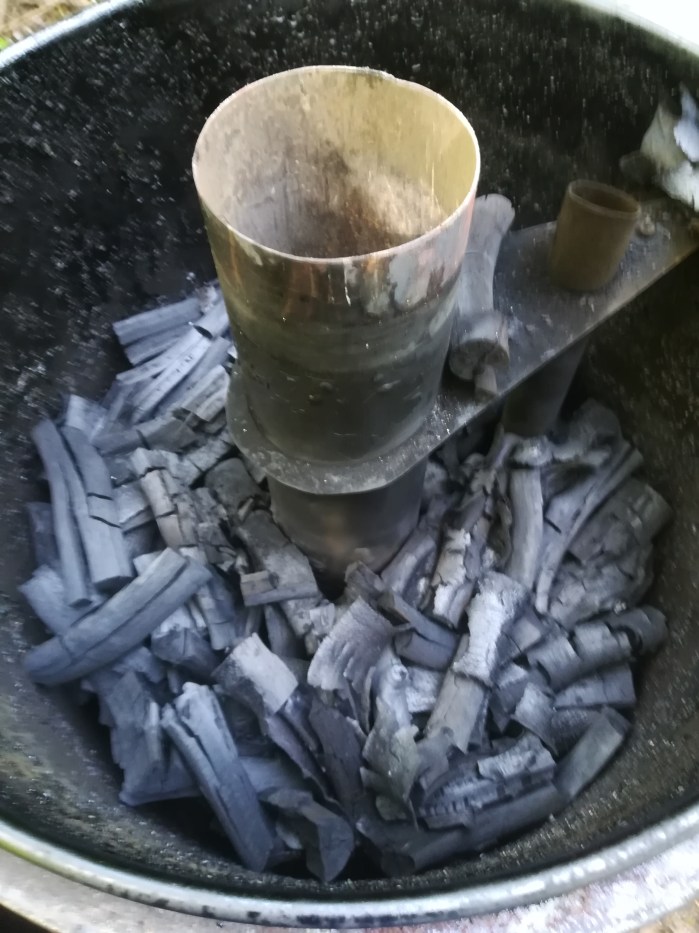
and finally……
 Tim Burr